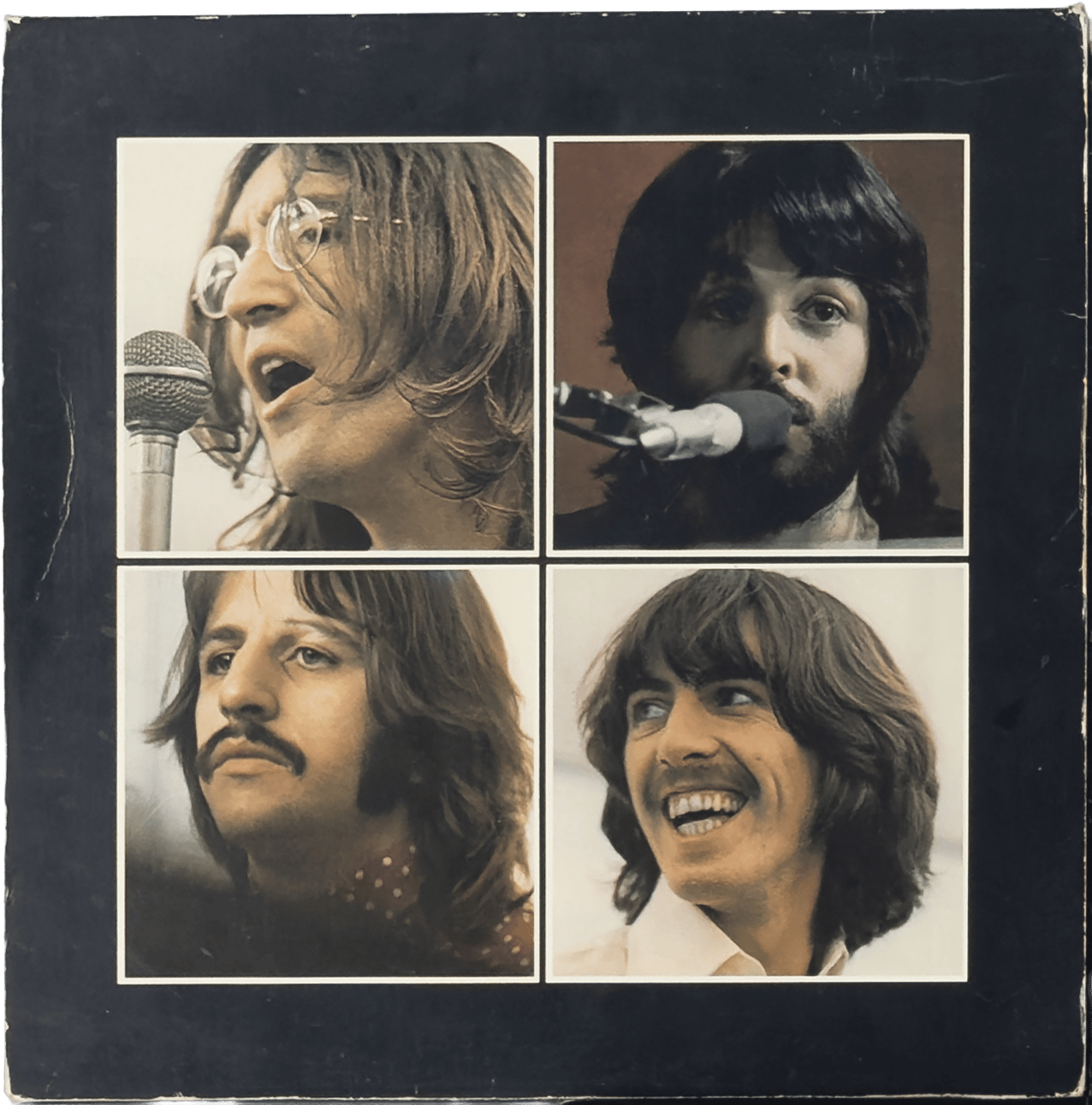
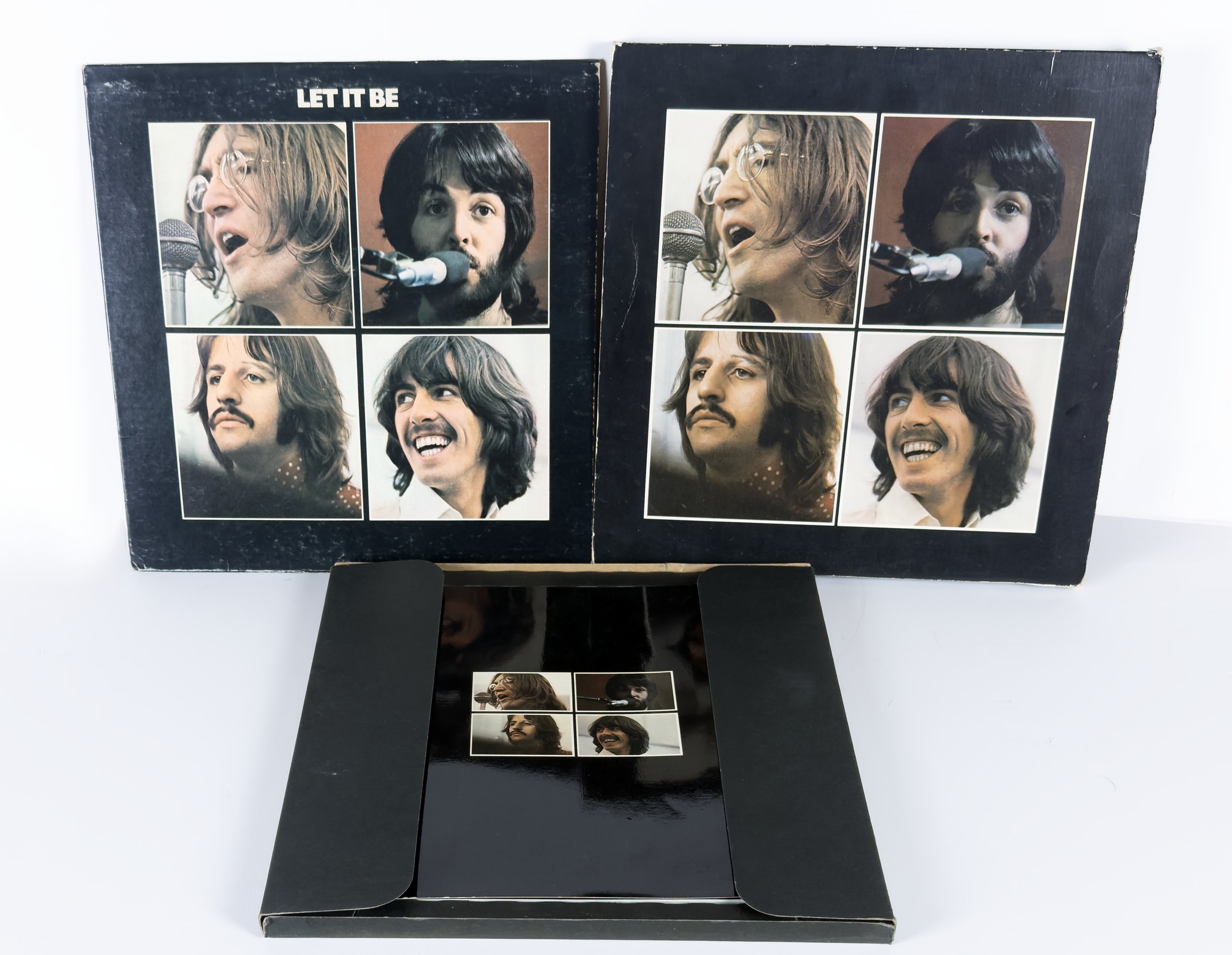
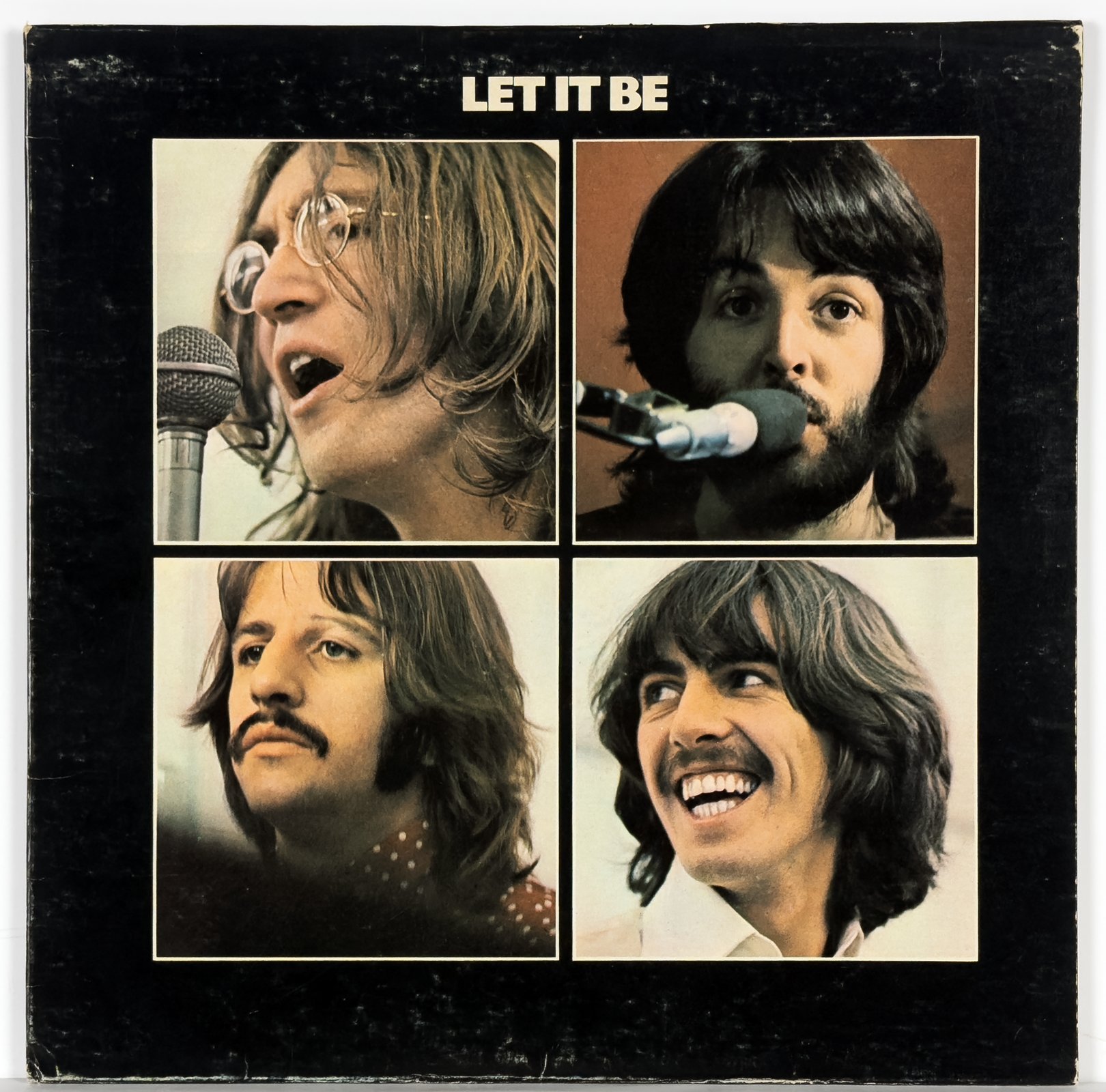
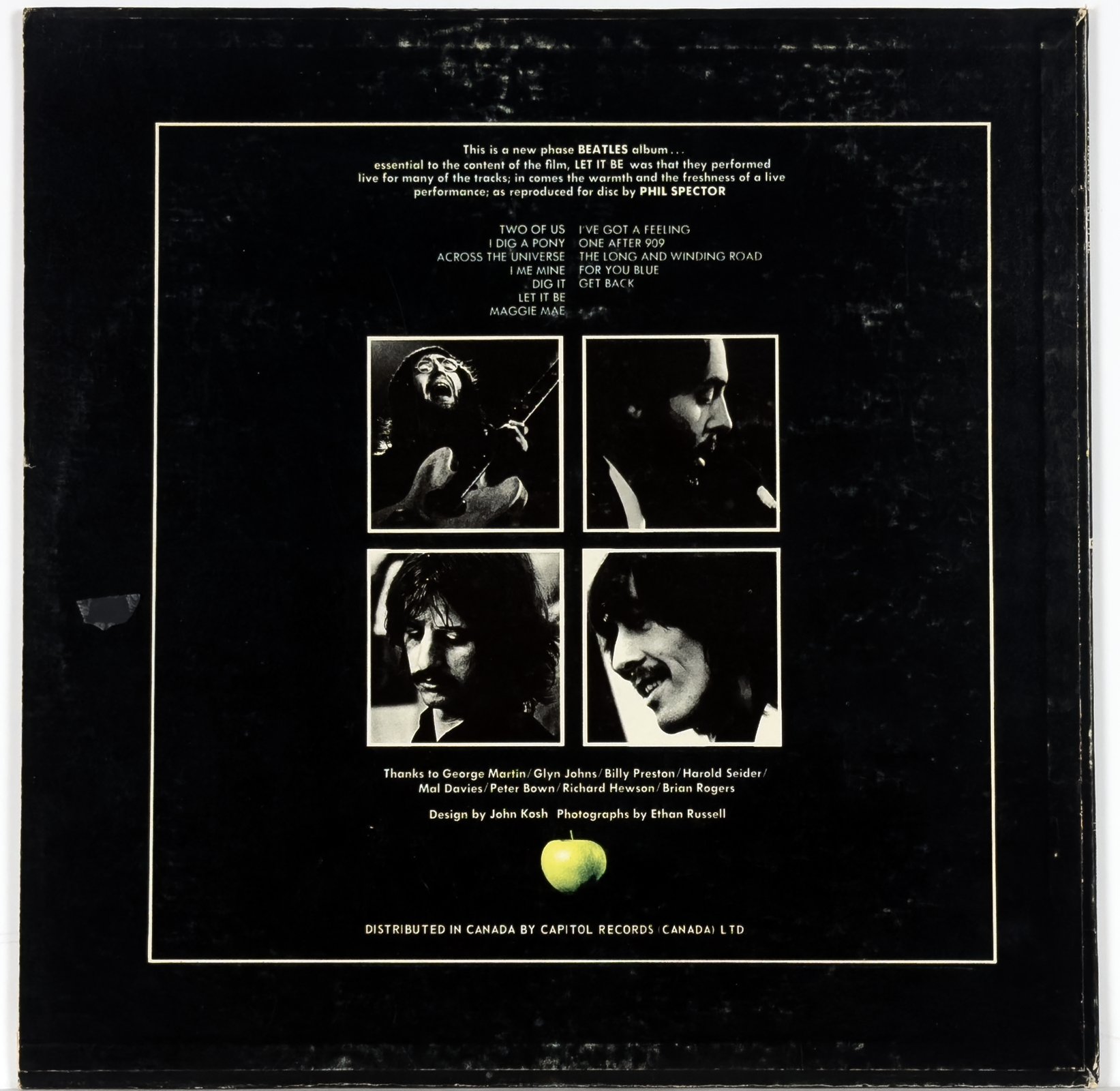
Lot Details
| Artist | The Beatles |
|---|---|
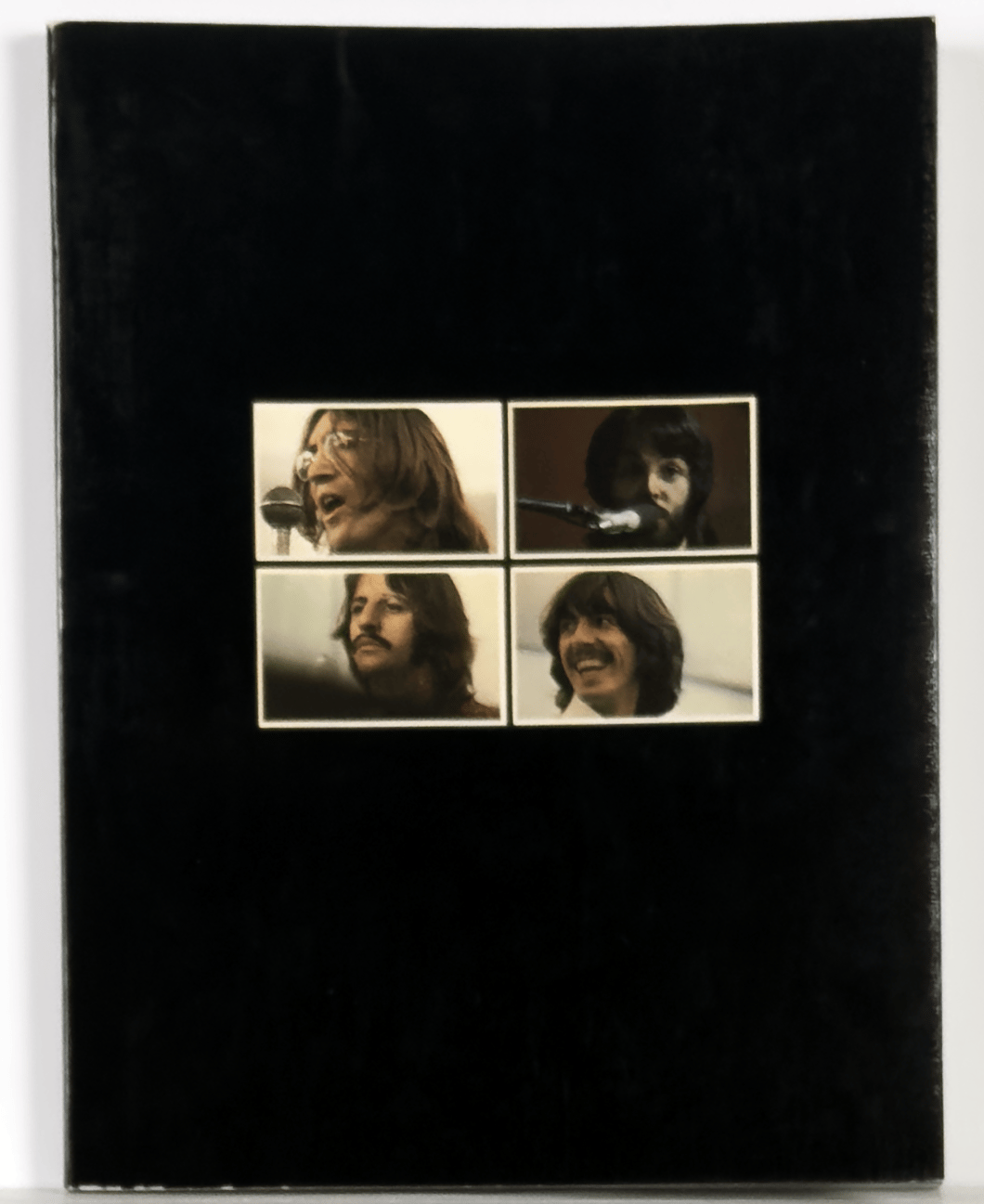
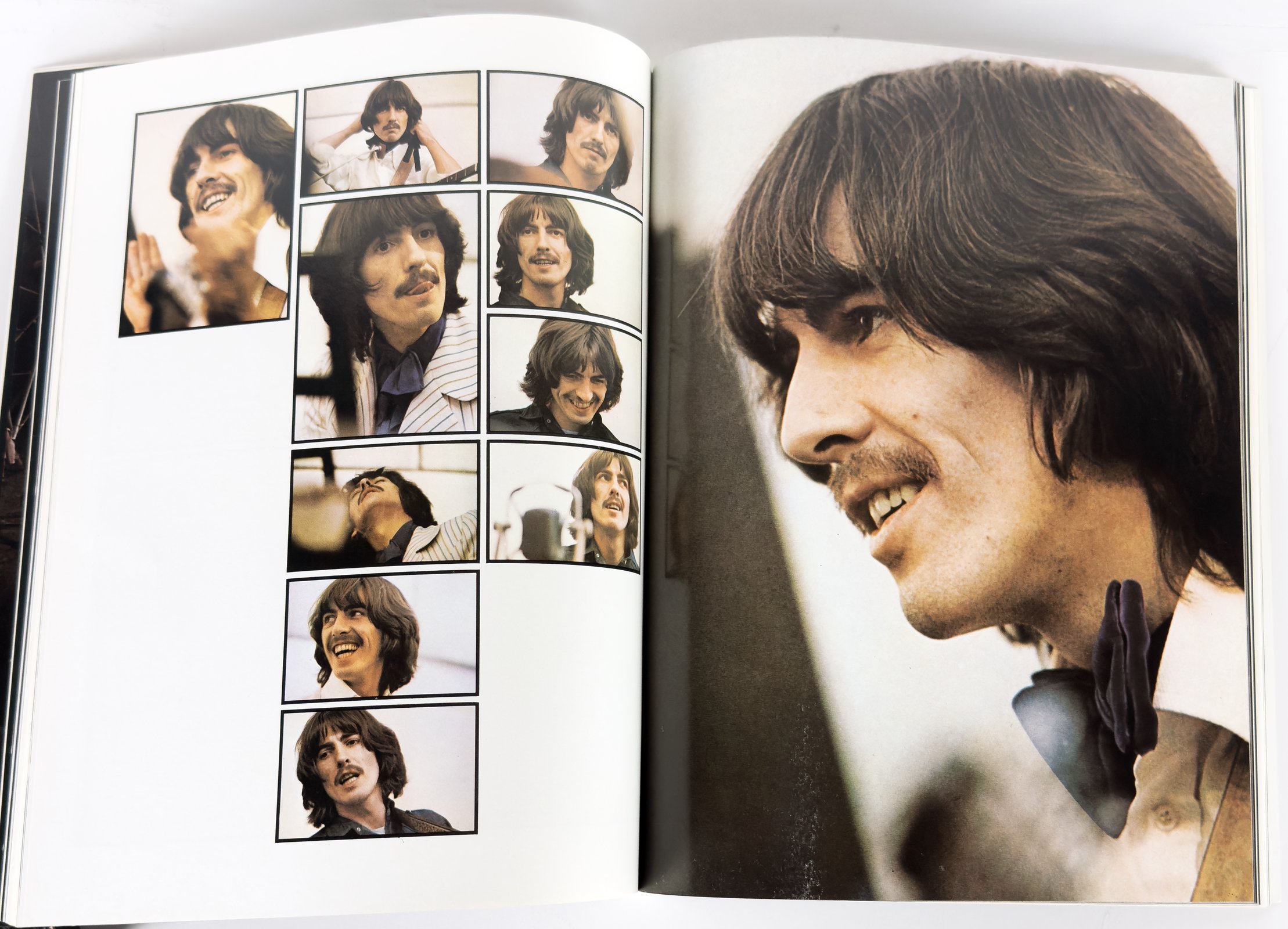
| Album Title | Let It Be |
| Format Details | Vinyl (LP, Album), Box Set (Limited Edition) |
| Label | Apple Records |
| Publication Year | 1970 |
| Genre | Rock, Pop |
| Style | Pop Rock |
| Track Count | 12 |
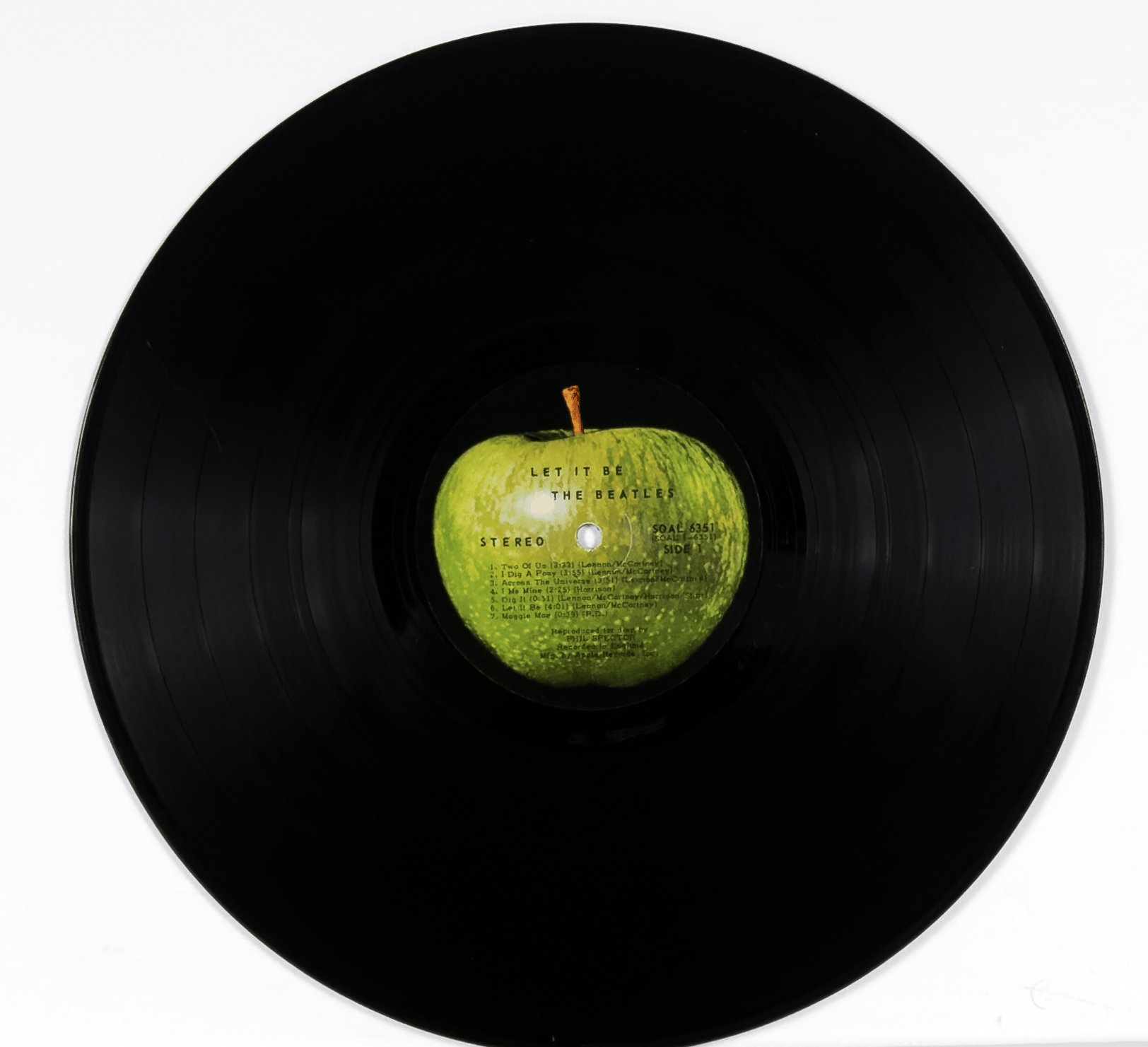
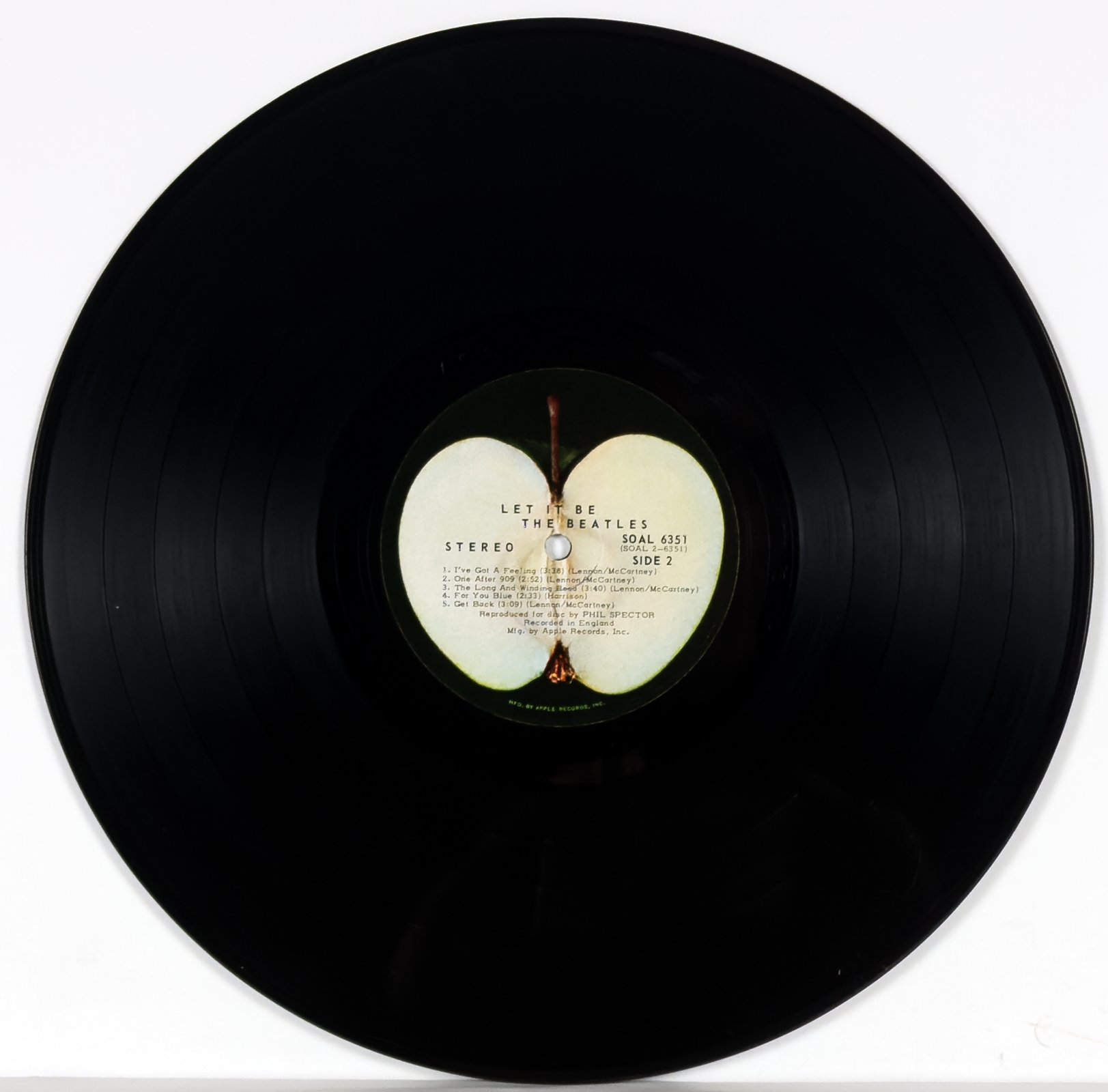
| Catalog Number | SOAL 6351 |
Identifiers
| Matrix / Runout (Label side A) SOAL 1- 6351 |
| Matrix / Runout (Label side B) SOAL 2- 6351 |
| Matrix / Runout (Runout side A variant 1) SOAL 1- 6351 Phil + Ronnie JS 17,500-9 Bell Sound sf |
| Matrix / Runout (Runout side B variant 1) No 2 SOAL 2- 6351 Phil + Ronnie JS 17,501-9 Bell Sound sf |
| Matrix / Runout (Runout side A variant 2) SOAL-1-6351 Phil+Ronnie JS-17,500-9 bell sound sf no 3 |
| Matrix / Runout (Runout side B variant 2) SOAL-2-6351 Phil+Ronnie JS-17,500-9 bell sound sf no 2 |
Let It Be
(Includes Buyer's Premium)
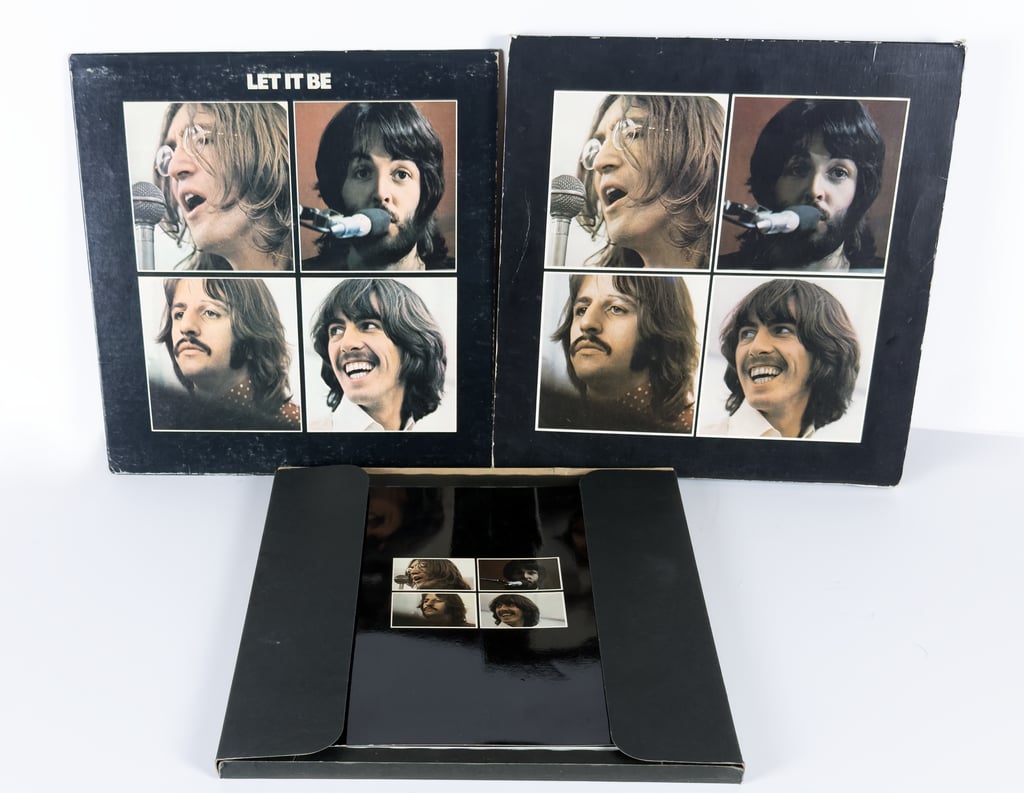
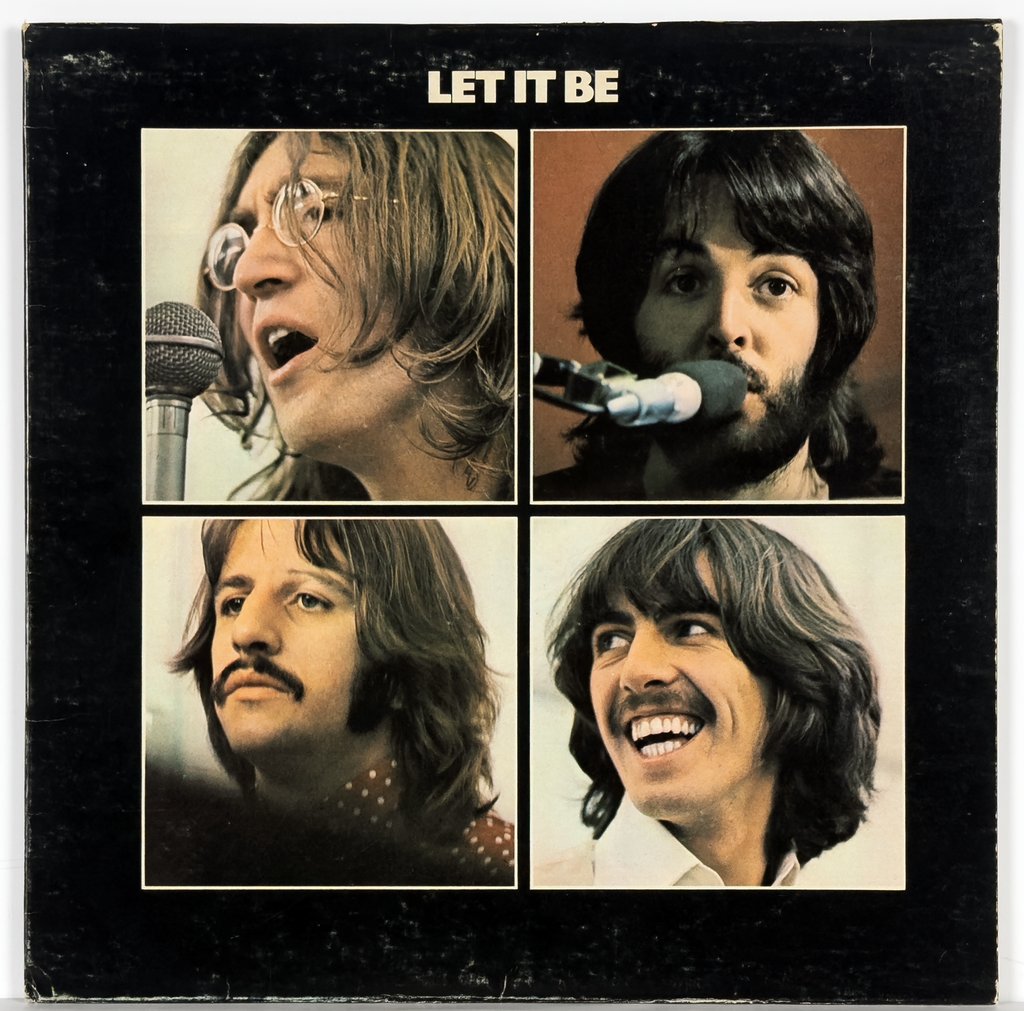
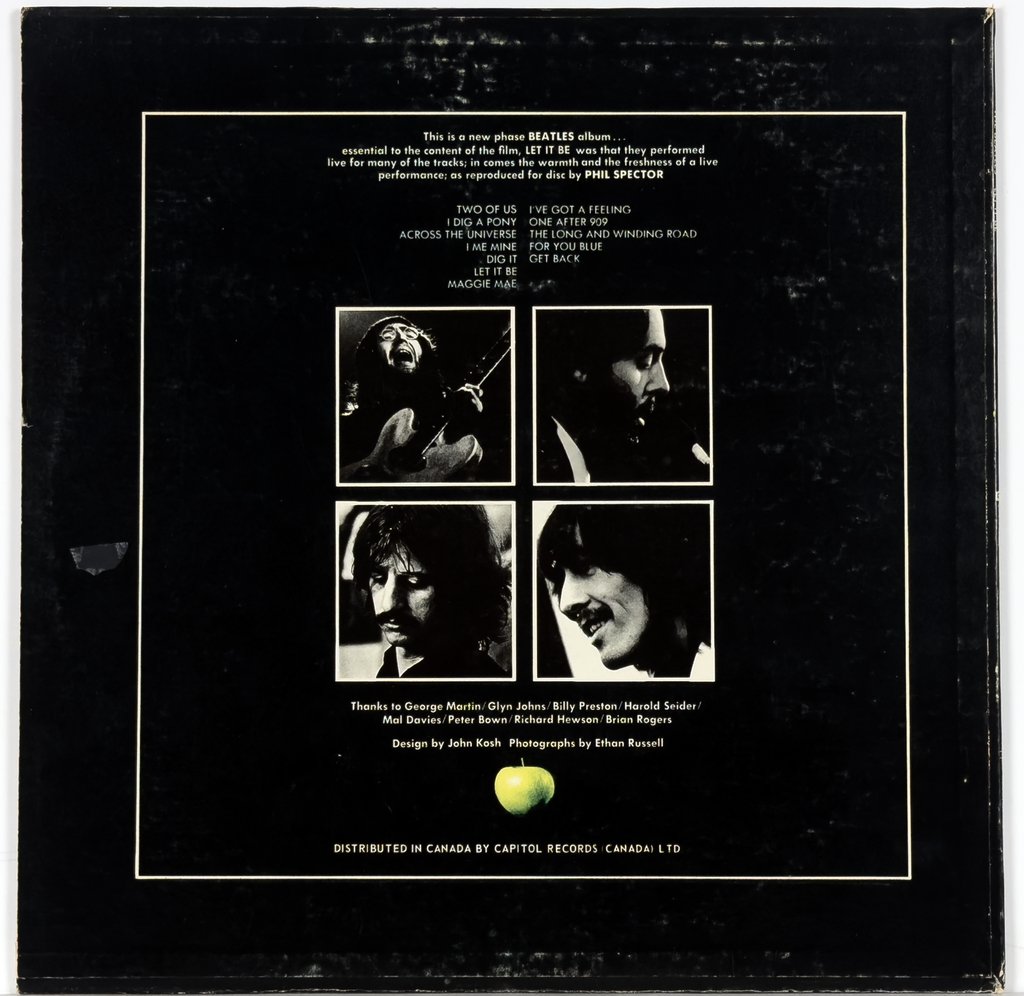
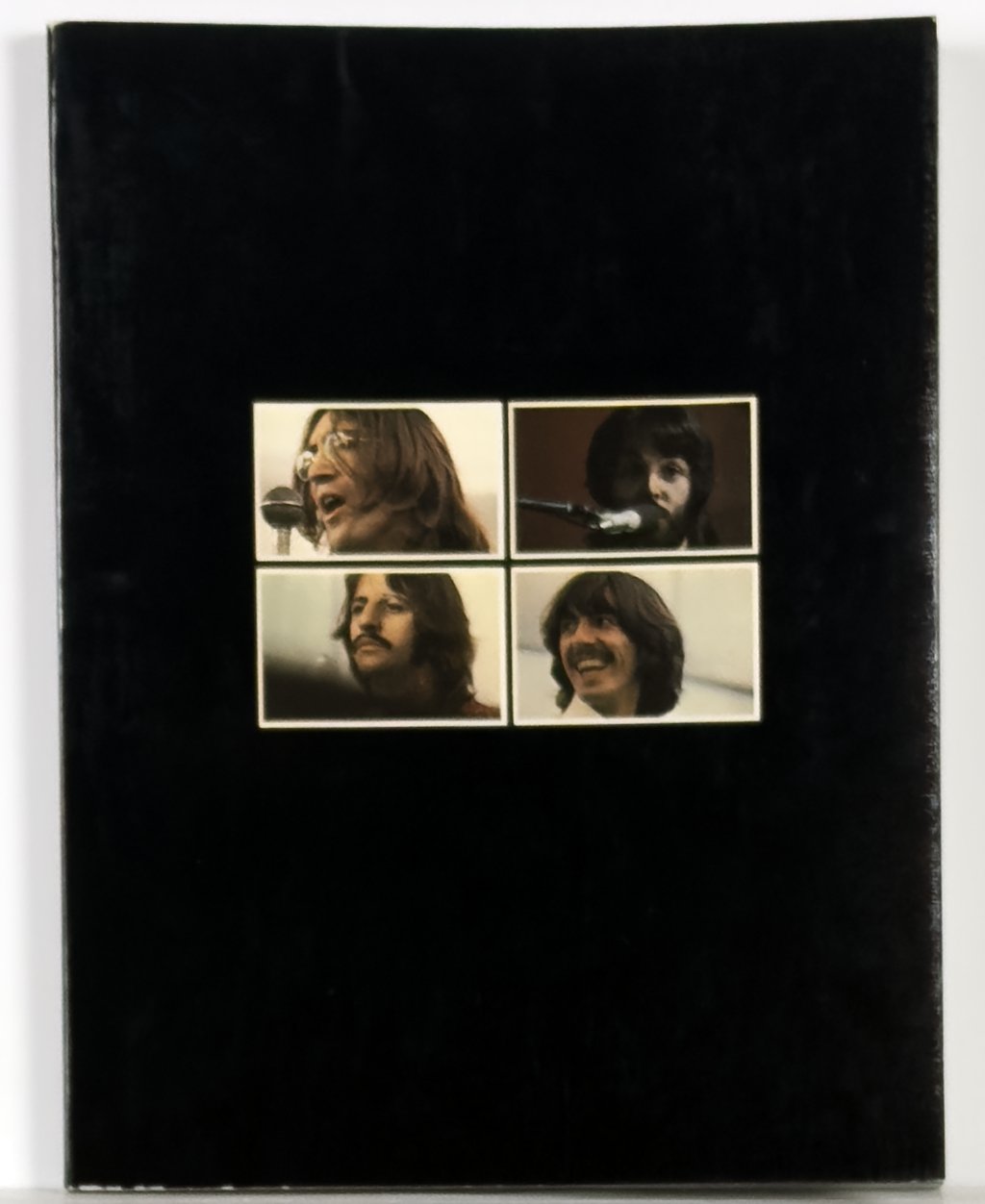
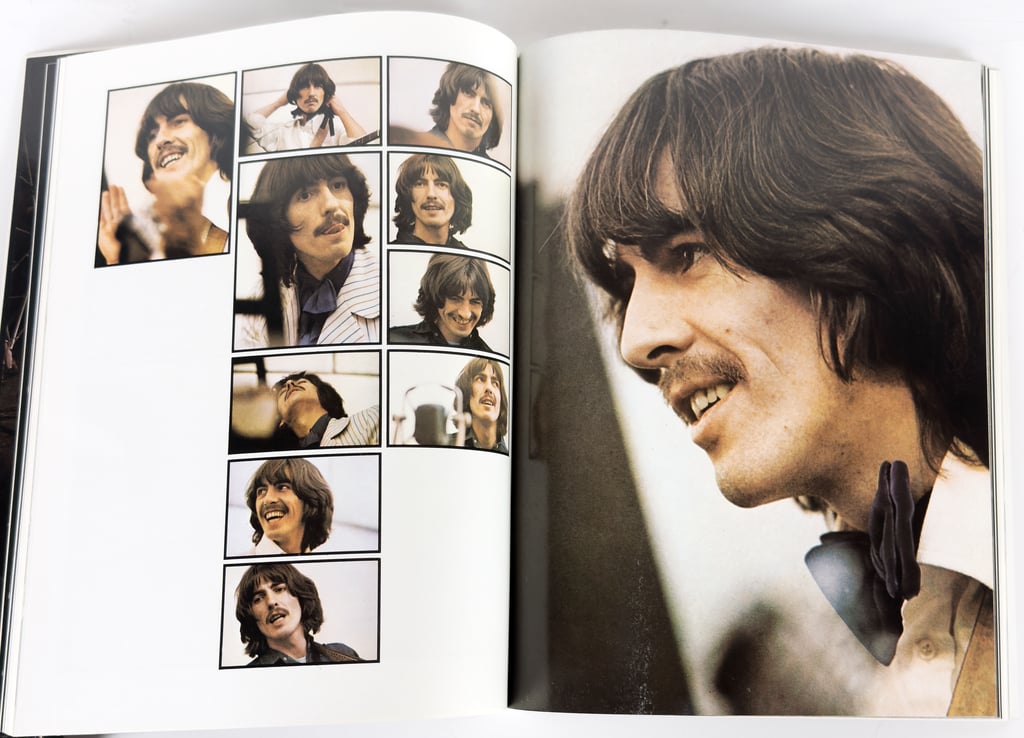
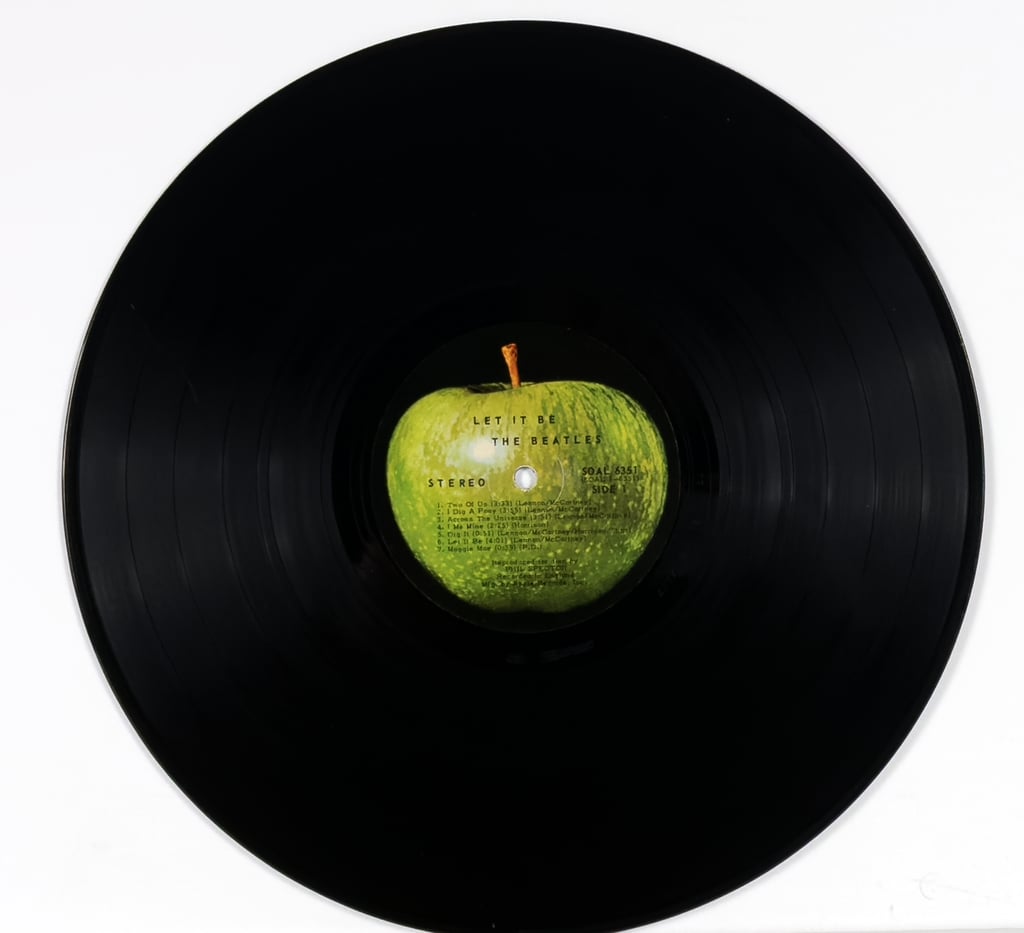
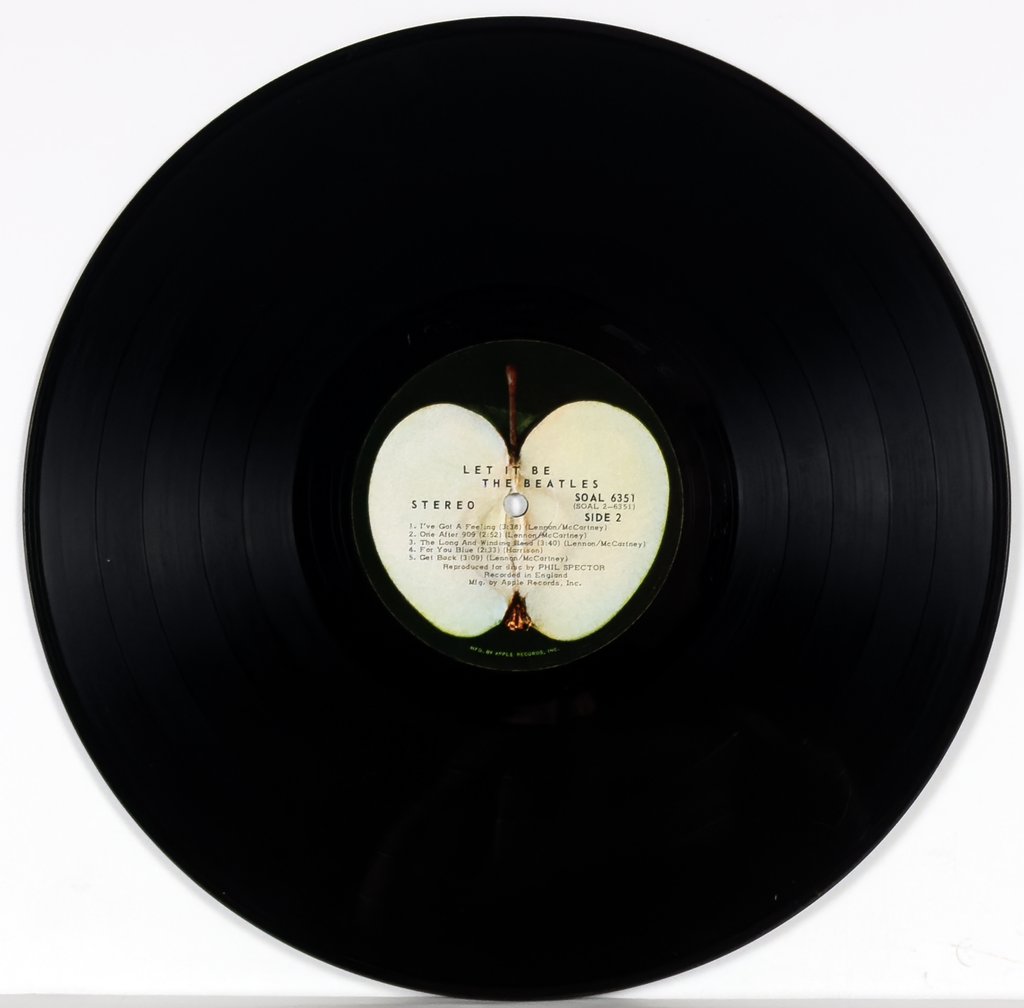
Lot Details
| Artist | The Beatles |
|---|---|
| Album Title | Let It Be |
| Format Details | Vinyl (LP, Album), Box Set (Limited Edition) |
| Label | Apple Records |
| Publication Year | 1970 |
| Genre | Rock, Pop |
| Style | Pop Rock |
| Track Count | 12 |
| Catalog Number | SOAL 6351 |
Identifiers
| Matrix / Runout (Label side A) SOAL 1- 6351 |
| Matrix / Runout (Label side B) SOAL 2- 6351 |
| Matrix / Runout (Runout side A variant 1) SOAL 1- 6351 Phil + Ronnie JS 17,500-9 Bell Sound sf |
| Matrix / Runout (Runout side B variant 1) No 2 SOAL 2- 6351 Phil + Ronnie JS 17,501-9 Bell Sound sf |
| Matrix / Runout (Runout side A variant 2) SOAL-1-6351 Phil+Ronnie JS-17,500-9 bell sound sf no 3 |
| Matrix / Runout (Runout side B variant 2) SOAL-2-6351 Phil+Ronnie JS-17,500-9 bell sound sf no 2 |
The Beatles
The Beatles formed in Liverpool in 1960, evolving from John Lennon's skiffle group The Quarrymen, which he started in 1957. The classic lineup of John Lennon (rhythm guitar, vocals), Paul McCartney (bass, vocals), George Harrison (lead guitar, vocals), and Ringo Starr (drums, vocals) solidified in August 1962 when Starr replaced Pete Best. Before achieving fame, the band honed their skills playing lengthy sets in Hamburg, Germany's seedy club scene between 1960-1962, performing over 1,200 hours on stage. Local record store owner Brian Epstein became their manager in January 1962, securing them an audition with EMI's Parlophone label after multiple rejections from other labels including Decca. Producer George Martin signed them despite initial reservations, beginning a creative partnership that would define 1960s popular music. Their first single "Love Me Do" reached #17 on UK charts in October 1962, followed by "Please Please Me" which hit #1 in most UK charts except Record Retailer where it peaked at #2.
The Beatles' impact on music history encompasses multiple innovations in songwriting, recording, and the music industry itself. They transitioned popular music from primarily professional songwriters to self-contained bands writing their own material, with Lennon-McCartney becoming the most successful songwriting partnership in popular music history. Their harmonic sophistication introduced elements from classical music, Indian music, and avant-garde techniques into mainstream pop. In the studio, they pioneered or popularized numerous recording techniques including artificial double tracking (ADT), backwards recording, tape loops, and innovative use of studio effects. Their album "Sgt. Pepper's Lonely Hearts Club Band" (1967) cost £25,000 to produce (approximately £500,000 today), an unprecedented sum that demonstrated albums could be artistic statements rather than collections of singles. The Beatles' success opened American markets to British acts, sparking the "British Invasion" that reshaped global popular music. They sold over 183 million certified units in the United States alone and an estimated 600 million units worldwide.
The Beatles' album production evolved dramatically across their eight-year recording career from 1963-1970. Their early albums like "Please Please Me" (1963) were recorded in single day sessions, with the debut album famously completed in 12 hours 45 minutes at a cost of £400. As their commercial success grew, EMI granted unprecedented studio access, allowing experimentation impossible for other acts. "Rubber Soul" (1965) and "Revolver" (1966) marked their transition from live performance-oriented recordings to studio creations impossible to replicate on stage. They retired from touring in August 1966, focusing exclusively on studio work. "Sgt. Pepper's" (1967) took 700 hours of studio time over five months, revolutionizing album production standards. The Beatles utilized Abbey Road's four-track recording technology to its limits, bouncing tracks together to create dense layered arrangements. Their partnership with George Martin, classically trained and open to experimentation, enabled orchestral arrangements, unconventional instruments, and concrete music techniques previously confined to avant-garde composers.
The band's thirteen core UK studio albums demonstrate consistent innovation within popular music frameworks. Early albums averaged 14 tracks mixing covers with originals, while later works featured exclusively original material with fewer, longer compositions. "The Beatles" (1968), known as the White Album, sprawled across 30 tracks exploring diverse genres from folk to proto-metal to musique concrète. "Abbey Road" (1969) featured a 16-minute medley on Side Two that showcased their sophisticated arrangement skills. Album sales peaked with "Sgt. Pepper's" selling over 32 million copies worldwide. Their catalog generated over £82 million in UK sales alone by 1985. The band recorded 213 songs during their EMI years, with Lennon-McCartney credited on 180 compositions. George Harrison contributed 25 songs, while Ringo Starr contributed two. They achieved 17 UK #1 singles and 15 #1 albums, spending 174 weeks atop the UK album charts.
The Beatles' recording legacy influenced virtually every aspect of modern popular music production. Their insistence on artistic control established precedents for musician autonomy in the studio. The concept of the album as cohesive artistic statement rather than singles compilation became industry standard following their example. Technical innovations they popularized became routine studio practices: close microphone placement on drums, compression techniques, and treating the studio as an instrument itself. Their work ethic - averaging two albums yearly while maintaining quality - set productivity standards rarely matched. The CD remasters in 2009 sold over 10 million copies in four months, demonstrating enduring commercial appeal. Their influence extends beyond direct musical impact to broader cultural effects: validating popular music as art worthy of serious analysis, establishing the template for self-contained bands, and proving rock music could address complex themes while maintaining mass appeal. Quantifiable achievements include 20 Grammy Awards, induction into the Rock and Roll Hall of Fame in 1988, and continuing sales exceeding 2 million units annually fifty years after disbanding.
Winnipeg Collectibles Auction
October 15 - October 29, 2025
BidLots operates as a division of Mayberry Holdings Ltd t/a Mayberry Fine Art
Contact us below to preview this lot or to sell similar items.
212 McDermot Ave, Winnipeg MB
(204) 255-5690
[email protected]
|
Bidding Range
|
Increment
|
|---|---|
| $0.00 - $50.00 | $1.00 |
| $50.00 - $100.00 | $5.00 |
| $100.00 - $500.00 | $10.00 |
| $500.00 - $1,000.00 | $25.00 |
| $1,000.00 - $5,000.00 | $50.00 |
| $5,000.00 - $10,000.00 | $100.00 |
| $10,000.00 - $20,000.00 | $200.00 |
| $20,000.00 - $50,000.00 | $500.00 |
| $50,000.00 - $100,000.00 | $1,000.00 |
| $100,000.00+ | $5,000.00 |
All items are shipped fully insured by Canada Post or by courier depending on service availablity.
Records, Comics and Paper Items: Flat rate $25 shipping for single items anywhere in Canada. Contact us for a quote on multiple items, special requests or international shipping.
Manitoba orders: GST (5%) and PST (7%) will be added to all orders picked up or shipped within Manitoba.
Other Canadian provinces: GST or HST will be added based on your province's rate.
US & International orders: No Canadian taxes apply. You may be responsible for import duties or taxes in your country.
Login or register a BidLots.com account to participate in any auction. Track specific lots and artists with real-time notifications on all bidding activity.
Becoming an approved bidder takes three simple steps:
1. Create a BidLots account
2. Confirm your email address
3. Add a valid billing profile
Note: BidLots or the auctioneer reserves the right to revoke bidding privileges if your account is not in good standing or violates our terms and conditions of sale.
A buyer's premium is an additional fee charged to winning bidders, typically ranging from 10% to 20% of the winning bid amount. The specific premium for each auction is clearly displayed on lot listings and paddle registration forms.
Bidding starts at the reserve price and increases by predetermined increments based on the current bid range. These increments are clearly shown on each lot's detail page. All bids (including maximum and single bids) must follow these preset increments to prevent duplicate bids.
Single bid cancellations are at the auctioneer's discretion. For maximum bids:
You can increase your maximum bid amount
Decreases require auctioneer approval
Changes won't be permitted if the lot closes within 24 hours or has significant activity
To request bid changes, use the "Ask a question" button on the lot's detail page
You'll be notified of winning bids in three ways:
Email notification (or Text notification if enabled)
Listed on your "Bidding Results" page
Highlighted message on auction pages when logged in
Shipping options vary based on item size, weight, and location. You'll select shipping preferences during auction registration. The auctioneer will provide specific shipping quotes after auction close. For special shipping requirements, please contact the auctioneer before bidding.
After the auction closes, you'll receive a detailed invoice including shipping costs. Payment options include:
Credit card (online)
Electronic Fund Transfer (EFT)
Bank draft
International wire transfer
Registered credit cards will be automatically charged for any outstanding balance 5 days after the close of a sale unless alternative payment arrangements have been made.