Lot Details
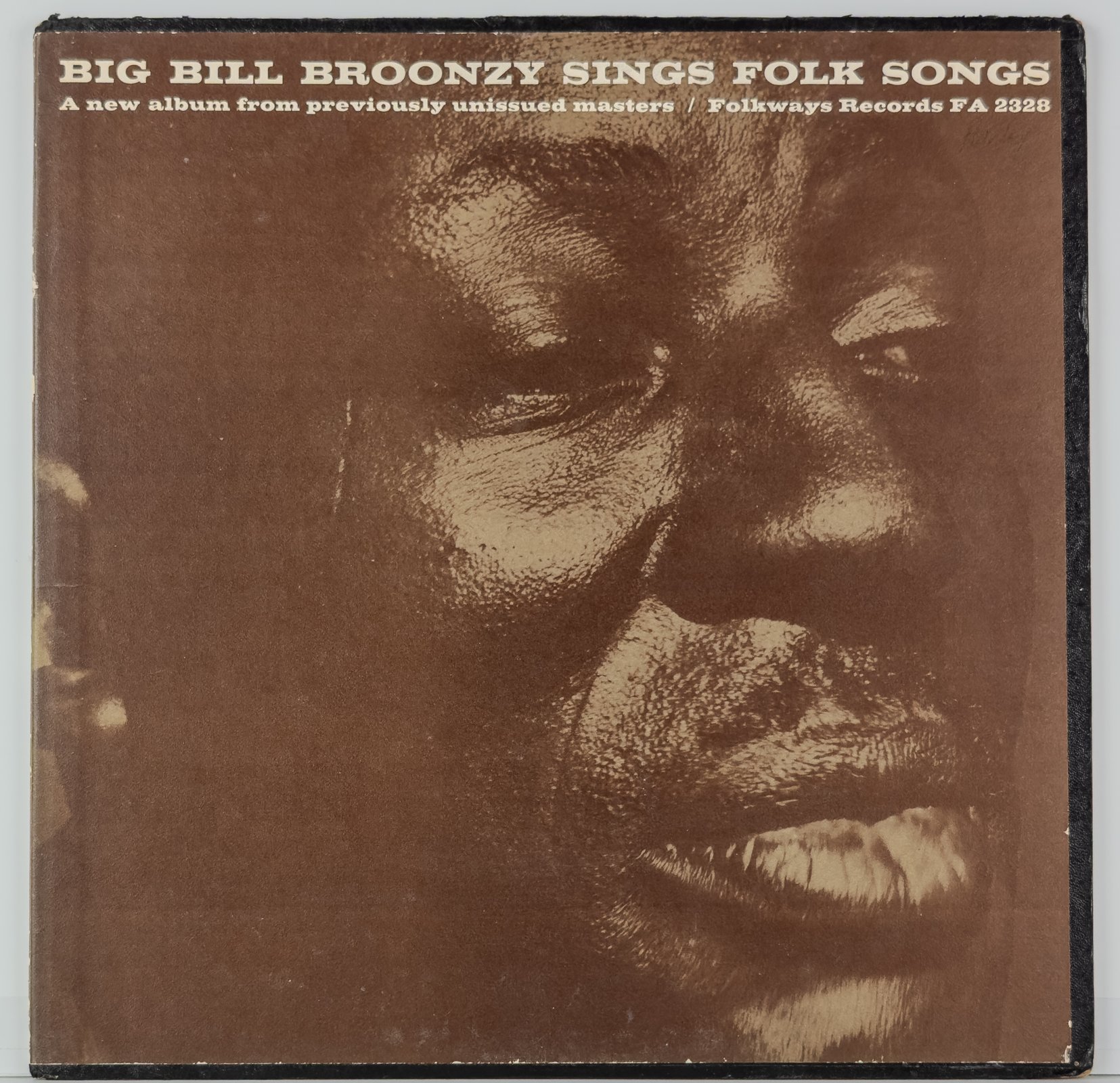
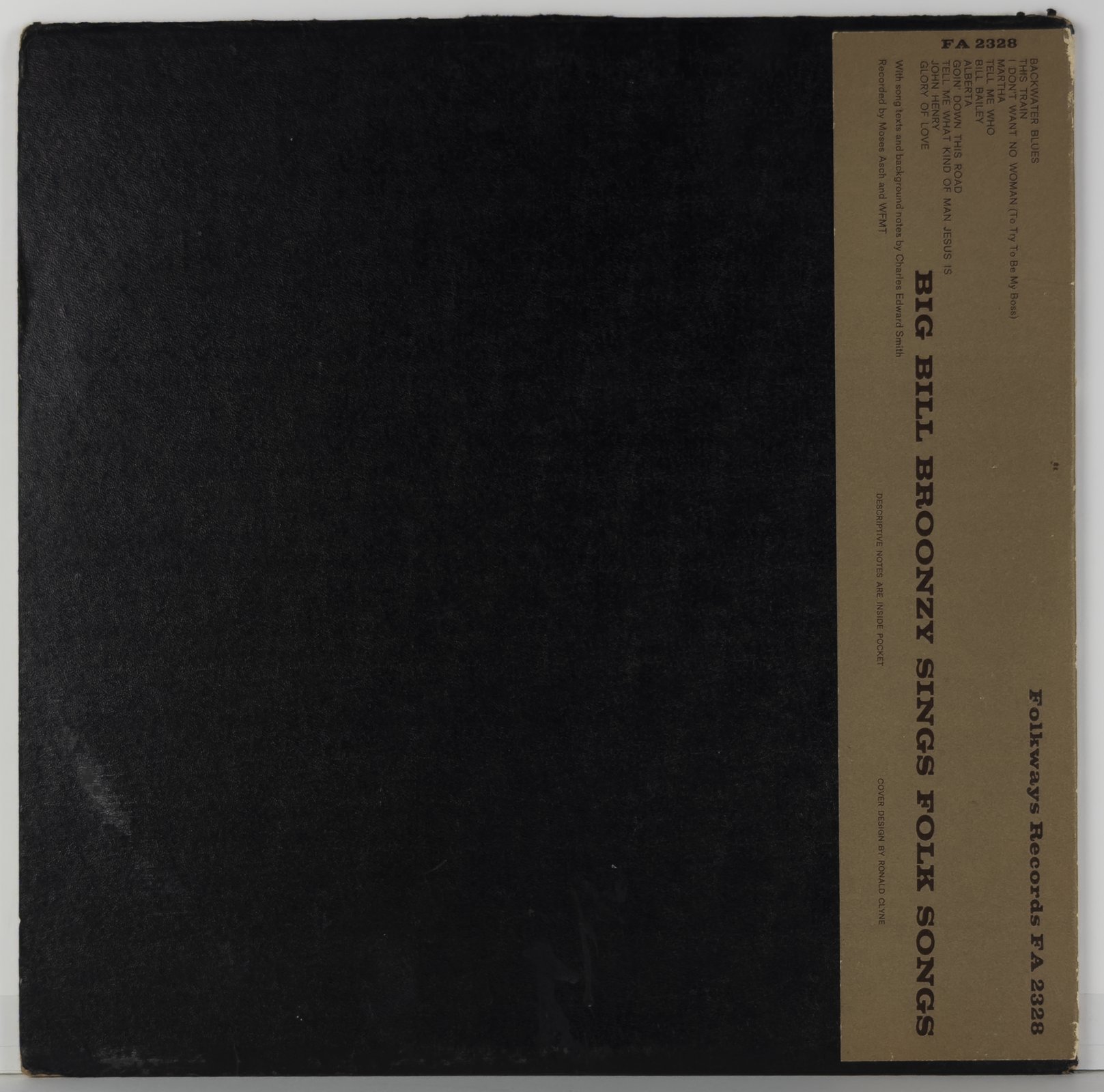
| Artist | Big Bill Broonzy |
|---|---|
| Album Title | Sings Folk Songs |
| Format Details | Vinyl (LP, Album) |
| Label | Folkways Records |
| Publication Year | 1962 |
| Genre | Blues, Folk, World, & Country |
| Style | Delta Blues, Country Blues |
| Track Count | 11 |
| Catalog Number | FA 2328 |
Identifiers
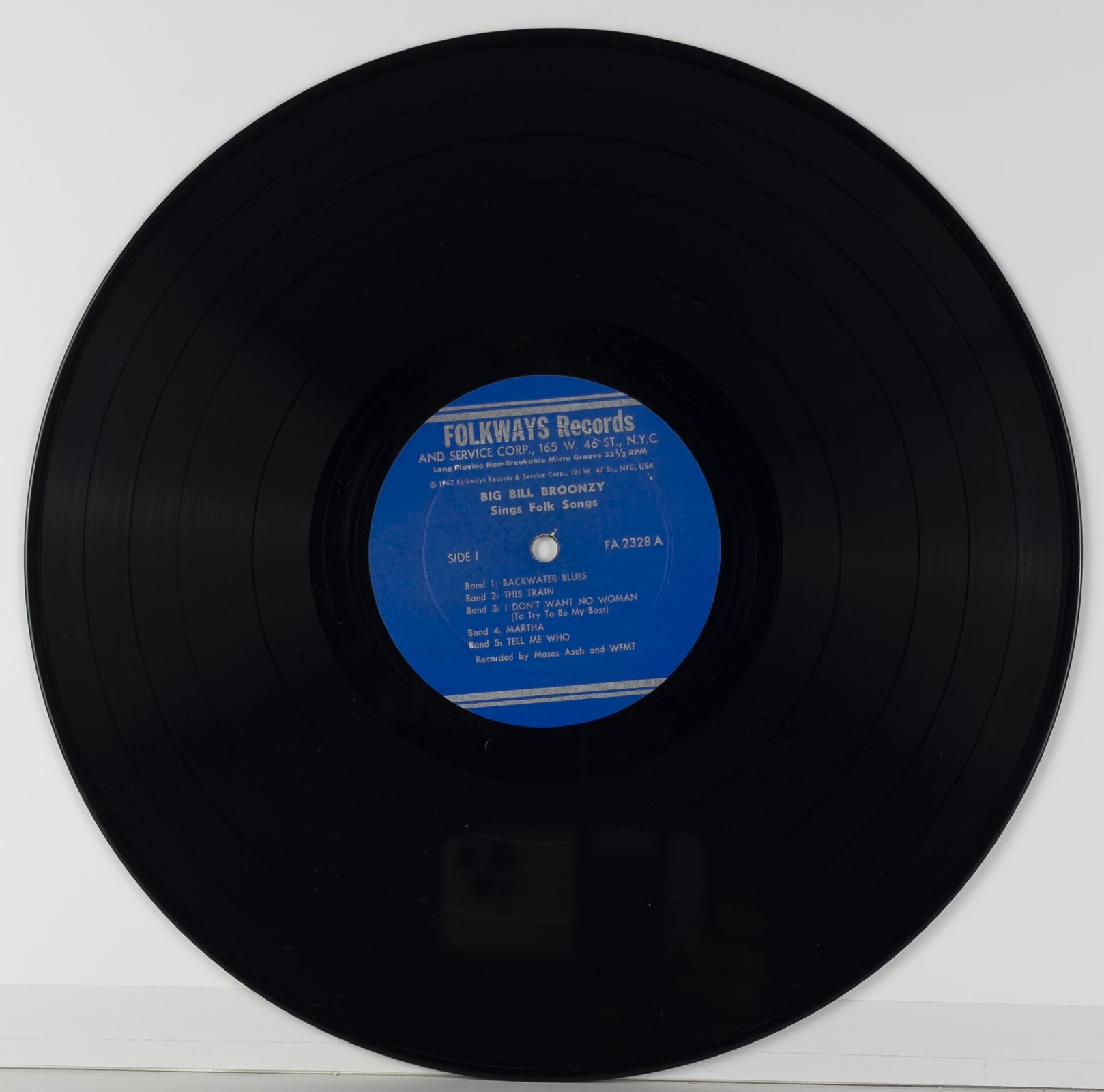
| Matrix / Runout (Side A Label) FA 2328 A |
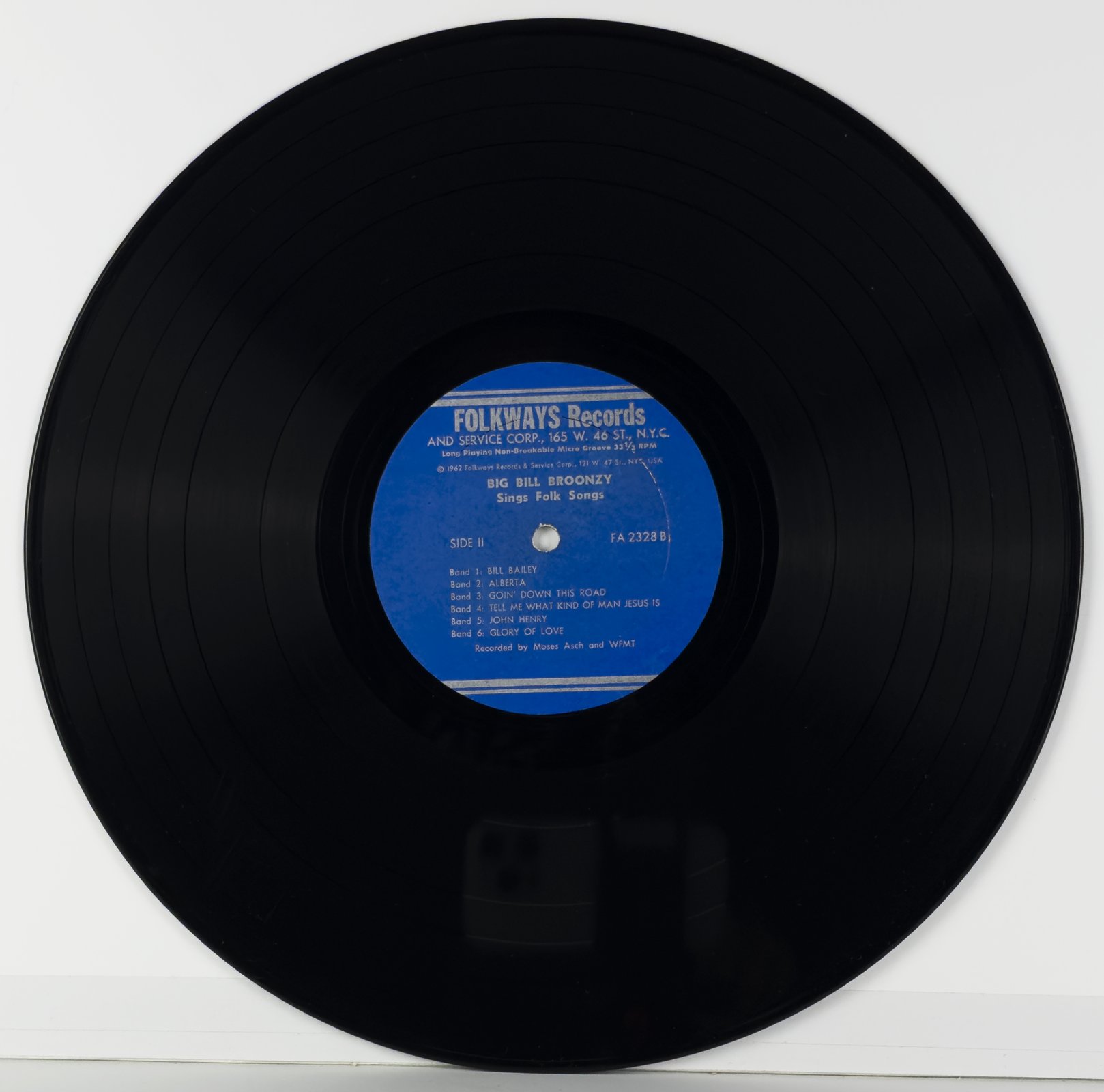
| Matrix / Runout (Side B Label) FA 2328 B |
| Matrix / Runout (Side A Runout) FA-2328-A 20-3 1'62 |
| Matrix / Runout (Side B Runout) FA-2328-B 20-3 1'62 |
| Pressing Plant ID () P |
Big Bill Broonzy Sings Folk Songs
(Includes Buyer's Premium)
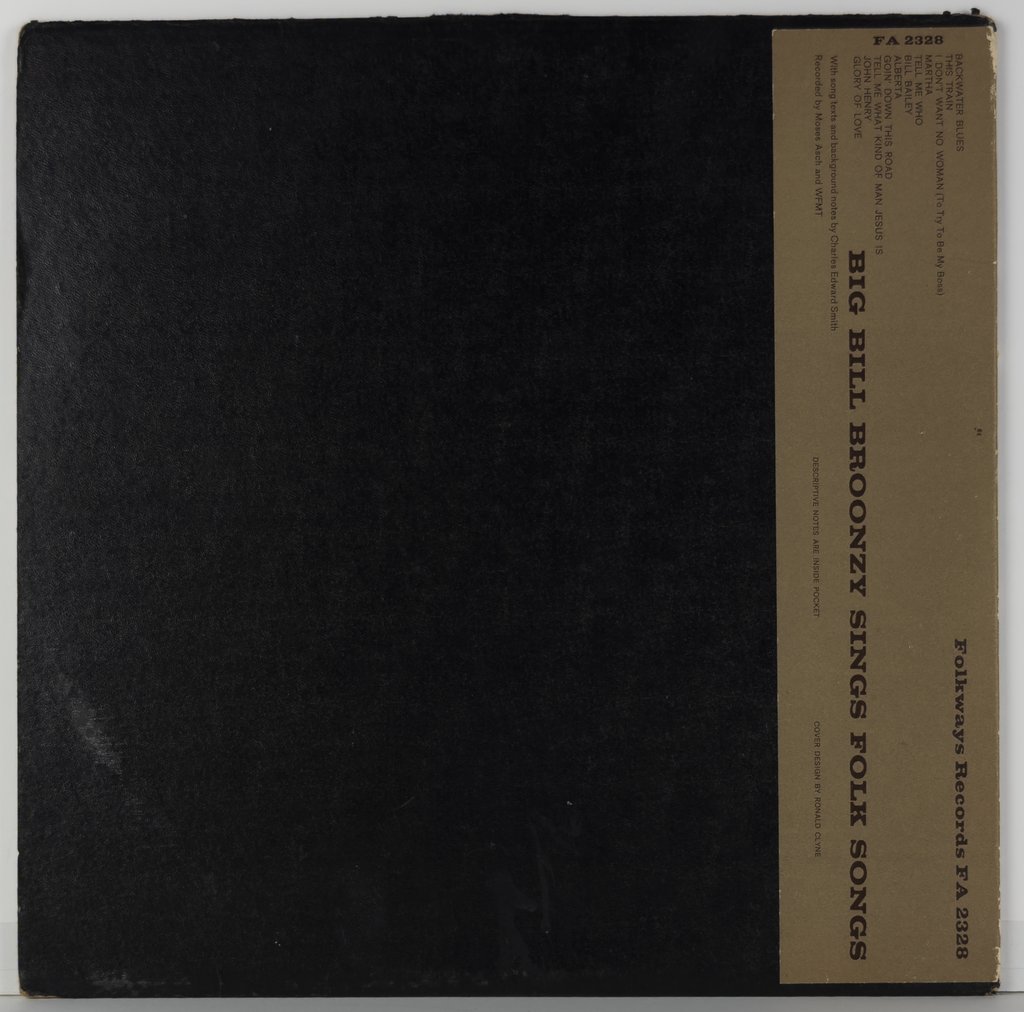
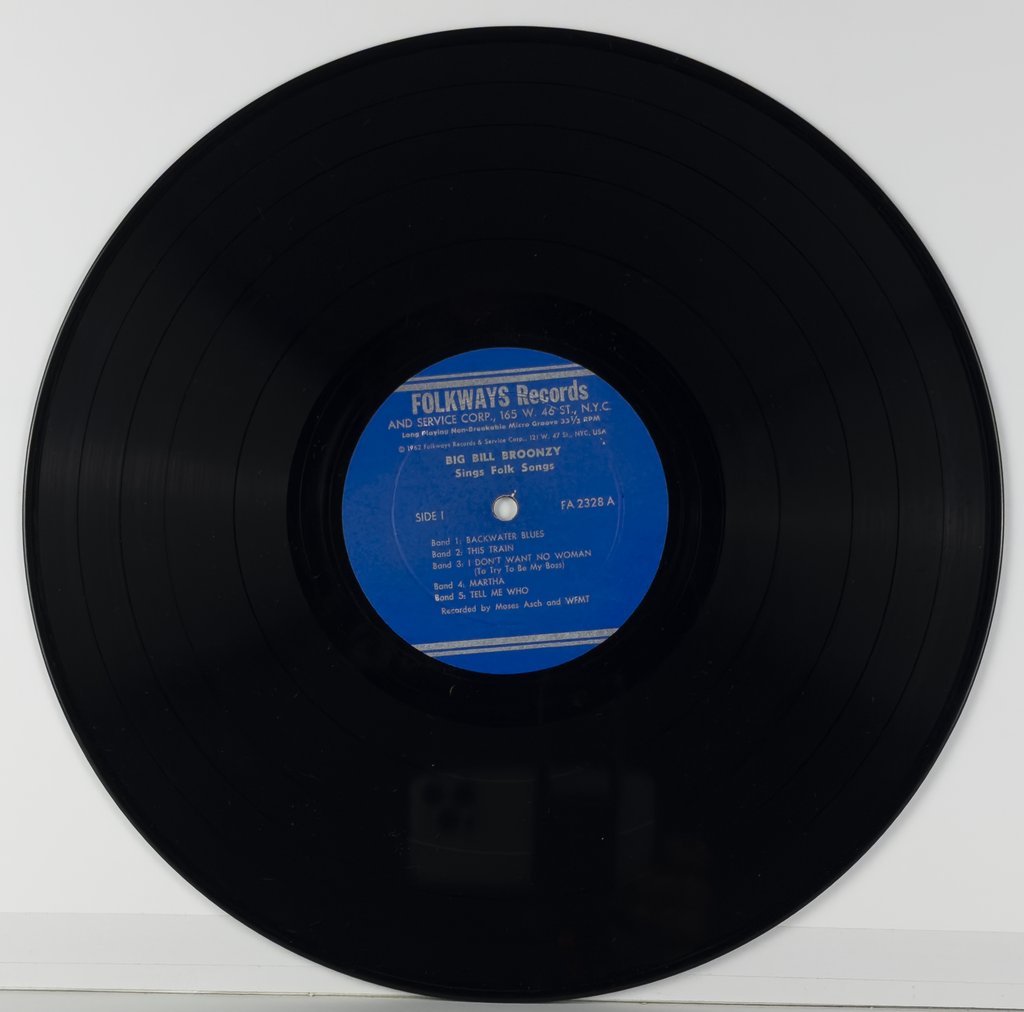
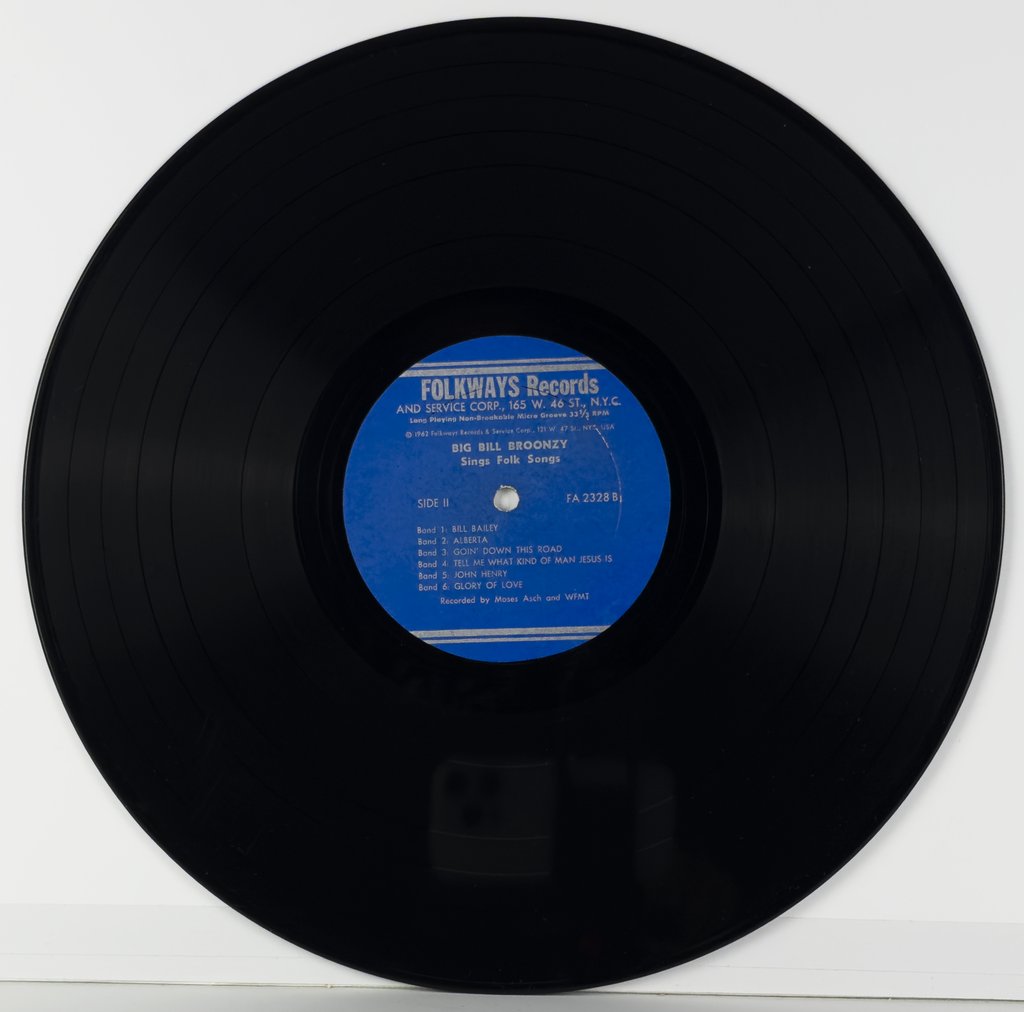
Lot Details
| Artist | Big Bill Broonzy |
|---|---|
| Album Title | Sings Folk Songs |
| Format Details | Vinyl (LP, Album) |
| Label | Folkways Records |
| Publication Year | 1962 |
| Genre | Blues, Folk, World, & Country |
| Style | Delta Blues, Country Blues |
| Track Count | 11 |
| Catalog Number | FA 2328 |
Identifiers
| Matrix / Runout (Side A Label) FA 2328 A |
| Matrix / Runout (Side B Label) FA 2328 B |
| Matrix / Runout (Side A Runout) FA-2328-A 20-3 1'62 |
| Matrix / Runout (Side B Runout) FA-2328-B 20-3 1'62 |
| Pressing Plant ID () P |
Big Bill Broonzy
Big Bill Broonzy was born Lee Conley Bradley on June 26, 1893 (though he often claimed 1898) in Scott County, Mississippi, to parents who had been born into slavery. One of 17 children, he grew up in Arkansas where he learned to play homemade instruments, including a violin made from a cigar box. After serving in World War I, Broonzy moved to Chicago in 1920 as part of the Great Migration, initially working as a Pullman porter and factory laborer while developing his guitar skills. He learned from Papa Charlie Jackson and other blues musicians in Chicago's thriving Black music scene. By 1926, he was performing professionally and made his first recordings for Paramount Records in 1927. His early career coincided with the rise of recorded blues music, positioning him to become one of the genre's most prolific and influential artists.
Broonzy's recording career spanned over 30 years, during which he recorded approximately 350 songs for various labels including Vocalion, Columbia, Mercury, and Chess. His musical style evolved significantly throughout his career, beginning with country blues in the 1920s and 1930s, transitioning to small combo blues in the 1940s, and later embracing folk blues for white audiences in the 1950s. In the 1930s, he became a central figure in Chicago's blues scene, serving as a talent scout and session musician while leading his own groups. His songs from this period, including "Key to the Highway" (1941) and "All By Myself," became blues standards covered by countless artists. During the 1940s, he recorded with small combos featuring piano, bass, and drums, helping establish the Chicago blues sound that would influence Muddy Waters and other electric blues pioneers.
The post-World War II era brought significant changes to Broonzy's career as blues popularity declined among Black audiences who increasingly favored jump blues and R&B. Recognizing these market shifts, Broonzy successfully reinvented himself for the emerging folk revival movement. He simplified his guitar style, adopted acoustic performances, and crafted a romanticized personal history that appealed to white folk audiences. His autobiography "Big Bill Blues" (1955), written with Yannick Bruynoghe, mixed fact with fiction, claiming he was born in 1898 and had been a sharecropper, creating a persona that fit folk revival expectations. This transformation proved commercially successful - he toured Europe extensively from 1951 onward, performing at major venues including London's Royal Festival Hall and appearing on BBC television. These European tours earned him approximately £1,000-2,000 per tour, substantial income for a blues musician of that era.
Broonzy's influence on blues and popular music extends far beyond his commercial recordings. He served as a crucial bridge between rural country blues and urban Chicago blues, mentoring younger musicians including Muddy Waters, who credited Broonzy with helping him establish his career in Chicago. His guitar technique, combining Mississippi Delta styles with ragtime influences, created a sophisticated approach that influenced folk guitarists like Bob Dylan and Eric Clapton. As a songwriter, he composed over 300 songs addressing themes from rural life to urban experiences, from personal relationships to social commentary. His song "Black, Brown and White" (1947), though not released until after his death due to its racial content, became an important civil rights anthem. His willingness to adapt his music for different audiences demonstrated commercial pragmatism while maintaining artistic integrity.
Broonzy's later years saw him battling throat cancer while continuing to perform and record. His final sessions in 1957 produced some of his most emotionally powerful work, including "When I Been Drinkin'" and reinterpretations of earlier songs. He died on August 15, 1958, in Chicago, just as the folk revival he helped inspire was gaining momentum. His funeral drew hundreds of mourners from Chicago's blues community and the emerging folk scene. The Folk Song Society posthumously released several albums that introduced new generations to his music. His estate, managed poorly, generated little income for his widow, reflecting the exploitative nature of blues recording contracts during his era.
Big Bill Broonzy's legacy encompasses multiple dimensions of American music history. He recorded in every blues style from solo country blues to electric Chicago blues, documenting the genre's evolution across three decades. His approximate 350 recordings provide an invaluable archive of blues history, though many original recordings were destroyed when labels discarded metal masters during World War II. His influence appears in the work of blues giants like Muddy Waters and folk revivalists like Pete Seeger, who called him "the greatest blues singer I ever heard." Modern blues historians recognize him as crucial to understanding how rural blues transformed into urban styles. His ability to navigate racial boundaries in severely segregated America, performing for both Black and white audiences while maintaining respect in both communities, demonstrated remarkable cultural diplomacy. Reissue programs have made his music available to contemporary audiences, with comprehensive box sets documenting his various stylistic periods. While never achieving the fame of some contemporaries, Broonzy's combination of musical versatility, prolific output, and historical importance establishes him as one of the foundational figures in American blues music.
Winnipeg Collectibles Auction
October 15 - October 29, 2025
BidLots operates as a division of Mayberry Holdings Ltd t/a Mayberry Fine Art
Contact us below to preview this lot or to sell similar items.
212 McDermot Ave, Winnipeg MB
(204) 255-5690
[email protected]
|
Bidding Range
|
Increment
|
|---|---|
| $0.00 - $50.00 | $1.00 |
| $50.00 - $100.00 | $5.00 |
| $100.00 - $500.00 | $10.00 |
| $500.00 - $1,000.00 | $25.00 |
| $1,000.00 - $5,000.00 | $50.00 |
| $5,000.00 - $10,000.00 | $100.00 |
| $10,000.00 - $20,000.00 | $200.00 |
| $20,000.00 - $50,000.00 | $500.00 |
| $50,000.00 - $100,000.00 | $1,000.00 |
| $100,000.00+ | $5,000.00 |
All items are shipped fully insured by Canada Post or by courier depending on service availablity.
Records, Comics and Paper Items: Flat rate $25 shipping for single items anywhere in Canada. Contact us for a quote on multiple items, special requests or international shipping.
Manitoba orders: GST (5%) and PST (7%) will be added to all orders picked up or shipped within Manitoba.
Other Canadian provinces: GST or HST will be added based on your province's rate.
US & International orders: No Canadian taxes apply. You may be responsible for import duties or taxes in your country.
Login or register a BidLots.com account to participate in any auction. Track specific lots and artists with real-time notifications on all bidding activity.
Becoming an approved bidder takes three simple steps:
1. Create a BidLots account
2. Confirm your email address
3. Add a valid billing profile
Note: BidLots or the auctioneer reserves the right to revoke bidding privileges if your account is not in good standing or violates our terms and conditions of sale.
A buyer's premium is an additional fee charged to winning bidders, typically ranging from 10% to 20% of the winning bid amount. The specific premium for each auction is clearly displayed on lot listings and paddle registration forms.
Bidding starts at the reserve price and increases by predetermined increments based on the current bid range. These increments are clearly shown on each lot's detail page. All bids (including maximum and single bids) must follow these preset increments to prevent duplicate bids.
Single bid cancellations are at the auctioneer's discretion. For maximum bids:
You can increase your maximum bid amount
Decreases require auctioneer approval
Changes won't be permitted if the lot closes within 24 hours or has significant activity
To request bid changes, use the "Ask a question" button on the lot's detail page
You'll be notified of winning bids in three ways:
Email notification (or Text notification if enabled)
Listed on your "Bidding Results" page
Highlighted message on auction pages when logged in
Shipping options vary based on item size, weight, and location. You'll select shipping preferences during auction registration. The auctioneer will provide specific shipping quotes after auction close. For special shipping requirements, please contact the auctioneer before bidding.
After the auction closes, you'll receive a detailed invoice including shipping costs. Payment options include:
Credit card (online)
Electronic Fund Transfer (EFT)
Bank draft
International wire transfer
Registered credit cards will be automatically charged for any outstanding balance 5 days after the close of a sale unless alternative payment arrangements have been made.