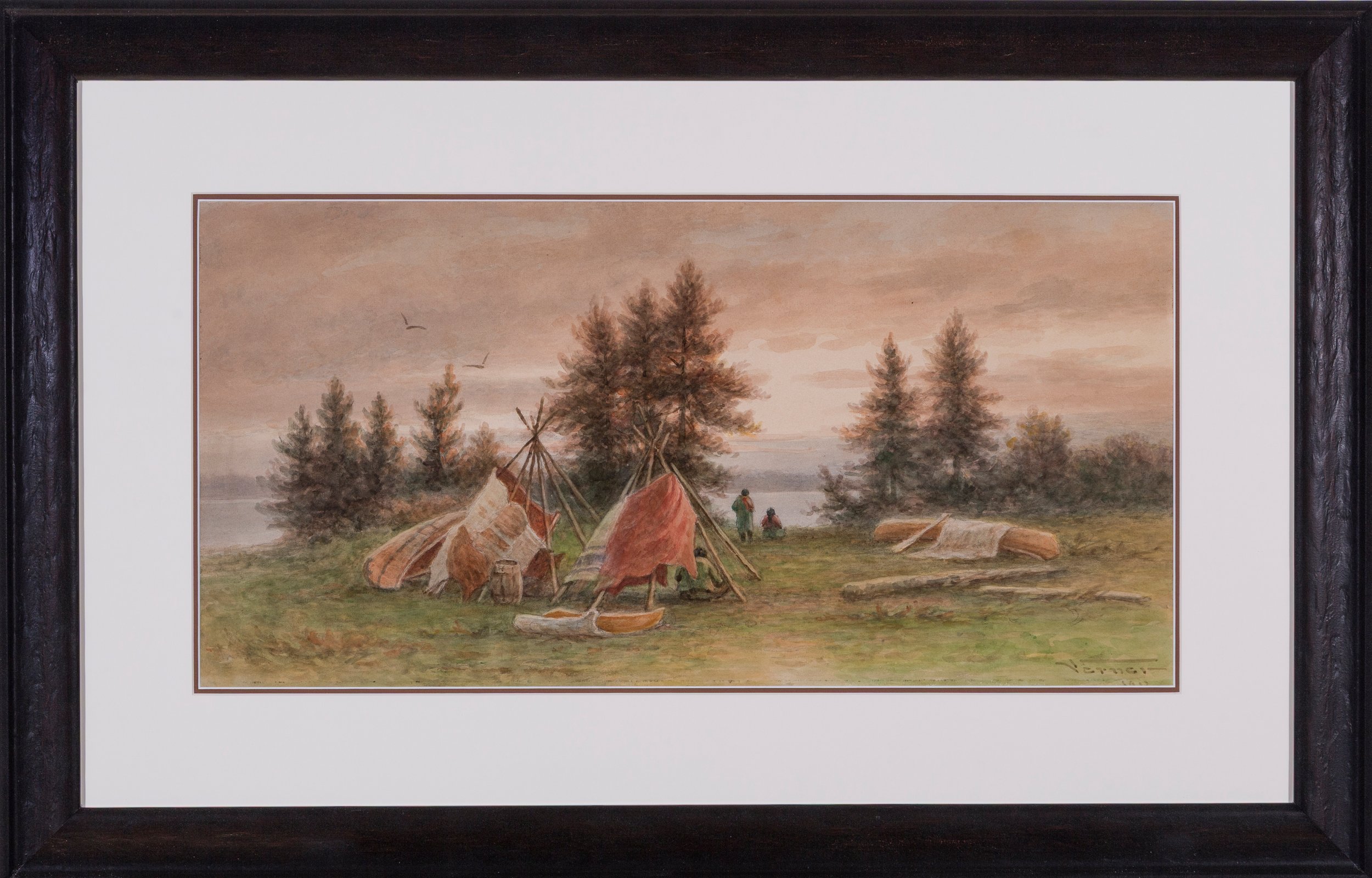
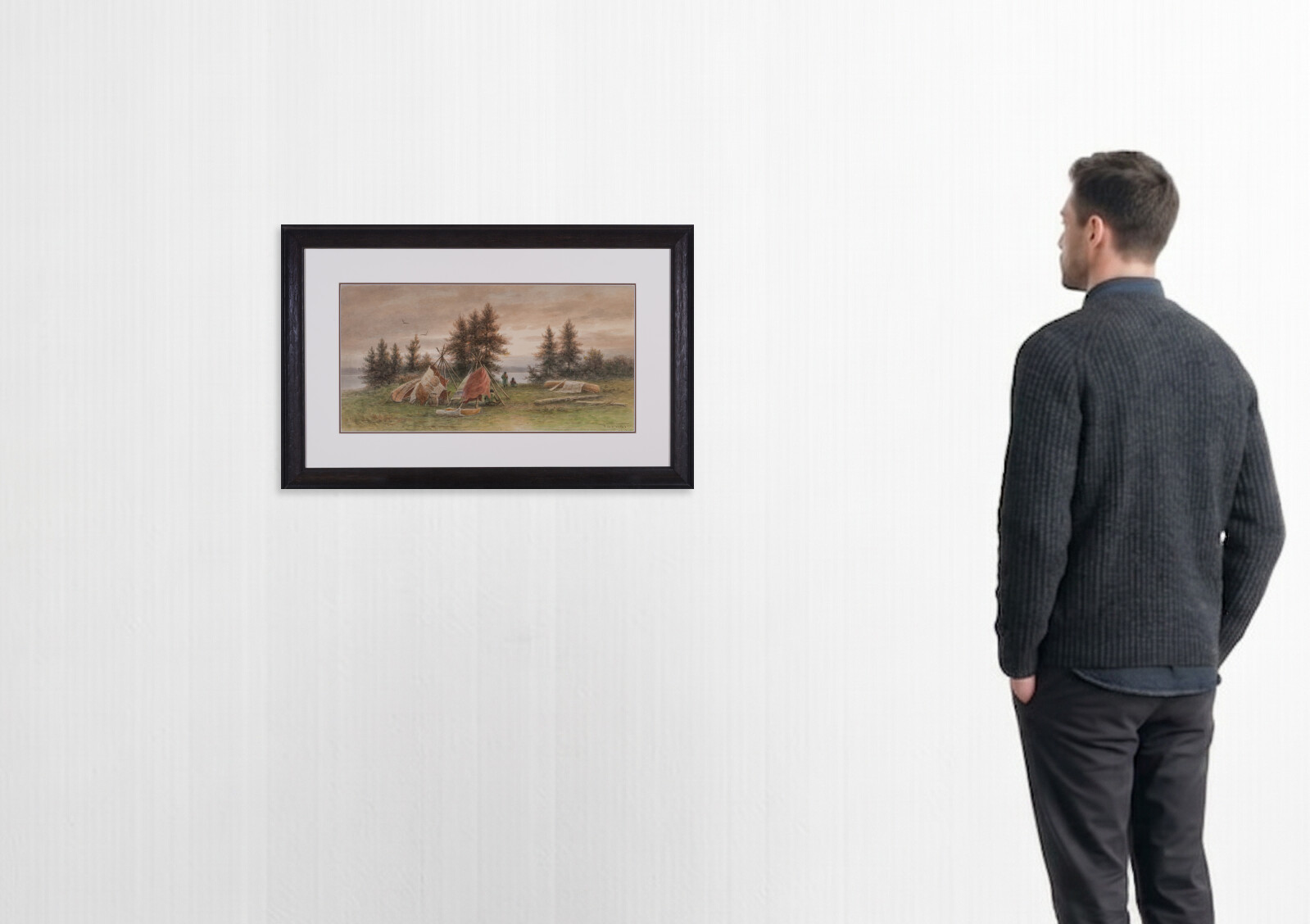
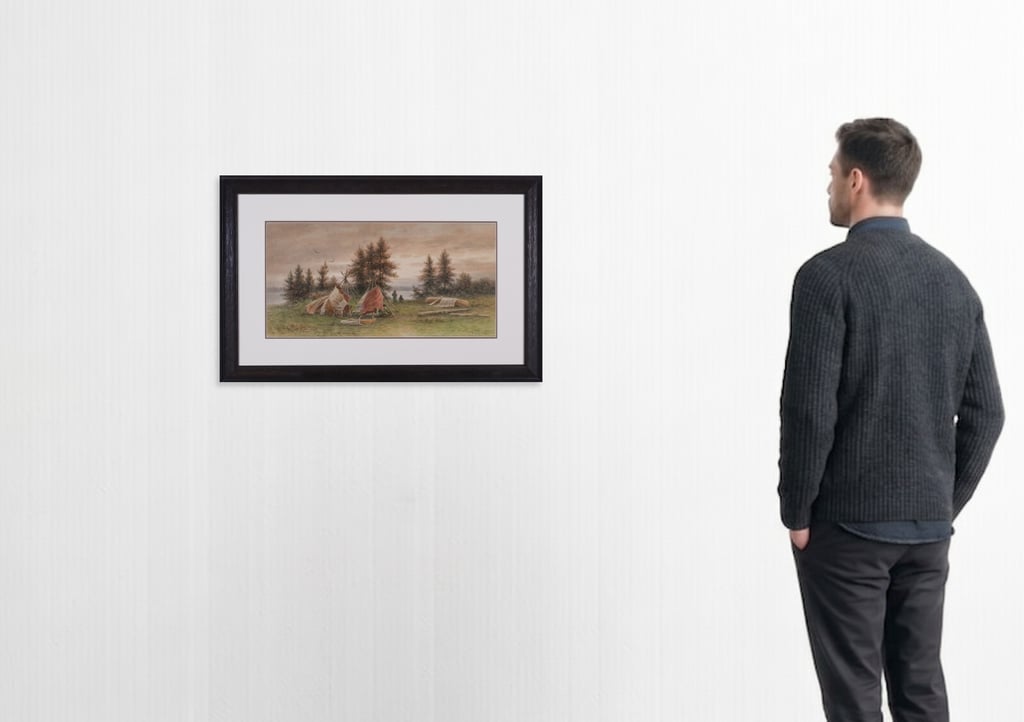
21.5 x 33.5 in (54.6 x 85.1 cm) including frame
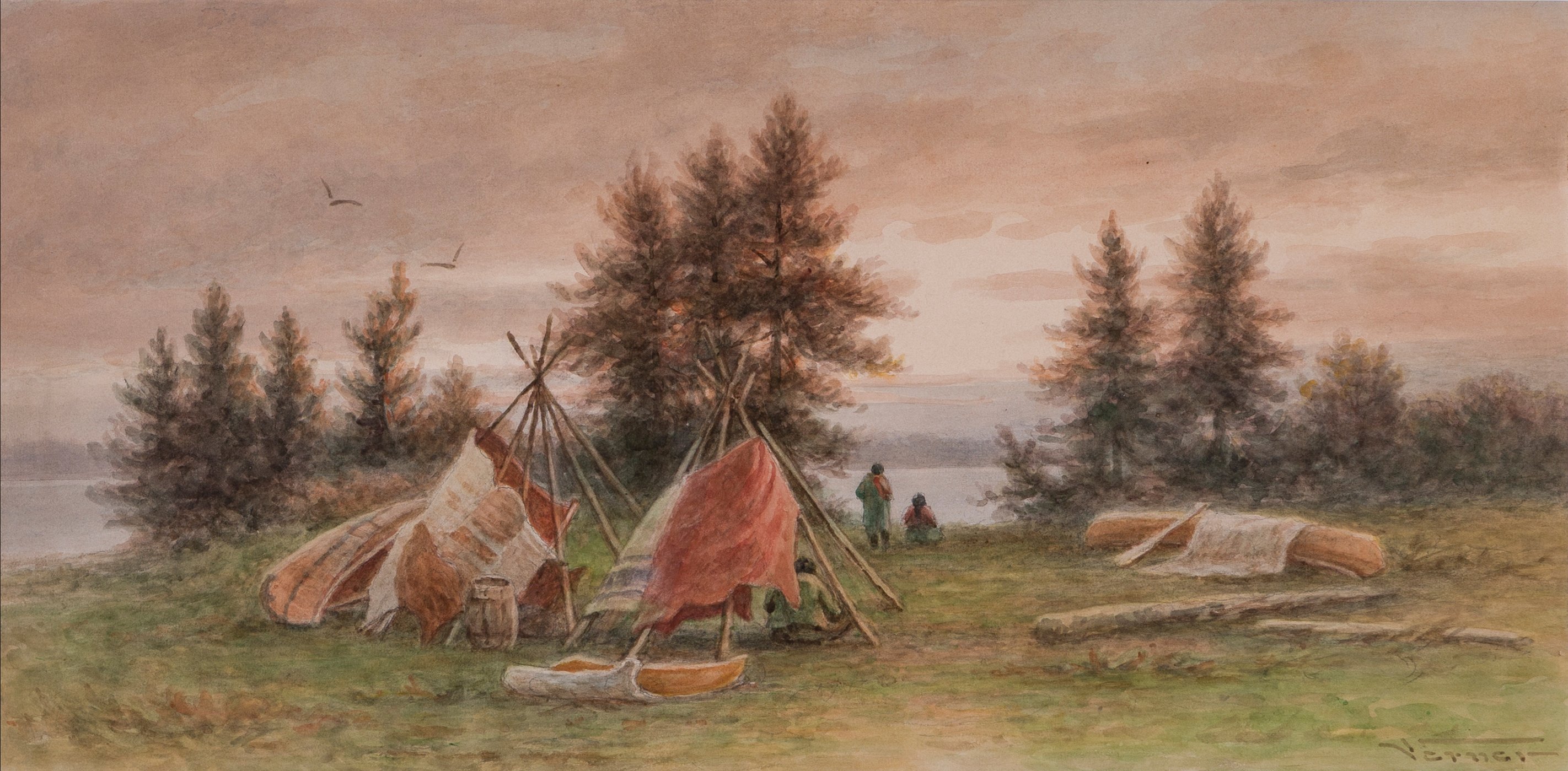
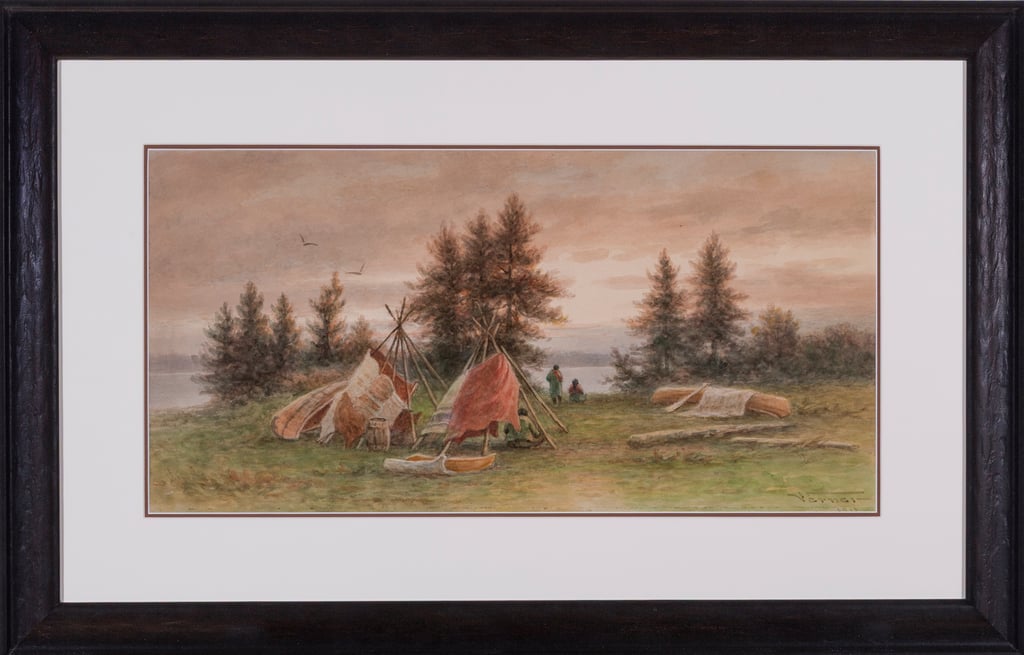
Frederick Arthur Verner was a Canadian painter best known for his atmospheric depictions of Indigenous life and the buffalo on the western plains. This 1913 watercolour, Untitled (River Encampment), is a late-career work that demonstrates his mastery of the medium and his characteristic use of a panoramic format. The scene depicts an Indigenous camp along a riverbank at twilight, rendered with soft washes of color.
The composition features two birch bark canoes resting near temporary shelters made of poles and draped skins. Several figures are visible: one seated near the shelters and two others standing at the water's edge, looking out across the river. Verner utilizes a muted, tonalist palette of ochres, soft greens, and hazy pinks to capture the low light of a setting sun. The hazy, misty atmosphere obscures the distant shoreline, focusing the viewer’s attention on the quiet, still quality of the encampment.
Private Collection, Toronto
(Includes Buyer's Premium)
Frederick Arthur Verner
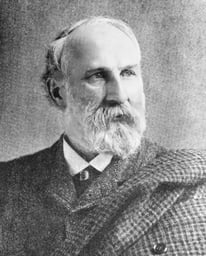
Frederick Arthur Verner was born on February 26, 1836, at Hammondsville (later Sheridan), Upper Canada, now part of Mississauga, Ontario. As a boy, he was fascinated by the paintings of Paul Kane and attempted unsuccessfully to become his pupil. In 1856, Verner traveled to London where he studied at Heatherley School of Fine Art and the British Museum until 1858. He then enlisted in the 3rd West Yorkshire Regiment, achieving the rank of lieutenant. In 1860, he joined the British Legion under Garibaldi to fight in the Italian unification campaign, and rejoined the 3rd West Yorkshire Regiment in 1861.
Verner returned to Toronto in 1862, where he established a photography business and created oil portraits from photographs, including portraits of Indigenous subjects that marked the beginning of his painting career. In 1873, he accompanied Lieutenant-Governor of Manitoba Alexander Morris to the signing of Treaty Three, the Northwest Angle Treaty, at Lake of the Woods. The sketches and watercolours he made during this trip, now held in the National Gallery of Canada, became source material for paintings throughout the rest of his life. He also studied buffalo extensively beginning in 1875, using these sketches as the basis for paintings, though he may never have seen buffalo in the wild.
Verner became a founding member of the Ontario Society of Artists in 1872 and exhibited with the group almost every year until shortly before his death. In 1880, he moved permanently to London, England, though he continued to visit Canada periodically. He exhibited widely in Toronto, Montreal, New York, Philadelphia, Buffalo, St. Louis, and London. In 1893, he was made an Associate Member of the Royal Canadian Academy and exhibited with the Academy from its founding in 1880 until near the end of his life. In 1901, he won a gold medal at the Pan-American Exposition in Buffalo, and in 1905 he was elected the first Canadian member of the Royal British Colonial Society of Artists, receiving the diploma in 1910. He also exhibited with the Royal Academy of Arts in London from 1881 to 1900.
Verner's paintings of the Canadian West, particularly his depictions of First Nations people and buffalo, were highly regarded during his lifetime. Toronto's The Globe stated in 1906 that his buffalo paintings represented "a class of subject where he stands almost alone and unrivalled." His work conveyed tranquil, solitary scenes and his ability to capture specific times of day and the light and breadth of the Canadian prairies. His paintings are held in numerous public collections including the National Gallery of Canada, Art Gallery of Ontario, Smithsonian American Art Museum, National Museum of Wildlife Art, Amon Carter Museum of American Art, Glenbow Museum, and Montreal Museum of Fine Arts. Verner married Mary Chilcott in England in 1882 and died in London on May 16, 1928.
Major Spring Fine Art Auction
May 7 - May 28, 2026

661 Wall St, Winnipeg MB
(204) 255-5690
mayberryfineart.com
[email protected]
Contact us to make an appointment to preview this item or to sell similar works.
|
Bidding Range
|
Increment
|
|---|---|
| $0.00 - $50.00 | $1.00 |
| $50.00 - $100.00 | $5.00 |
| $100.00 - $500.00 | $10.00 |
| $500.00 - $1,000.00 | $25.00 |
| $1,000.00 - $5,000.00 | $50.00 |
| $5,000.00 - $10,000.00 | $100.00 |
| $10,000.00 - $20,000.00 | $200.00 |
| $20,000.00 - $50,000.00 | $500.00 |
| $50,000.00 - $100,000.00 | $1,000.00 |
| $100,000.00+ | $5,000.00 |
Login or register a BidLots.com account to participate in any auction. Track specific lots and artists with real-time notifications on all bidding activity.
Bidding approval requires three simple steps:
1. Create a Bid Lots account
2. Confirm your email address
3. Create a valid billing profile
Bid Lots and/or the auctioneer may choose to revoke your bidding privileges if your account is not in good standing or your activity is in conflict with our standard terms and conditions of sale.
The buyer’s premium is an additional percentage charged to the winning bidder. The buyer’s premiums may vary from auction to auction, typically ranging from 10% to 20%. Buyer’s premiums will be displayed on detailed lot listings and paddle registration forms.
Bidding begins at the reserve price and advances at set increments based on the bidding range. The specific bidding increments may vary from auction to auction, however the next bid and subsequent increments will always be clearly defined on detailed lot listings. Maximum Bids and Single Bids can only be placed within the pre-defined bidding increments ensuring that no two bidders can place identical bids on an item. View individual lot detail pages to see a complete range of bidding increments for that item.
Requests to cancel a single bid are at the sole descretion of the auctioneer. Maximum bids can be increased but cannot be decreased unless premitted by the auctioneer. Requests to cancel a bid or to alter a maximum bid will be denied if the specific lot is scheduled to close in less than 24 hours or if the lot has significant interest or activity.
To request that a bid be cancelled or to change a maximum bid use the "Ask a question" button on the detailed lot listing.
You will receive an email notification when you have successfully won an auction. You will also see the item listed on your "Bidding Results" page and if you are logged into the site you will see a highlighted message on the auction catalogue pages and auction listings.
Shipping requirements may vary on different items depending on location and size or weight of an item. When registering for a specific auction you will be provided options to clarify your preferred shipping instructions. The auctioneer will also review and provide specific shipping quotes or options following the close of an auction. If you have specific shipping requirements or are unsure of the shipping constraints on a specific item please contact the auctioneer prior to bidding.
Following the close of an auction the auctioneer will provide a detailed invoice for all items you have won. They may contact you before a final invoice is prepared to confirm or review specific shipping instructions. Payment is due once a final invoice is provided and can be submitted online by credit card, or made by EFT (Electronic Fund Transfer), bank draft or international wire transfer. Any outstanding balance will be automatically charged to your registered credit card 5 days following the close of an auction.