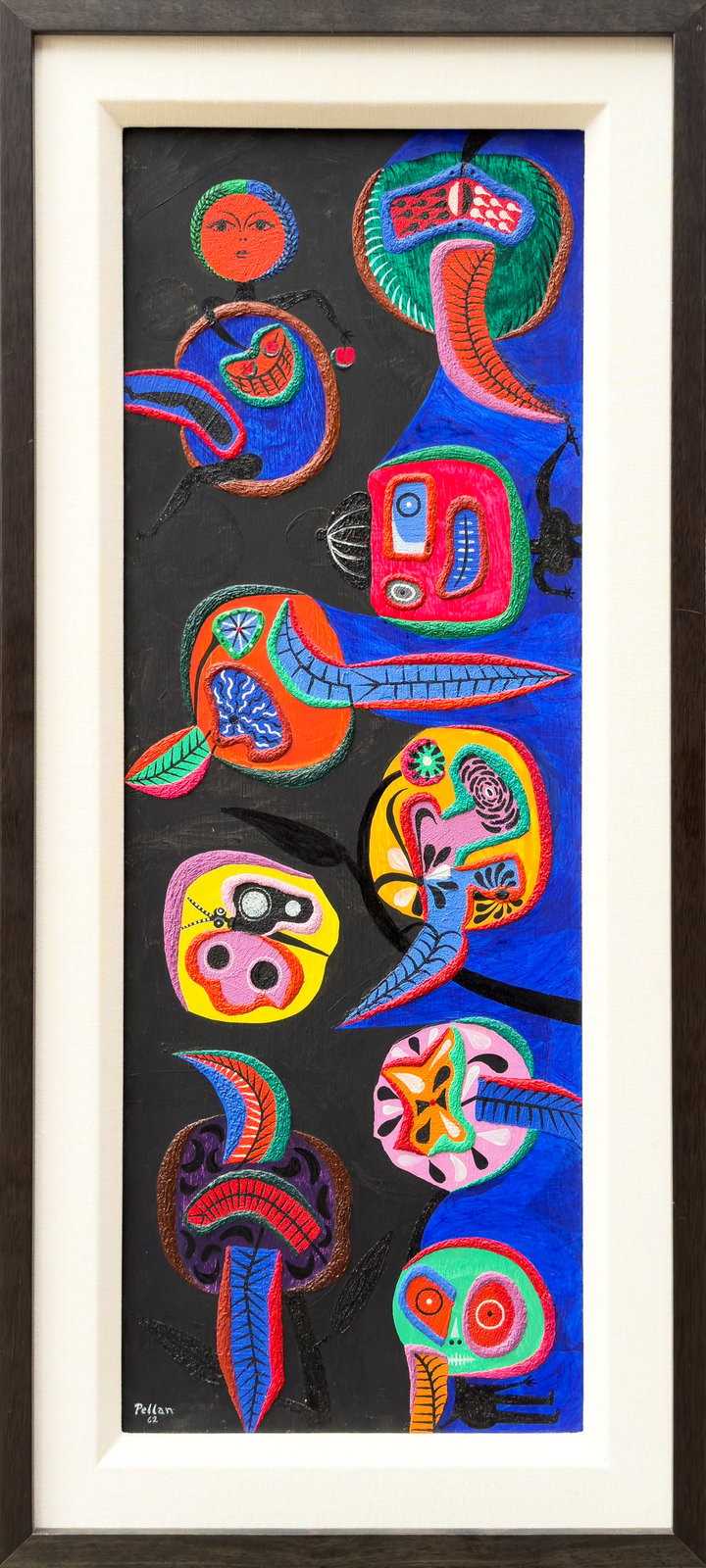
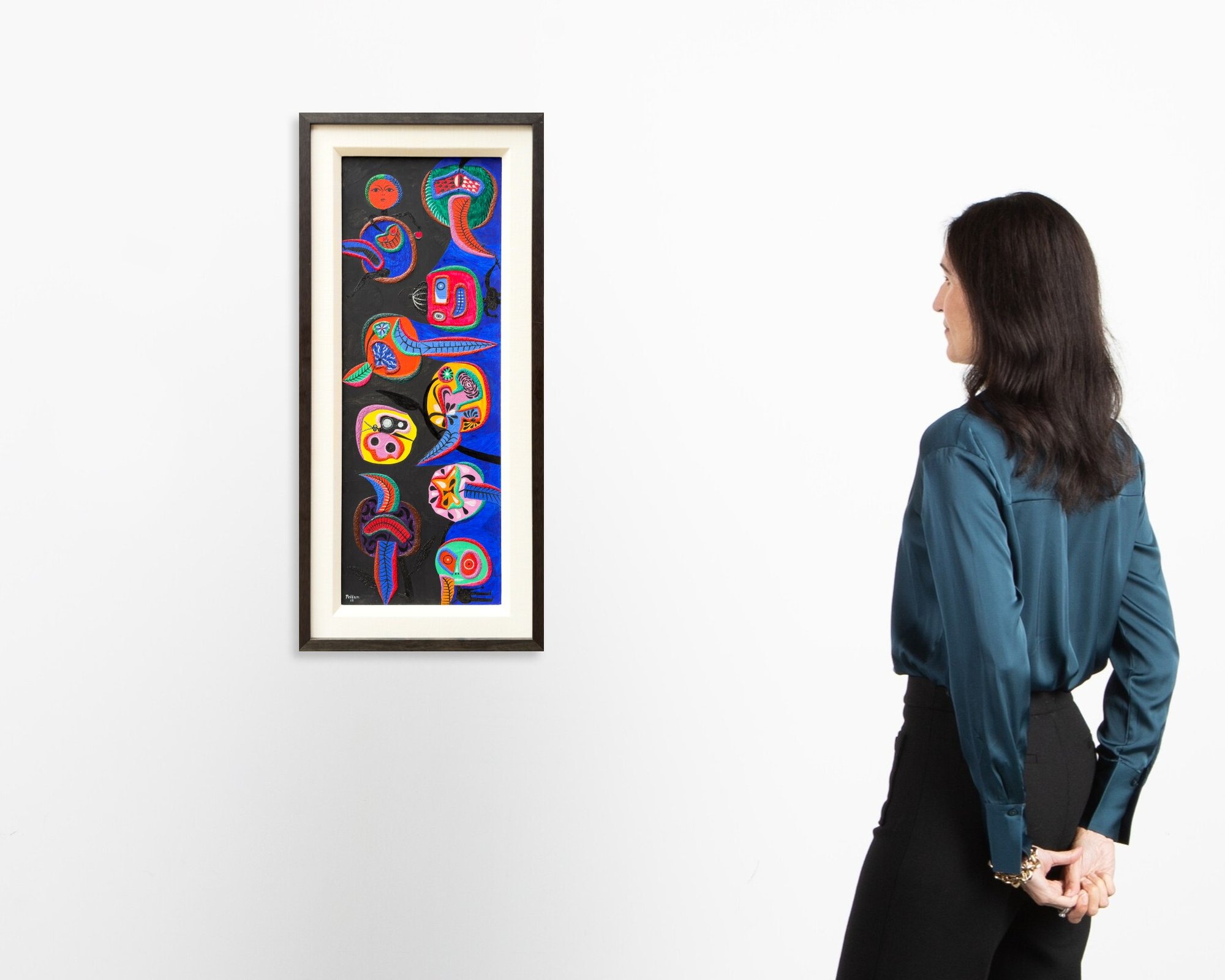
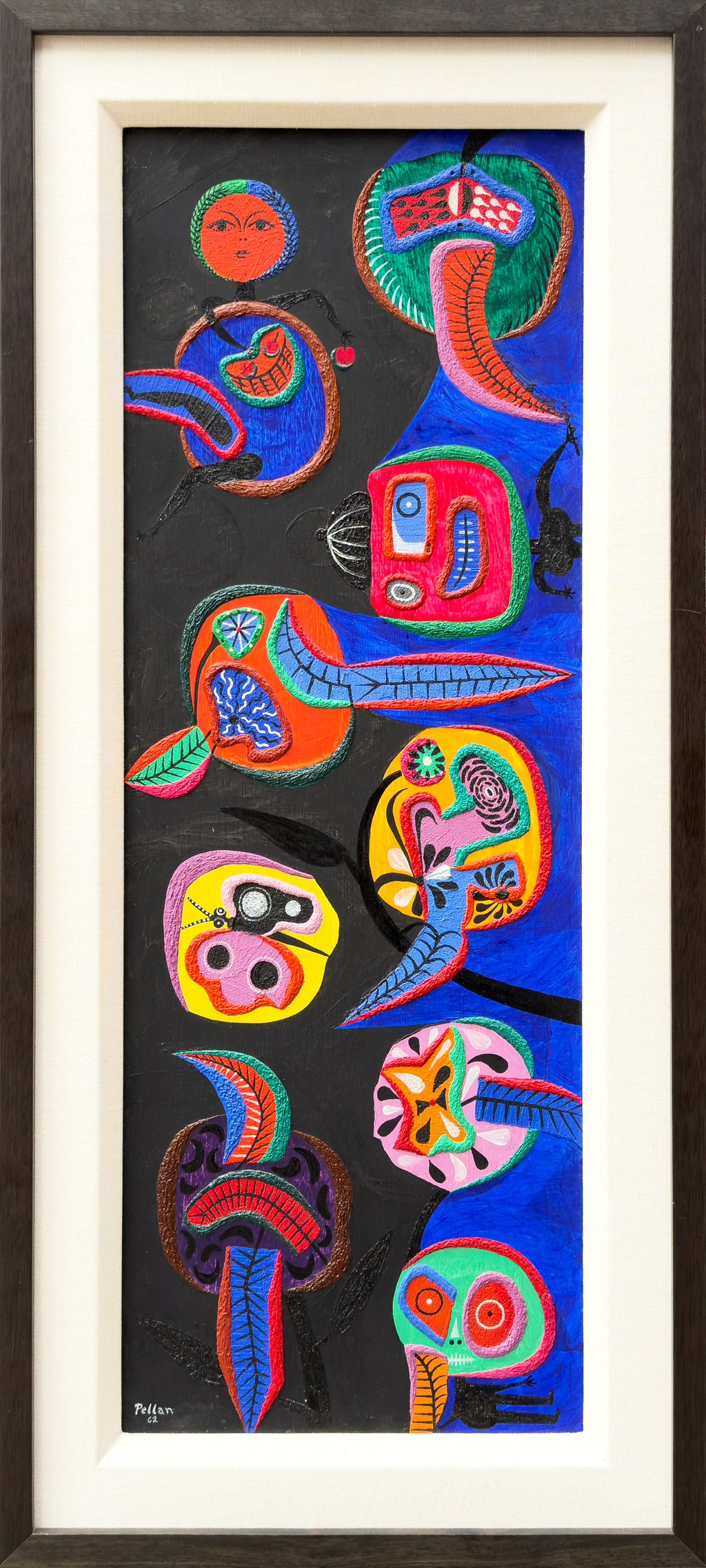
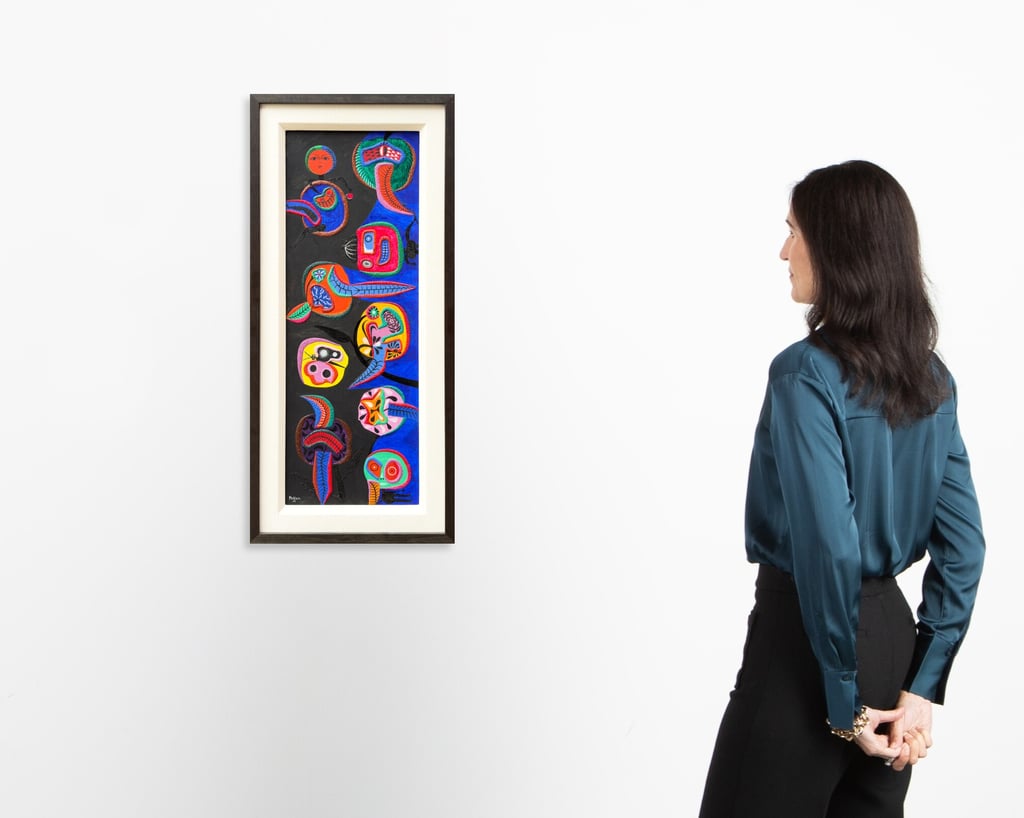
33 x 15 in (83.8 x 38.1 cm) including frame
Alfred Pellan’s prodigious talent was recognized when he was twenty and won a scholarship that gave him the chance to study in France. He left Quebec City for Paris in 1926, returned briefly in 1936 to interview for a teaching job he did not get, and returned to Paris for four more years. While abroad he worked through the history of twentieth-century French modernism on his own terms and participated in group exhibitions with Raoul Dufy, Fernand Léger and Pablo Picasso, and in 1937 had a painting acquired by Musée de Jeu de Paume (now, Musée national d’Art Moderne, Paris).
Pellan’s activity as artist and organizer of artists was ceaseless and prolific. Where his contemporaries Paul Émile Borduas and the Automatistes channeled Surrealism into abstraction with societal implications Pellan was less strident with Prisme d’Yeux. Pellan aspired for painting to address profound spiritual needs through its imagery.
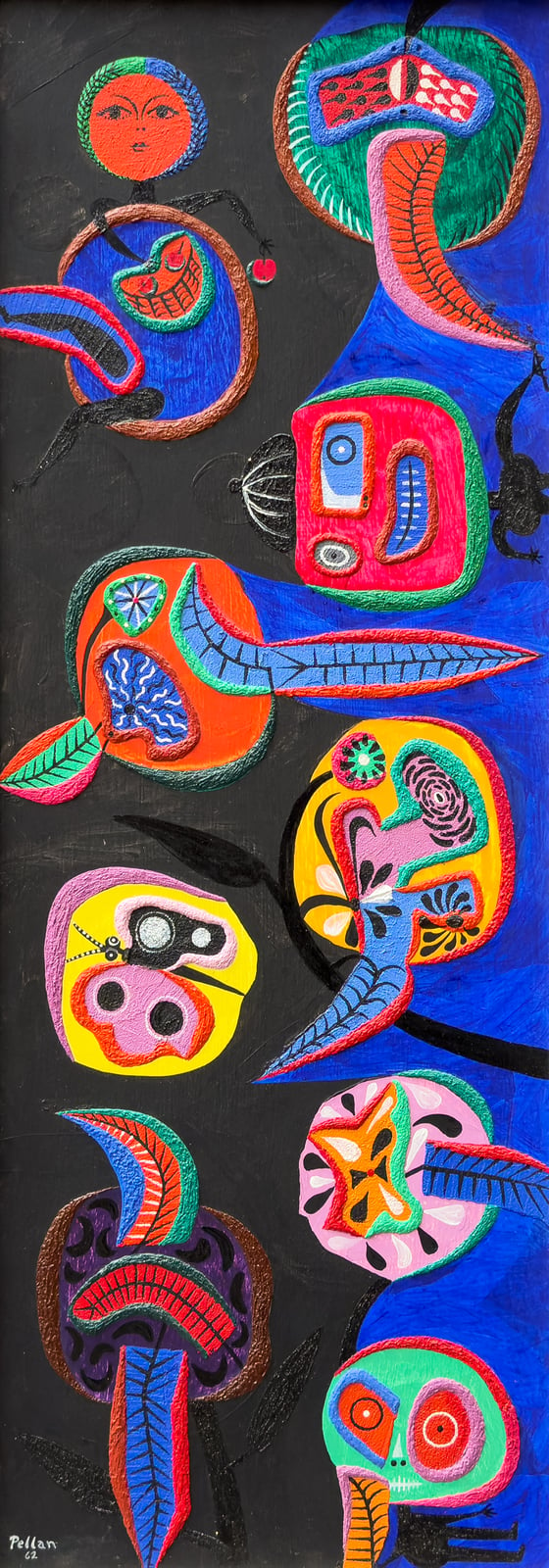
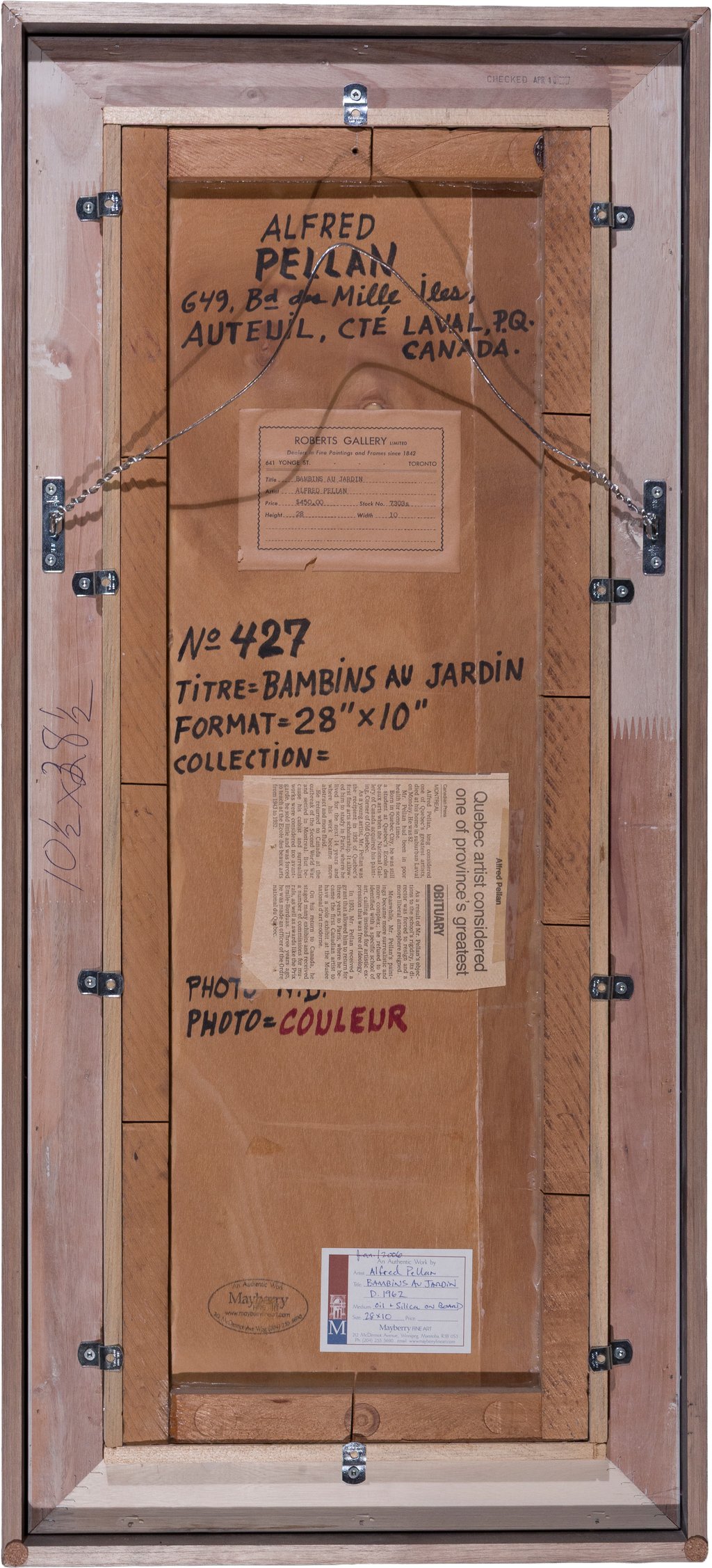
When Bambins au Jardin was shown in Toronto’s Roberts Gallery in November 1964, Kay Kritzwiser’s review in The Globe and Mail quoted Pellan talking about his quest for a poetic expression of plasticity, namely the characteristic of movement within a painting, particularly into and out of the picture. He wanted vibration and vitality in his colour. With his colour pressed pure from the paint tube, sometimes mixed with silica, he succeeded in making lively paintings like Bambins au jardin that were direct, free from theorizing, and open to enjoyment.[1]
[1] Kay Kritzwiser, “Pellan: apostle of art for everybody,” The Globe and Mail (14 November 1964), p. 15.
Thank you to Gregory Humeniuk, independent art historian, consultant and curator, for contributing the preceding essay.
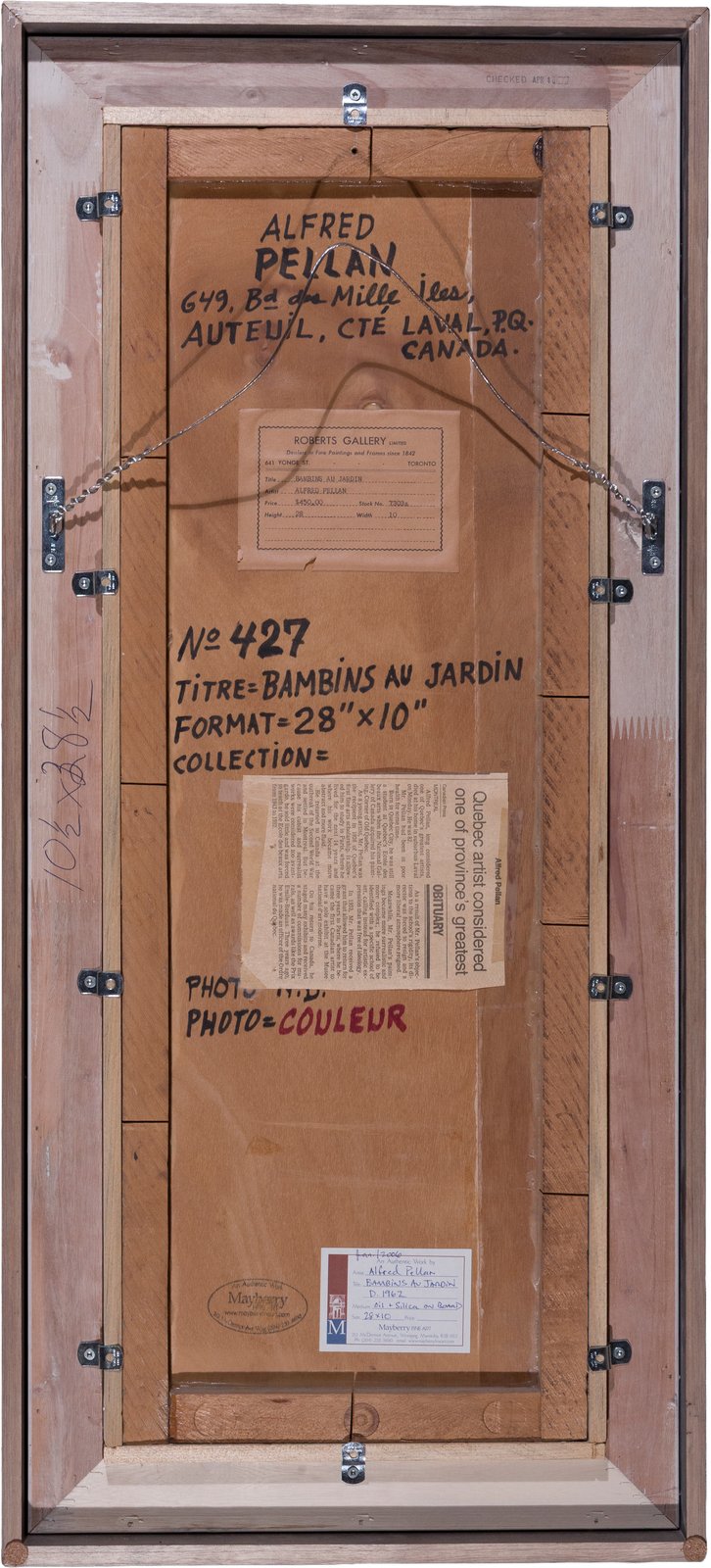
Roberts Gallery, Toronto, 1962
Private Collection, Toronto, 1962
Mayberry Fine Art, Winnipeg
Private Collection, Winnipeg
Alfred Pellan, Roberts Gallery, Toronto, ON, 10-21 November 1964
(Includes Buyer's Premium)
Alfred Pellan
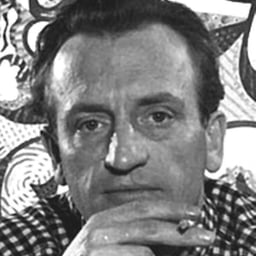
Alfred Pellan was a transformative figure in 20th-century Canadian painting and a pioneer of modern art in Quebec. Born in Quebec City on May 16, 1906, he began his formal art training at the École des beaux-arts de Québec at the age of 14. His early talent was recognized early, and in 1923, at the age of 17, the National Gallery of Canada acquired one of his paintings. In 1926, Pellan became the first recipient of the Quebec government's fine arts scholarship, which allowed him to pursue further studies at the École nationale supérieure des beaux-arts in Paris.
During his time in France, which lasted from 1926 to 1940, Pellan fully engaged with the European avant-garde. He studied the works of Surrealists, Cubists, and Fauvists, incorporating their vibrant palettes, fractured forms, and non-figurative elements into his own practice. He participated in the Parisian art scene, exhibiting alongside renowned international artists. The outbreak of World War II in 1940 compelled him to return to Montreal, where he introduced a radical modern aesthetic that challenged the conservative artistic conventions of the time.
Upon his return, Pellan became an influential educator at the École des beaux-arts de Montréal, where he advocated for artistic innovation and freedom. In 1948, he was a key signatory of the Prisme d'yeux manifesto, which called for artistic independence and an opening toward international modernism. Throughout the 1940s and 1950s, he expanded his practice beyond painting to include book illustration, costume and set design for the theatre, and mural commissions. In 1952, a research fellowship from the Royal Society of Canada enabled a second period in Paris, which culminated in a major solo retrospective of his work at the Musée d'Art moderne de la Ville de Paris in 1955.
Pellan’s career was marked by numerous honors and institutional recognition. He was named a Companion of the Order of Canada (CC) in 1967 and was a member of the Royal Canadian Academy of Arts (RCA). His work remains a staple of Canadian art history, characterized by its imaginative synthesis of Surrealist and abstract influences. Alfred Pellan died on October 31, 1988, in Laval, Quebec. His work is held in the permanent collections of major public institutions, including the National Gallery of Canada and the Musée national des beaux-arts du Québec.
Major Spring Fine Art Auction
May 7 - May 28, 2026

661 Wall St, Winnipeg MB
(204) 255-5690
mayberryfineart.com
[email protected]
Contact us to make an appointment to preview this item or to sell similar works.
|
Bidding Range
|
Increment
|
|---|---|
| $0.00 - $50.00 | $1.00 |
| $50.00 - $100.00 | $5.00 |
| $100.00 - $500.00 | $10.00 |
| $500.00 - $1,000.00 | $25.00 |
| $1,000.00 - $5,000.00 | $50.00 |
| $5,000.00 - $10,000.00 | $100.00 |
| $10,000.00 - $20,000.00 | $200.00 |
| $20,000.00 - $50,000.00 | $500.00 |
| $50,000.00 - $100,000.00 | $1,000.00 |
| $100,000.00+ | $5,000.00 |
Login or register a BidLots.com account to participate in any auction. Track specific lots and artists with real-time notifications on all bidding activity.
Bidding approval requires three simple steps:
1. Create a Bid Lots account
2. Confirm your email address
3. Create a valid billing profile
Bid Lots and/or the auctioneer may choose to revoke your bidding privileges if your account is not in good standing or your activity is in conflict with our standard terms and conditions of sale.
The buyer’s premium is an additional percentage charged to the winning bidder. The buyer’s premiums may vary from auction to auction, typically ranging from 10% to 20%. Buyer’s premiums will be displayed on detailed lot listings and paddle registration forms.
Bidding begins at the reserve price and advances at set increments based on the bidding range. The specific bidding increments may vary from auction to auction, however the next bid and subsequent increments will always be clearly defined on detailed lot listings. Maximum Bids and Single Bids can only be placed within the pre-defined bidding increments ensuring that no two bidders can place identical bids on an item. View individual lot detail pages to see a complete range of bidding increments for that item.
Requests to cancel a single bid are at the sole descretion of the auctioneer. Maximum bids can be increased but cannot be decreased unless premitted by the auctioneer. Requests to cancel a bid or to alter a maximum bid will be denied if the specific lot is scheduled to close in less than 24 hours or if the lot has significant interest or activity.
To request that a bid be cancelled or to change a maximum bid use the "Ask a question" button on the detailed lot listing.
You will receive an email notification when you have successfully won an auction. You will also see the item listed on your "Bidding Results" page and if you are logged into the site you will see a highlighted message on the auction catalogue pages and auction listings.
Shipping requirements may vary on different items depending on location and size or weight of an item. When registering for a specific auction you will be provided options to clarify your preferred shipping instructions. The auctioneer will also review and provide specific shipping quotes or options following the close of an auction. If you have specific shipping requirements or are unsure of the shipping constraints on a specific item please contact the auctioneer prior to bidding.
Following the close of an auction the auctioneer will provide a detailed invoice for all items you have won. They may contact you before a final invoice is prepared to confirm or review specific shipping instructions. Payment is due once a final invoice is provided and can be submitted online by credit card, or made by EFT (Electronic Fund Transfer), bank draft or international wire transfer. Any outstanding balance will be automatically charged to your registered credit card 5 days following the close of an auction.