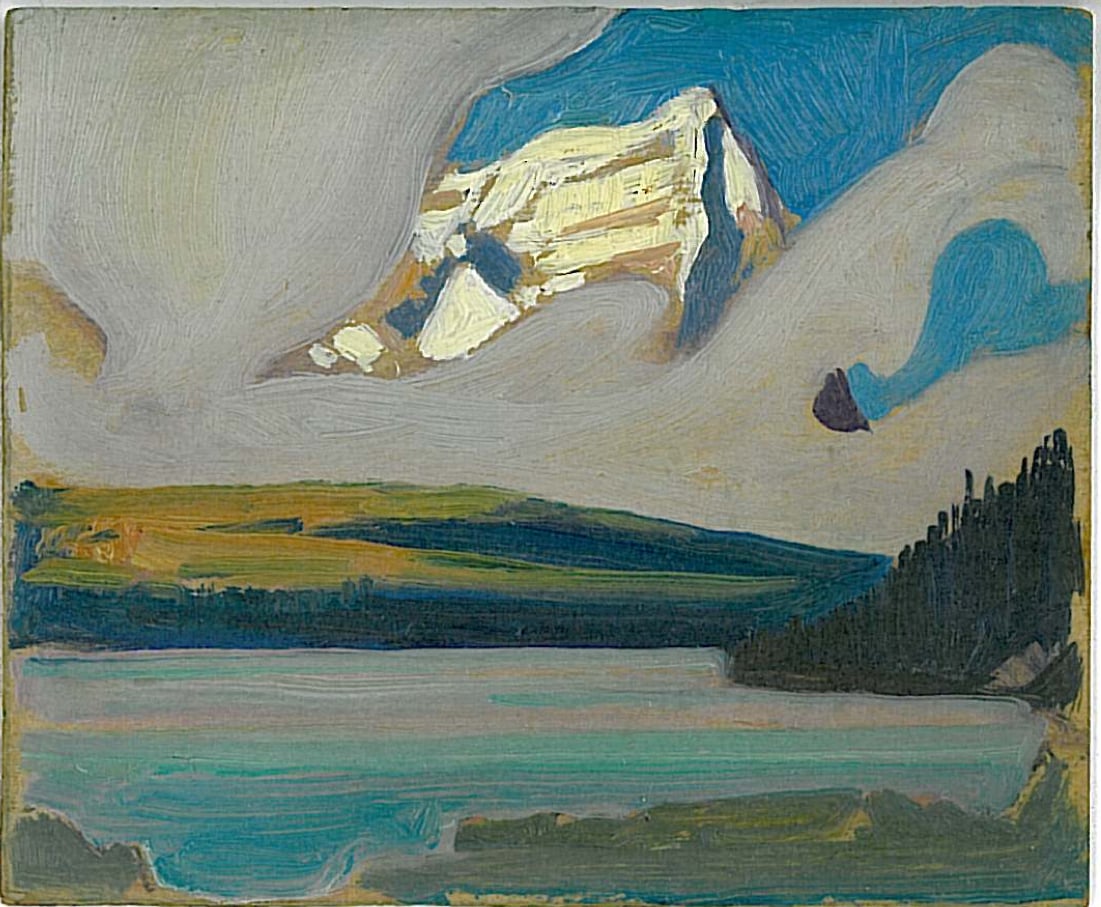
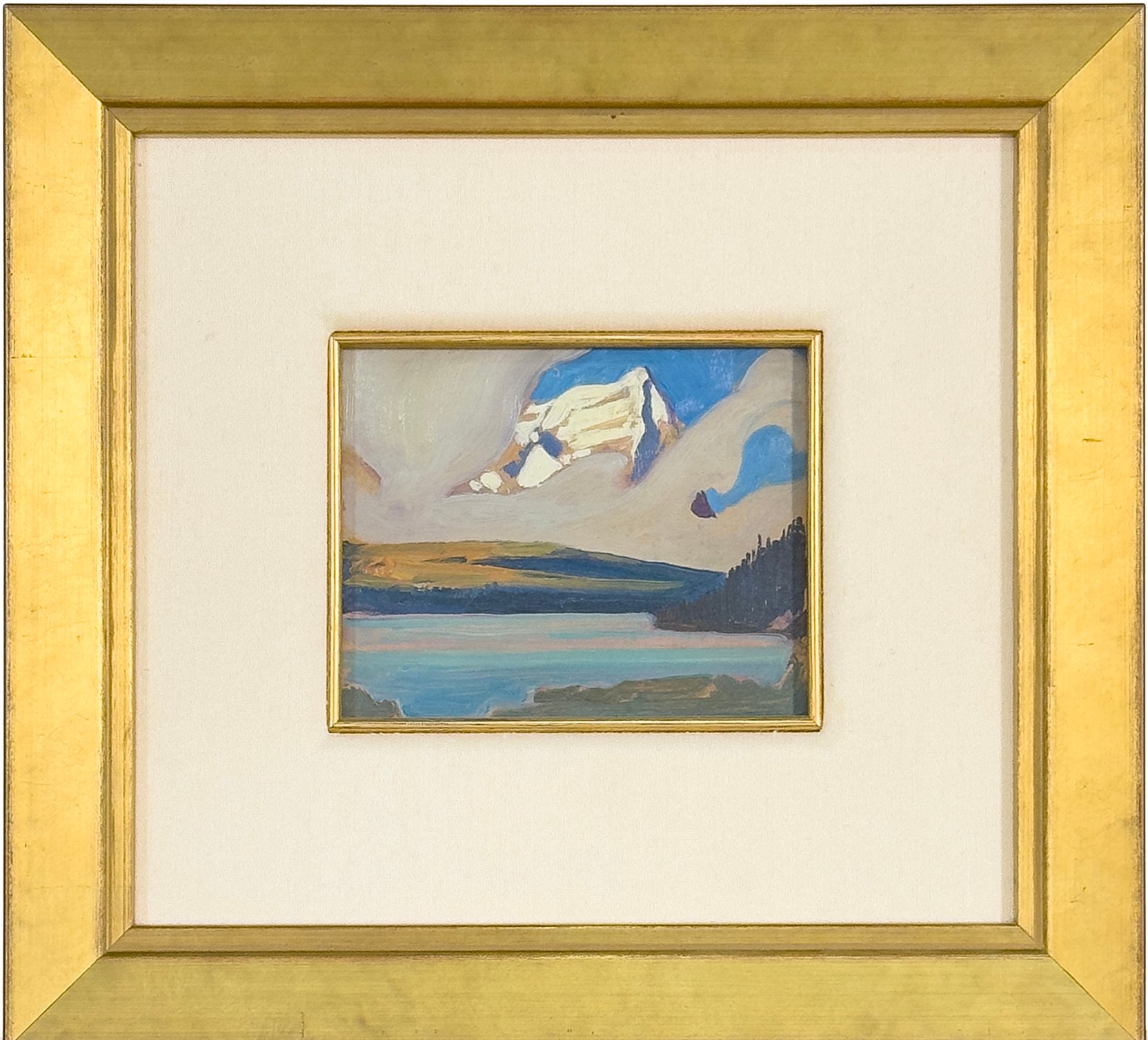
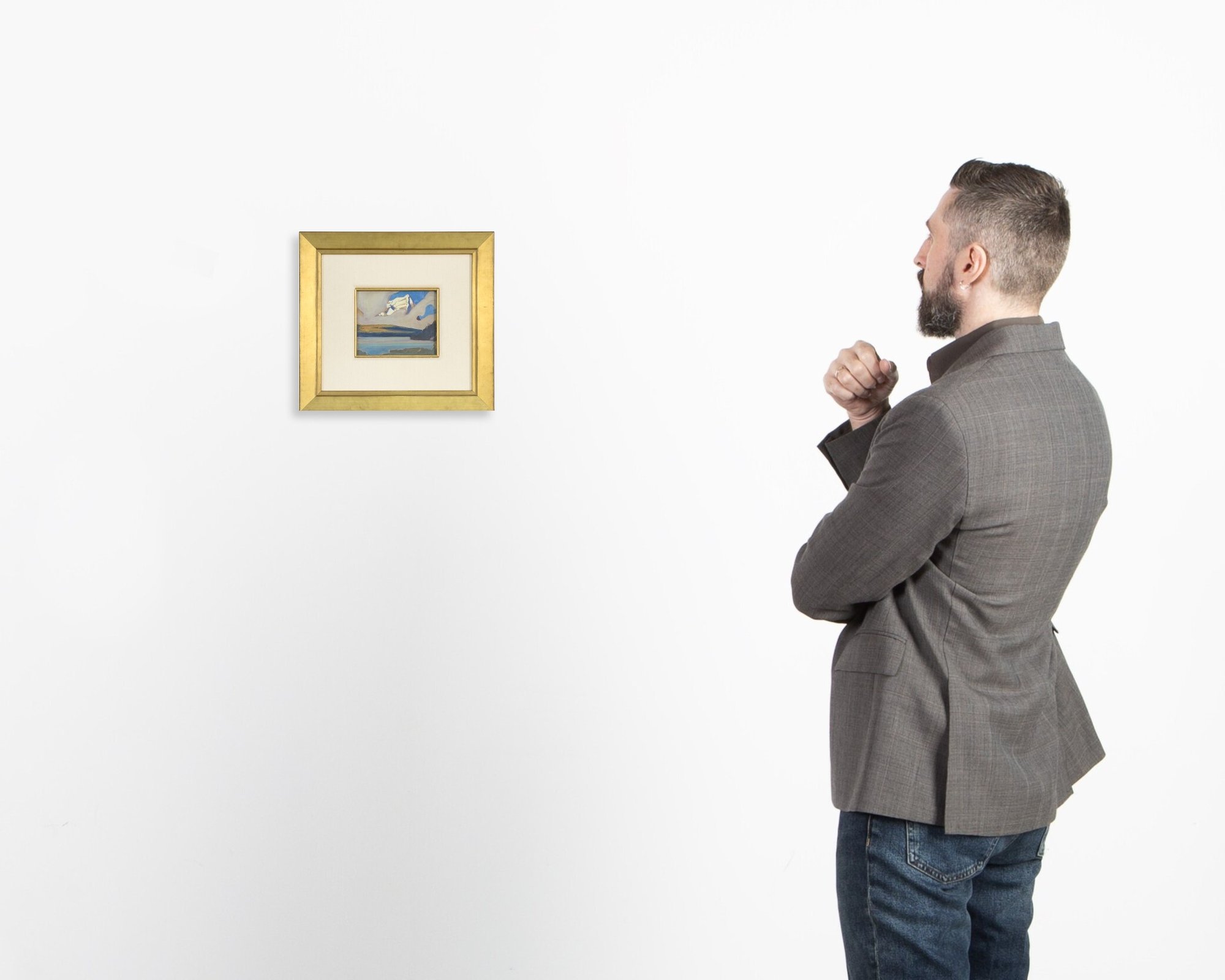
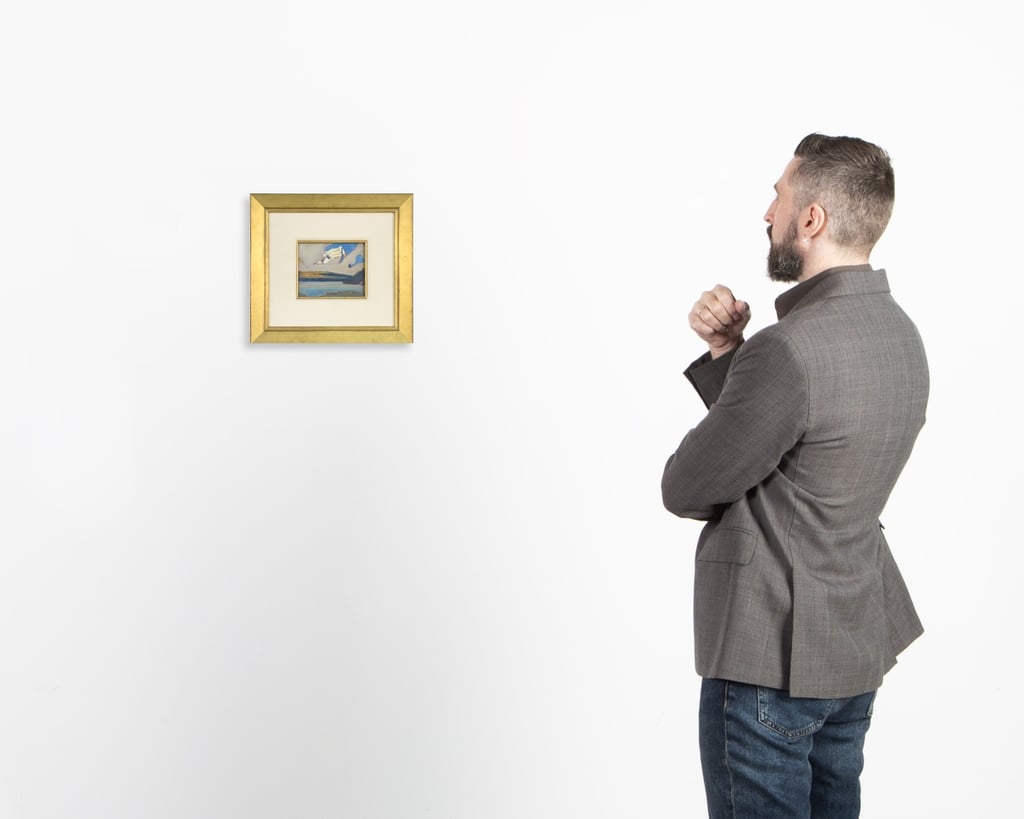
11 x 12 in (27.9 x 30.5 cm) including frame
Notes:
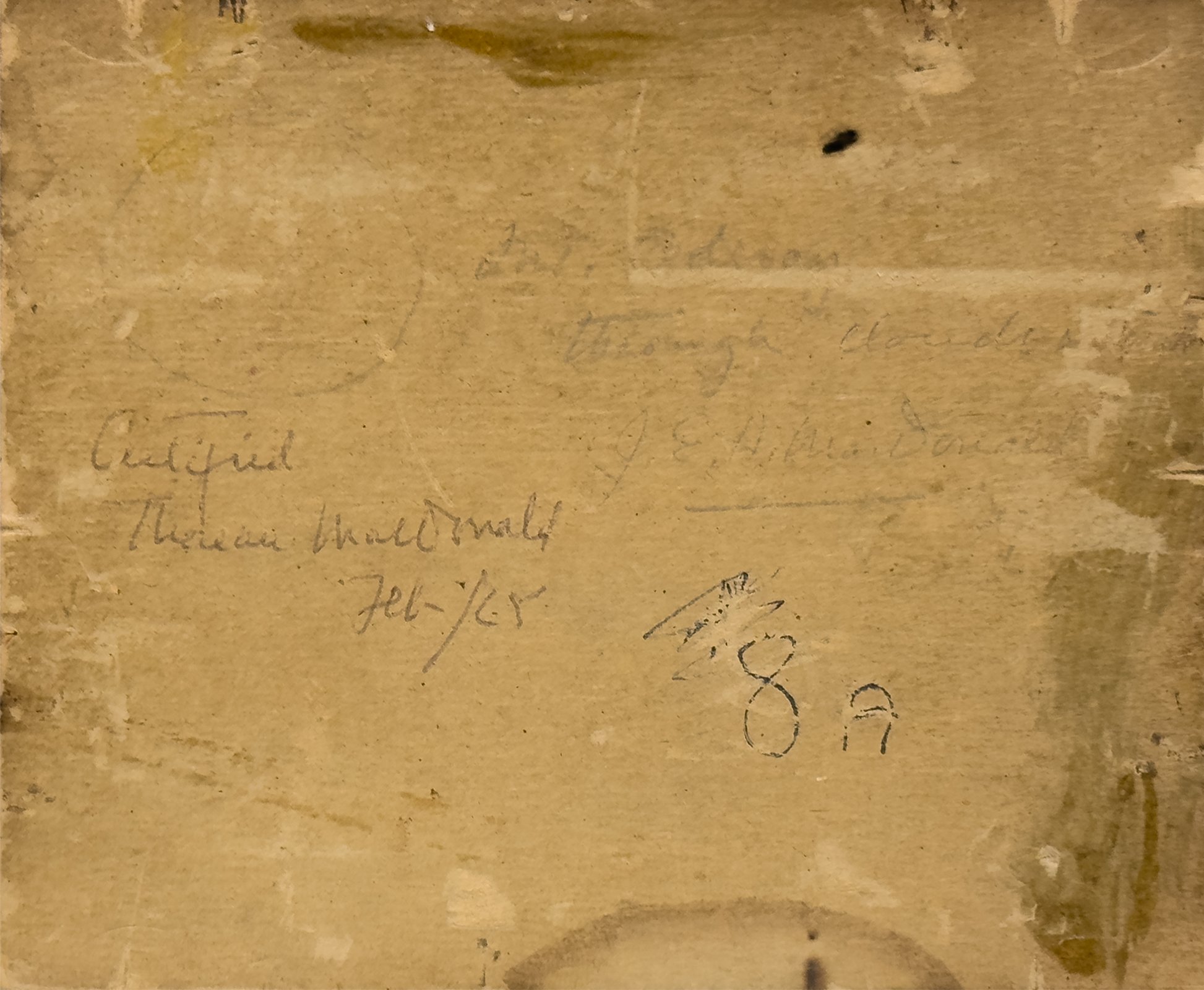
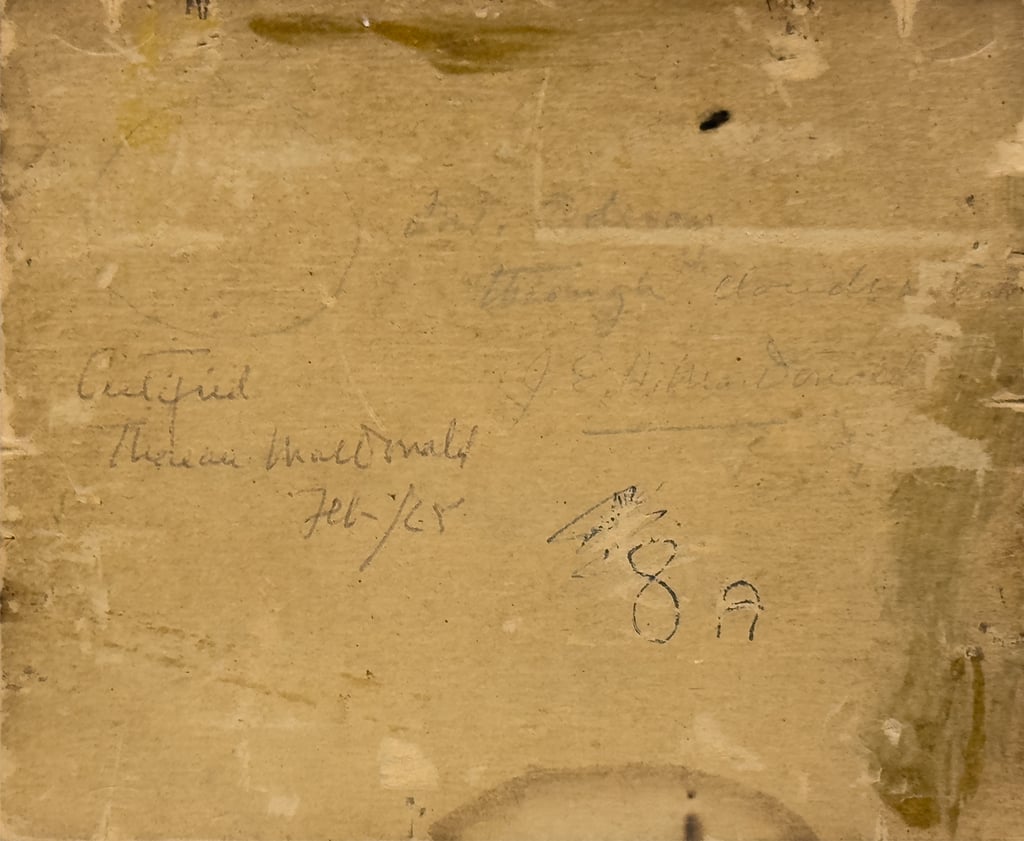
Titled and signed in pencil verso;
Certified by Thoreau MacDonald Feb/65 on verso
Estate stamp on verso
Provenance:
Mayberry Fine Art, Winnipeg;
Private Collection, Winnipeg
(Includes Buyer's Premium)
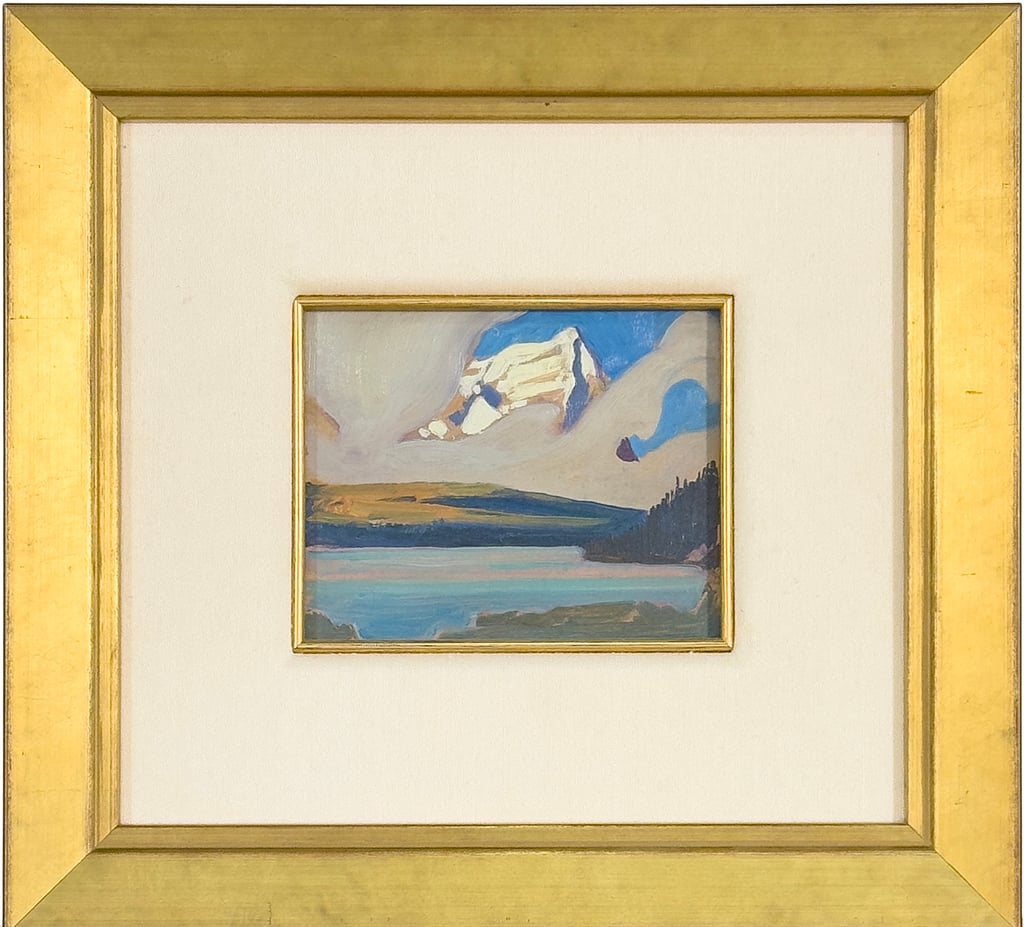
James Edward Hervey MacDonald
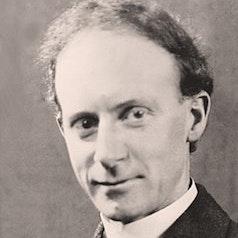
James Edward Hervey MacDonald was born on May 12, 1873, near Durham, England, to an English mother, Margaret Usher, and a Canadian father, William MacDonald, who was a cabinetmaker. In 1887, at age fourteen, he immigrated with his family to Hamilton, Ontario, where he began his first training as an artist at the Hamilton Art School, studying under John Ireland and Arthur Heming. In 1889, the family moved to Toronto, where MacDonald studied commercial art and became active in the Toronto Art Students' League, a society that believed in sketching outdoors. He continued his training at the Central Ontario School of Art and Design, studying with George Agnew Reid and William Cruikshank.
In 1894 or 1895, MacDonald took a position as a commercial designer at Grip Ltd., an important commercial art firm, where he further developed his design skills and, in the coming years, encouraged colleagues—including future artist Tom Thomson, who joined around 1907—to develop their skills as painters. In 1899, MacDonald married Joan Lavis, and two years later they had a son, Thoreau, named after the American writer Henry David Thoreau, one of MacDonald's favorite authors. MacDonald worked as a designer at Grip Ltd. until 1903, then at Carlton Studio in London from 1903 to 1907, and returned to Grip Ltd. in 1907. His design work was strongly influenced by Arts and Crafts designers in England and Canada, especially William Morris, and he became one of Canada's leading graphic designers and the greatest calligrapher of his period.
In 1911, MacDonald resigned his designer position at Grip Ltd. and moved with his wife and child to Thornhill, Ontario, to pursue a career as a landscape artist. To supplement his income, he worked occasionally as a freelance designer until 1921. After developing his own style as a painter, he organized a show of his work at the Arts and Letters Club of Toronto in November 1911. Fellow artist Lawren Harris, a member of the Royal Canadian Academy of Arts, was so impressed with MacDonald's work that he asked if they could work together. Harris encouraged MacDonald to continue painting and show his work whenever possible, and the following year they organized their first joint exhibition. In 1912, MacDonald was widely recognized for his contributions to an exhibition at the Ontario Society of Artists, and Harris later recalled that this show gave him his first recognition of what would become the Group of Seven's ethos.
In January 1913, MacDonald and Harris traveled to the Albright Art Gallery in Buffalo, New York, where they attended the Exhibition of Contemporary Scandinavian Art and saw post-Impressionist and expressionist landscape paintings by artists such as Gustaf Fjaestad and Vilhelm Hammershøi. The two artists felt that the approach to the northern Scandinavian wilderness could be adopted by Canadian painters to create a truly Canadian form of landscape art. Later that year, commercial artists based in Toronto began to congregate around MacDonald and Harris. In the spring of 1913, MacDonald wrote to A.Y. Jackson, inviting him to come to Toronto, which he did in May. In 1914, soon after the outbreak of the First World War, MacDonald created the poster "Canada and the Call" as a promotional piece for the Canadian Patriotic Fund, advertising an exhibition organized by the Royal Canadian Academy of Arts.
In March 1916, MacDonald exhibited "The Tangled Garden" at the Ontario Society of Artists. Though derided by critics of the day, it was a fairly conventional post-impressionistic painting of sunflowers based on sketches MacDonald made in his own garden at Thornhill. Accustomed to the smooth blending and muted tones of Canadian academic art in the style of the Canadian Art Club, critics were taken aback by the brightness and intensity of the colors. The Toronto Daily Star's art critic called it "an incoherent mass of color," and hostile art critics thereafter singled out MacDonald for attacks in the press. MacDonald was devastated by the accidental drowning of Tom Thomson in 1917 and designed a brass plaque to Thomson's memory, which was mounted on a cairn erected at Canoe Lake. After suffering a nervous breakdown in 1917, he also began writing poetry.
In the autumn of 1918, MacDonald, Harris, and other artists interested in their new Canadian approach to painting traveled to the Algoma district north of Lake Superior in a specially outfitted Algoma Central Railway car that functioned as a mobile artist studio. The group would hitch their car to trains traveling through the area, and when they found a scenic location, they would unhitch and spend time exploring and painting the wilderness. MacDonald would return to Algoma with his colleagues for the next several autumns through 1922. These trips produced some of his most acclaimed paintings, including "Mist Fantasy, Sand River, Algoma" (1920) and "The Solemn Land" (1921), elegant works that combined his longtime experience in design with fiery color. His palette was dark, tough, and rich, but his coloring was more fiery and his style more elegant than some of his contemporaries, with a sense of composition oriented toward his meditation on design.
In 1920, MacDonald co-founded the Group of Seven with Frederick Varley, A.Y. Jackson, Lawren Harris, Frank Johnston, Arthur Lismer, and Franklin Carmichael. The first official Group of Seven exhibition took place in May 1920. Beginning in 1924, MacDonald made the first of seven trips to the Canadian Rockies, traveling there every summer to paint the mountainous landscapes that dominated his later work. By this time he had become somewhat alienated from the rest of the Group of Seven, as many of the younger members were beginning to paint in a more abstract manner. MacDonald also painted decorations for Dr. James MacCallum's cottage in Georgian Bay (1915) and St. Anne's Church in Toronto (1923).
From 1921, MacDonald taught at the Ontario College of Art, and from 1928 until his death served as its Principal, a position he assumed in 1929. His teaching responsibilities sapped his energies, and he painted with less frequency and did few large canvases during this time. MacDonald suffered a stroke in November 1931 and spent the following summer in Barbados with his wife to recover. He died in Toronto on November 26, 1932, at age fifty-nine, and was buried at Prospect Cemetery in Toronto. His former home and four-acre garden in Vaughan, Ontario, have been restored and are owned by the City of Vaughan, open to the public. MacDonald is remembered as a founding member of the Group of Seven who profoundly shaped Canadian landscape painting, with one writer commenting that "no Canadian landscape painter possessed a richer command of colour and pigment than J.E.H. MacDonald."
November Canadian Fine Art Auction
November 13 - November 27, 2025

661 Wall St, Winnipeg MB
(204) 255-5690
mayberryfineart.com
[email protected]
Contact us to make an appointment to preview this item or to sell similar works.
|
Bidding Range
|
Increment
|
|---|---|
| $0.00 - $50.00 | $1.00 |
| $50.00 - $100.00 | $5.00 |
| $100.00 - $500.00 | $10.00 |
| $500.00 - $1,000.00 | $25.00 |
| $1,000.00 - $5,000.00 | $50.00 |
| $5,000.00 - $10,000.00 | $100.00 |
| $10,000.00 - $20,000.00 | $200.00 |
| $20,000.00 - $50,000.00 | $500.00 |
| $50,000.00 - $100,000.00 | $1,000.00 |
| $100,000.00+ | $5,000.00 |
Login or register a BidLots.com account to participate in any auction. Track specific lots and artists with real-time notifications on all bidding activity.
Bidding approval requires three simple steps:
1. Create a Bid Lots account
2. Confirm your email address
3. Create a valid billing profile
Bid Lots and/or the auctioneer may choose to revoke your bidding privileges if your account is not in good standing or your activity is in conflict with our standard terms and conditions of sale.
The buyer’s premium is an additional percentage charged to the winning bidder. The buyer’s premiums may vary from auction to auction, typically ranging from 10% to 20%. Buyer’s premiums will be displayed on detailed lot listings and paddle registration forms.
Bidding begins at the reserve price and advances at set increments based on the bidding range. The specific bidding increments may vary from auction to auction, however the next bid and subsequent increments will always be clearly defined on detailed lot listings. Maximum Bids and Single Bids can only be placed within the pre-defined bidding increments ensuring that no two bidders can place identical bids on an item. View individual lot detail pages to see a complete range of bidding increments for that item.
Requests to cancel a single bid are at the sole descretion of the auctioneer. Maximum bids can be increased but cannot be decreased unless premitted by the auctioneer. Requests to cancel a bid or to alter a maximum bid will be denied if the specific lot is scheduled to close in less than 24 hours or if the lot has significant interest or activity.
To request that a bid be cancelled or to change a maximum bid use the "Ask a question" button on the detailed lot listing.
You will receive an email notification when you have successfully won an auction. You will also see the item listed on your "Bidding Results" page and if you are logged into the site you will see a highlighted message on the auction catalogue pages and auction listings.
Shipping requirements may vary on different items depending on location and size or weight of an item. When registering for a specific auction you will be provided options to clarify your preferred shipping instructions. The auctioneer will also review and provide specific shipping quotes or options following the close of an auction. If you have specific shipping requirements or are unsure of the shipping constraints on a specific item please contact the auctioneer prior to bidding.
Following the close of an auction the auctioneer will provide a detailed invoice for all items you have won. They may contact you before a final invoice is prepared to confirm or review specific shipping instructions. Payment is due once a final invoice is provided and can be submitted online by credit card, or made by EFT (Electronic Fund Transfer), bank draft or international wire transfer. Any outstanding balance will be automatically charged to your registered credit card 5 days following the close of an auction.