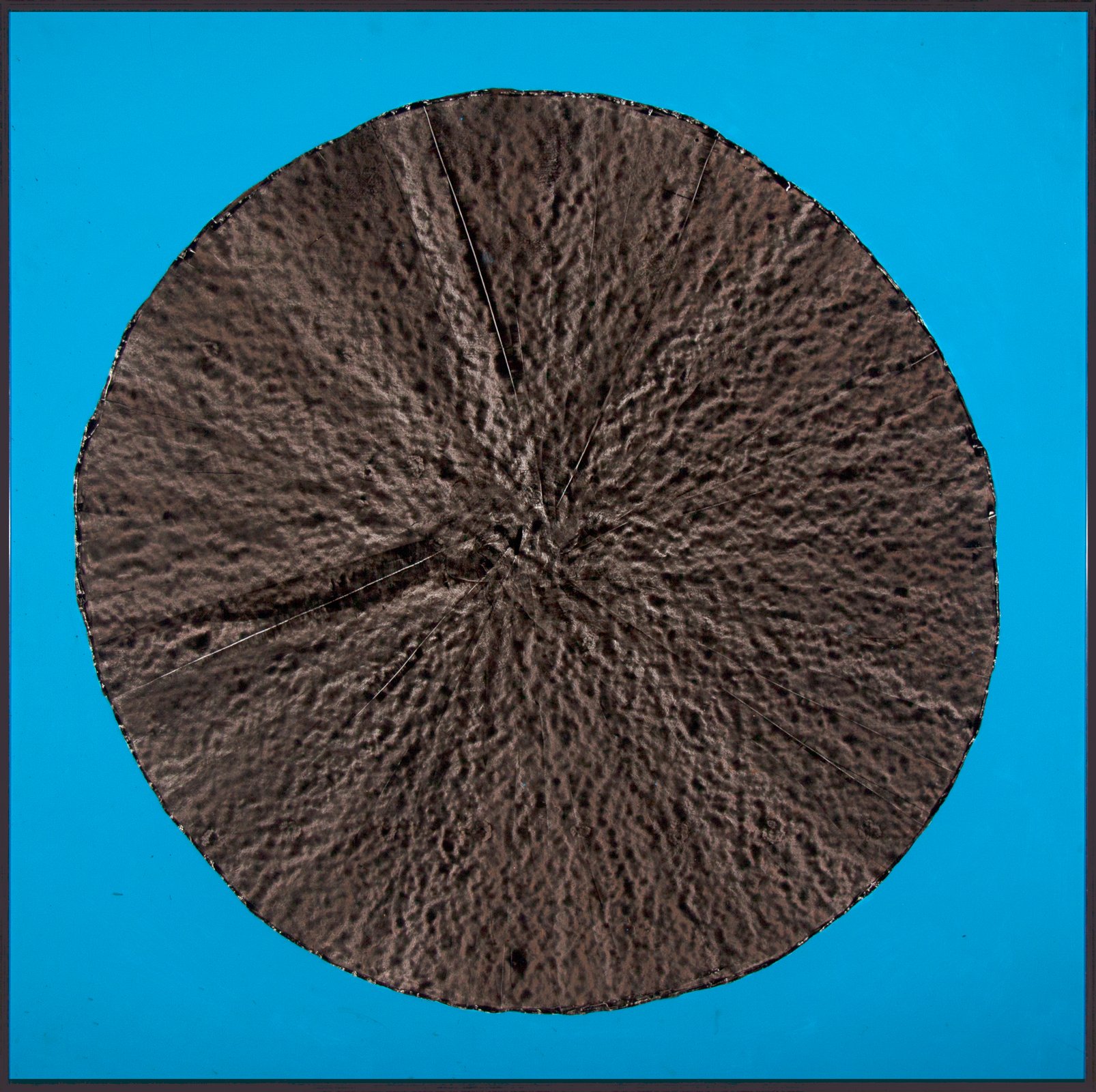
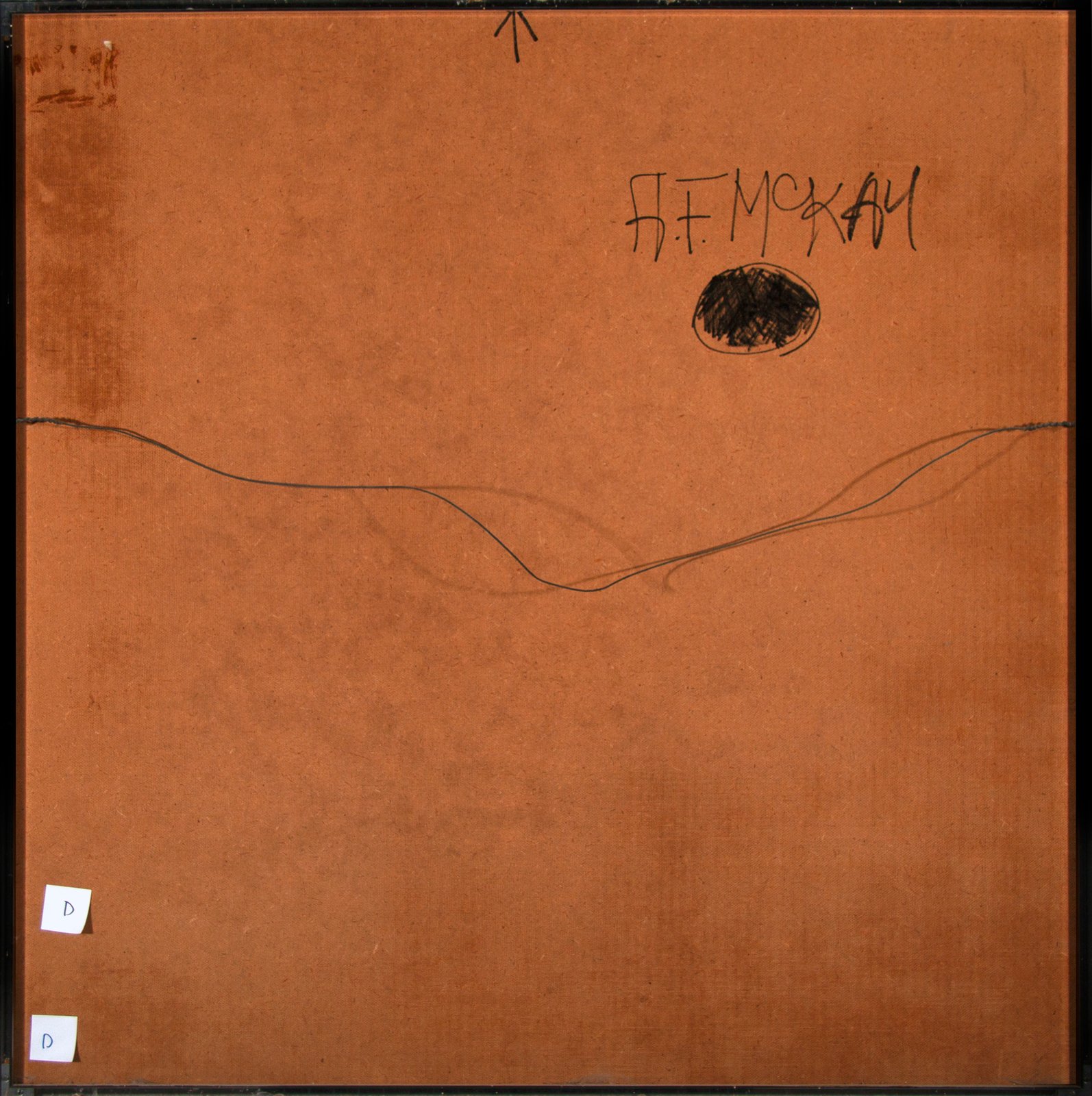
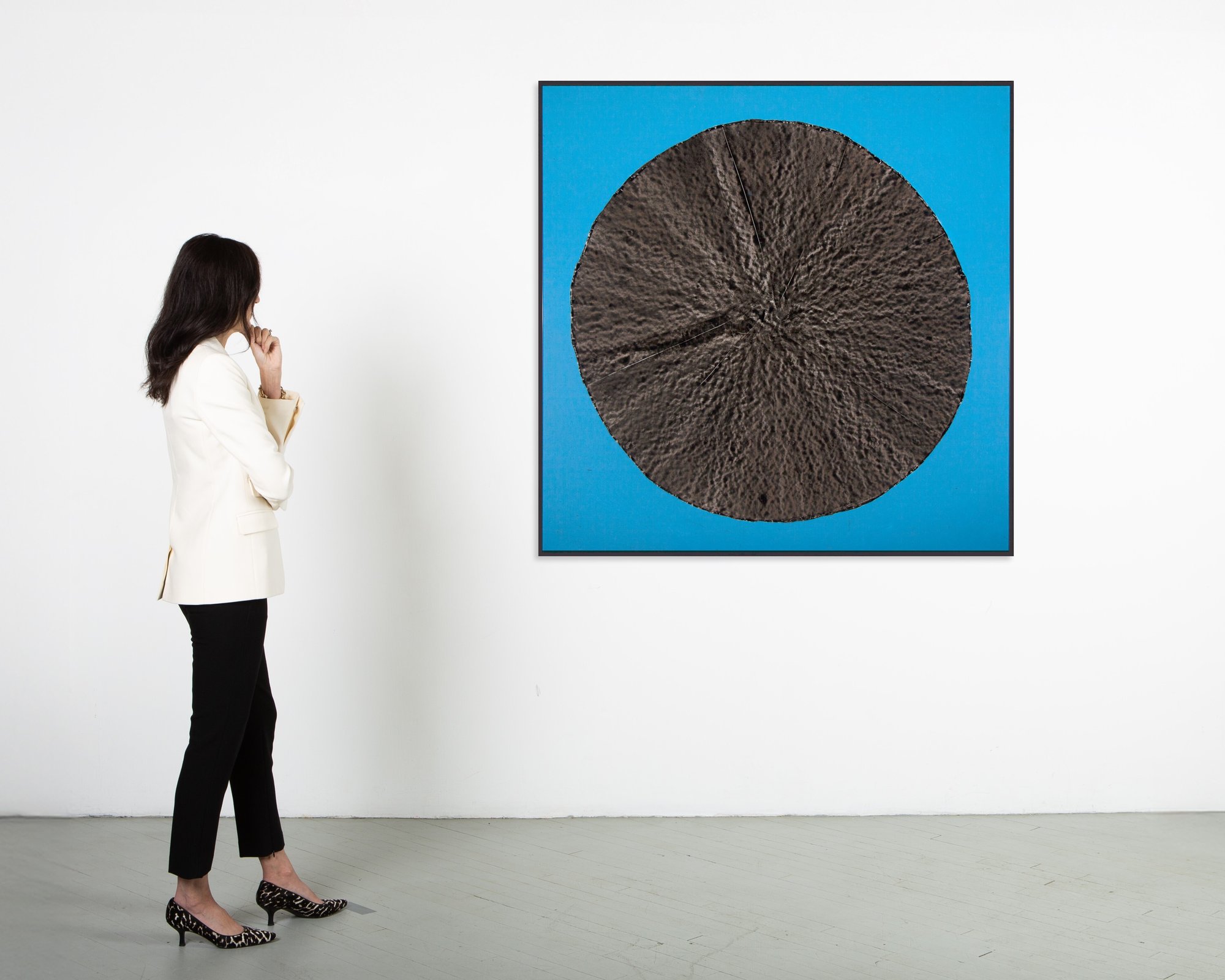
48.5 x 48.5 in (123.2 x 123.2 cm) including frame
Provenance:
Acquired directly from the artist, Collection of Greg Brodsky, Winnipeg;
By decent to present Private Collection, Winnipeg
(Includes Buyer's Premium)
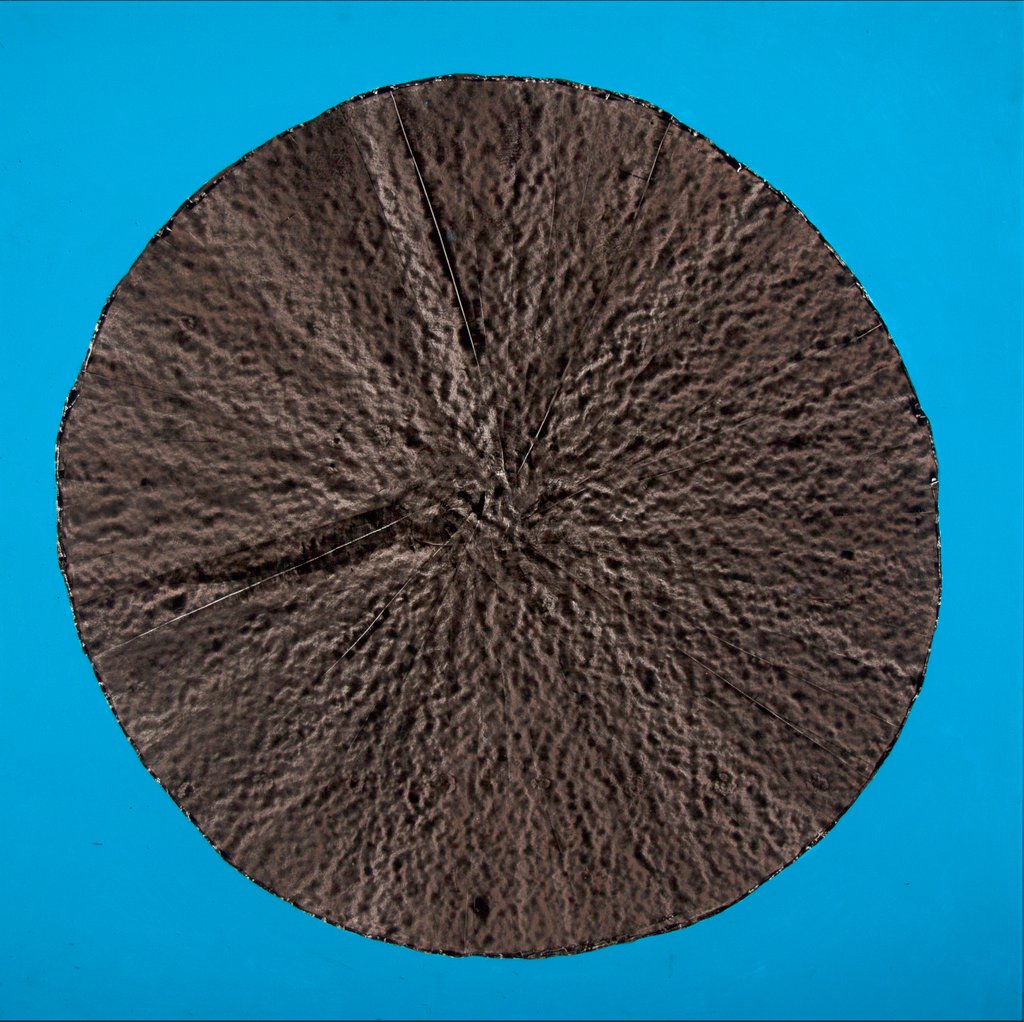
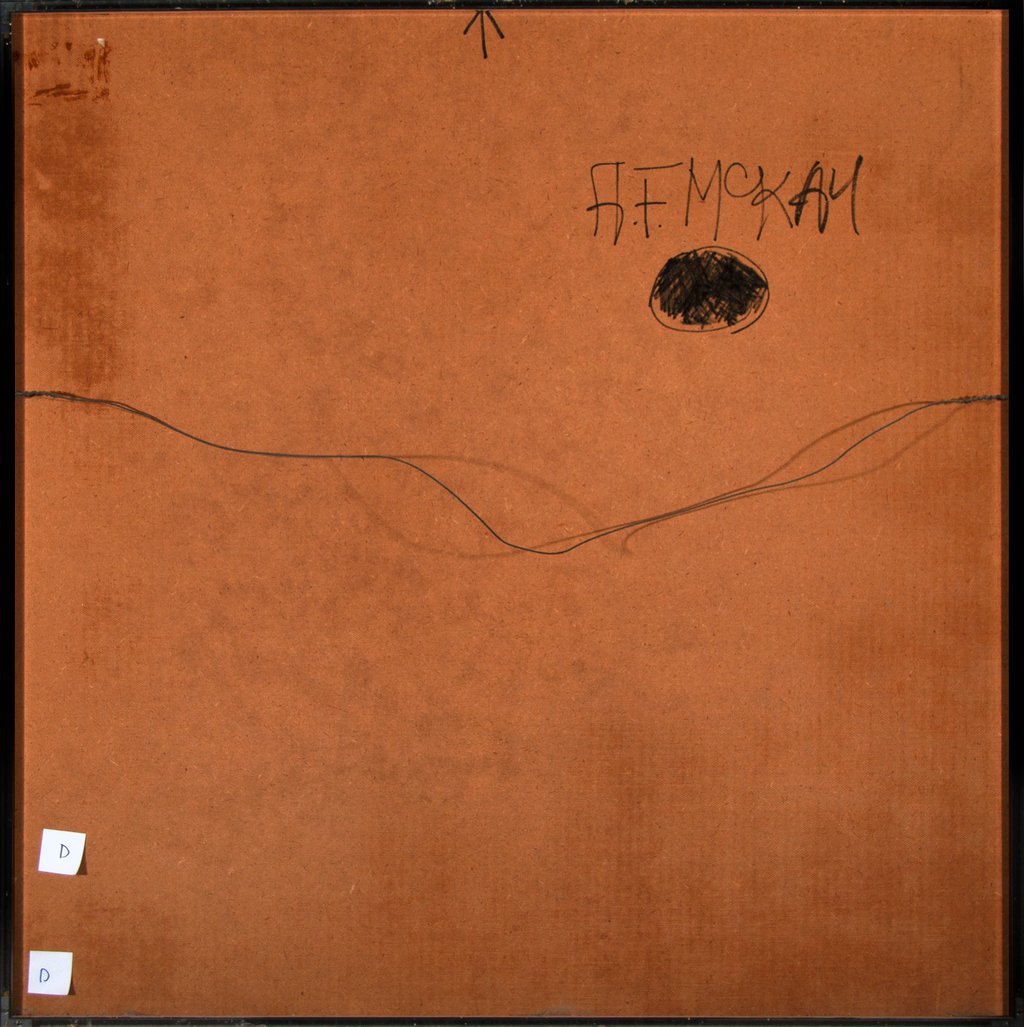
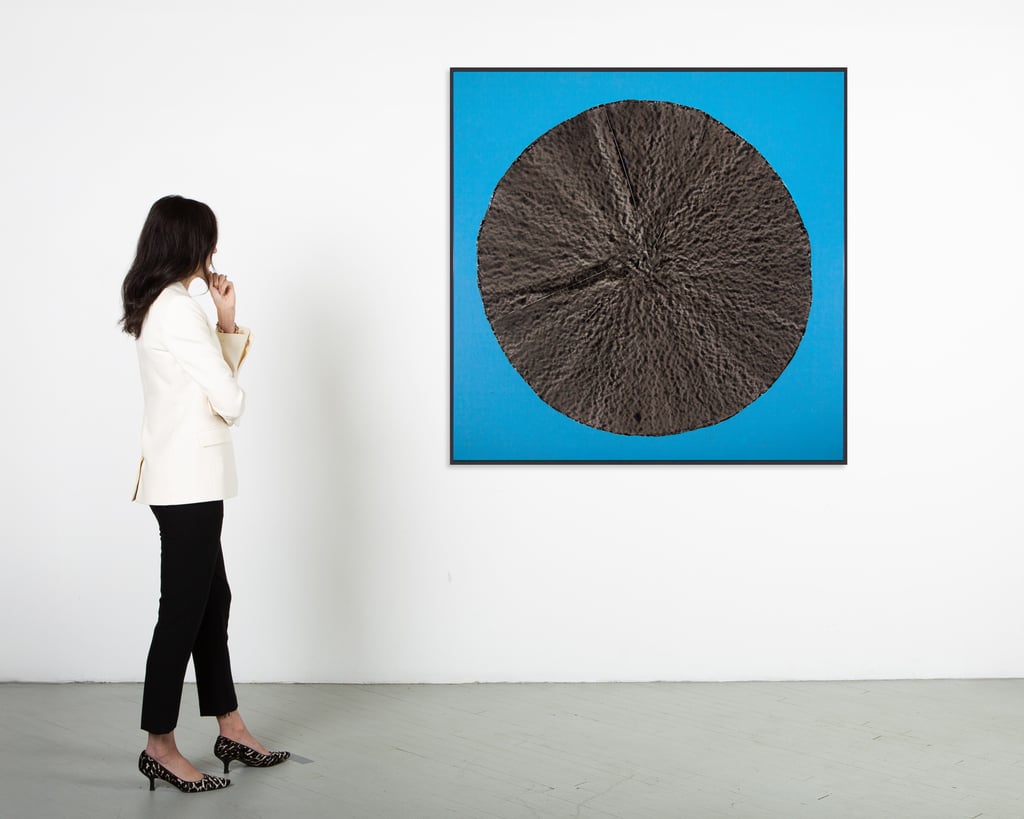
Arthur Fortescue McKay
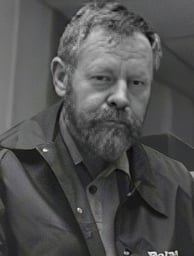
Arthur Fortescue McKay was born on September 11, 1926, in Nipawin, Saskatchewan. His father was Joseph Fortescue McKay, whose ancestry included Anglo-Métis heritage that qualified McKay as an Anglo-Métis artist in Saskatchewan. His mother, Georgina Agnes Newnham, was the daughter of Jervois Newnham, the Anglican Bishop of Saskatchewan. From an early age, McKay drew landscapes, and after high school he joined the army, though the war ended by the time his training was completed. Aptitude tests upon discharge showed his abilities in writing, visual art, and music, and he chose to pursue art.
McKay's formal training began at the Provincial Institute of Technology and Art (now the Alberta University of the Arts) in Calgary from 1946 to 1948. He and his wife Lori then traveled to Europe, where they worked in England before he studied at the Académie de la Grande Chaumière in Paris from 1949 to 1950. He later studied at Columbia University in New York and The Barnes Foundation in Merion, Pennsylvania, from 1956 to 1957, traveling back and forth between the two institutions for classes.
Returning to Regina in 1951, McKay enrolled in art history classes at the School of Art, University of Saskatchewan, Regina Campus. In 1952, he was hired by Ken Lochhead as a Special Lecturer in Art with the School of Fine Arts at Regina. He became Associate Professor of Art in 1956 and served as Director of the School of Art from 1964 to 1967. McKay helped organize the Emma Lake Artists' Workshops in rural Saskatchewan beginning in 1955, where he attended and planned workshops with visiting instructors including Jack Shadbolt (1955), Will Barnet (1957), and Barnett Newman (1959). These workshops brought together artists for instruction by prominent figures such as Newman and art critic Clement Greenberg, establishing Emma Lake as an important site for contemporary art discourse in Western Canada.
In 1958, McKay began creating non-objective paintings, explaining that he was "making paintings which are things in themselves rather than pictures of something or references to something else." He gained national and international attention as one of the Regina Five, a group of abstract painters whose work was exhibited at the National Gallery of Canada in 1961 in a show titled "Five Painters from Regina." Alongside Douglas Morton, Kenneth Lochhead, Ted Godwin, and Ronald Bloore, the group became known for their bold abstractions and were compared to contemporaries in the New York School of Art, bringing significant attention to the artistic efforts of Western Canada, specifically Saskatchewan.
McKay was influenced in the 1960s by Barnett Newman, whom he, Ron Bloore, and Roy Kiyooka had invited to the Emma Lake Artists' Workshop as guest artist in 1959. In 1964, McKay was included in Clement Greenberg's "Post-Painterly Abstraction" exhibition at the Los Angeles County Museum, one of only three Canadians selected for this prestigious show. In his 1963 essay "Clement Greenberg's View of Art On The Prairies" for Canadian Art, Greenberg championed McKay's innovation in knife handling, composition, and originality, stating that McKay's "pictorial feeling… embodies a new response to experience."
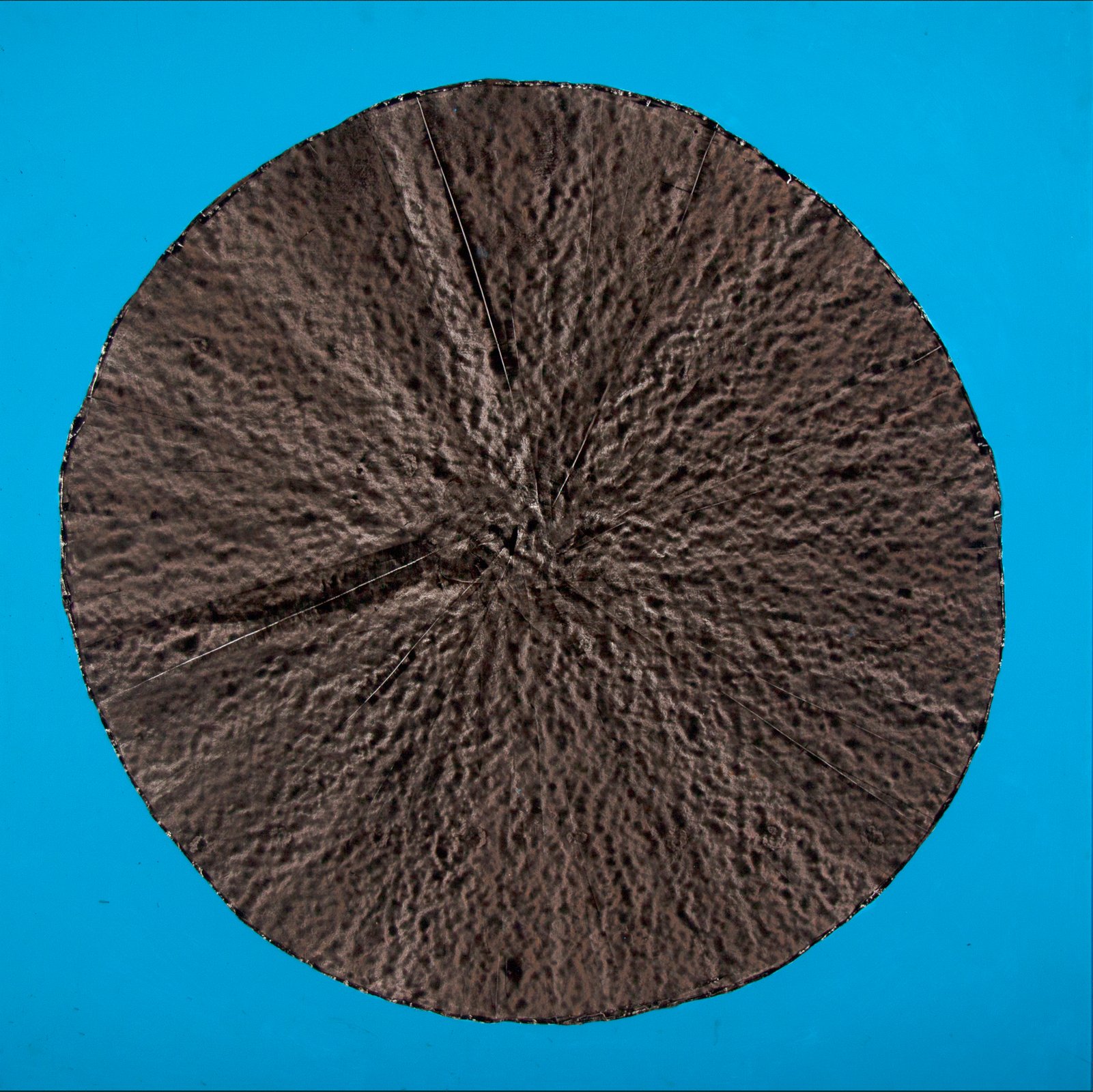
McKay is best known for his scraped enamel "mandalas," which utilize circular and rectangular formats to create highly contemplative images reflecting his interest in Zen Buddhism and Mahayana Buddhism. Working with enamel and palette knives, he relied on the fluidity of the medium to create his signature shapes. A block color was typically applied to frame geometric squares or circles as the focal point of each piece. Unlike typical mandalas, McKay abandoned symmetry, establishing a tranquil imbalance in his compositions. His color palette and focal shapes remained restrained and rarely varied throughout his career. In the 1970s, he continued to paint abstractions but also reintroduced landscape into his work, though his output declined in later years.
McKay taught at the Nova Scotia College of Art in 1967-68, then returned to teach at the University of Regina as an Associate Professor from 1978 until his retirement in 1987. In 1997, the MacKenzie Art Gallery mounted a national traveling exhibition, "Arthur F. McKay: A Critical Retrospective." At the exhibition opening, McKay remarked, "If I had known I was that good, I would have painted more." His work is held in many public and private collections, including the National Gallery of Canada and the Art Gallery of Guelph. Arthur McKay died on August 3, 2000, in Squamish, British Columbia, at age 73. In 2001, he was posthumously awarded an Honorary Doctor of Laws from the University of Regina along with the other members of the Regina Five.
November Canadian Fine Art Auction
November 13 - November 27, 2025

661 Wall St, Winnipeg MB
(204) 255-5690
mayberryfineart.com
[email protected]
Contact us to make an appointment to preview this item or to sell similar works.
|
Bidding Range
|
Increment
|
|---|---|
| $0.00 - $50.00 | $1.00 |
| $50.00 - $100.00 | $5.00 |
| $100.00 - $500.00 | $10.00 |
| $500.00 - $1,000.00 | $25.00 |
| $1,000.00 - $5,000.00 | $50.00 |
| $5,000.00 - $10,000.00 | $100.00 |
| $10,000.00 - $20,000.00 | $200.00 |
| $20,000.00 - $50,000.00 | $500.00 |
| $50,000.00 - $100,000.00 | $1,000.00 |
| $100,000.00+ | $5,000.00 |
Login or register a BidLots.com account to participate in any auction. Track specific lots and artists with real-time notifications on all bidding activity.
Bidding approval requires three simple steps:
1. Create a Bid Lots account
2. Confirm your email address
3. Create a valid billing profile
Bid Lots and/or the auctioneer may choose to revoke your bidding privileges if your account is not in good standing or your activity is in conflict with our standard terms and conditions of sale.
The buyer’s premium is an additional percentage charged to the winning bidder. The buyer’s premiums may vary from auction to auction, typically ranging from 10% to 20%. Buyer’s premiums will be displayed on detailed lot listings and paddle registration forms.
Bidding begins at the reserve price and advances at set increments based on the bidding range. The specific bidding increments may vary from auction to auction, however the next bid and subsequent increments will always be clearly defined on detailed lot listings. Maximum Bids and Single Bids can only be placed within the pre-defined bidding increments ensuring that no two bidders can place identical bids on an item. View individual lot detail pages to see a complete range of bidding increments for that item.
Requests to cancel a single bid are at the sole descretion of the auctioneer. Maximum bids can be increased but cannot be decreased unless premitted by the auctioneer. Requests to cancel a bid or to alter a maximum bid will be denied if the specific lot is scheduled to close in less than 24 hours or if the lot has significant interest or activity.
To request that a bid be cancelled or to change a maximum bid use the "Ask a question" button on the detailed lot listing.
You will receive an email notification when you have successfully won an auction. You will also see the item listed on your "Bidding Results" page and if you are logged into the site you will see a highlighted message on the auction catalogue pages and auction listings.
Shipping requirements may vary on different items depending on location and size or weight of an item. When registering for a specific auction you will be provided options to clarify your preferred shipping instructions. The auctioneer will also review and provide specific shipping quotes or options following the close of an auction. If you have specific shipping requirements or are unsure of the shipping constraints on a specific item please contact the auctioneer prior to bidding.
Following the close of an auction the auctioneer will provide a detailed invoice for all items you have won. They may contact you before a final invoice is prepared to confirm or review specific shipping instructions. Payment is due once a final invoice is provided and can be submitted online by credit card, or made by EFT (Electronic Fund Transfer), bank draft or international wire transfer. Any outstanding balance will be automatically charged to your registered credit card 5 days following the close of an auction.