Daredevil
Comic Series, 1964
Items in Daredevil
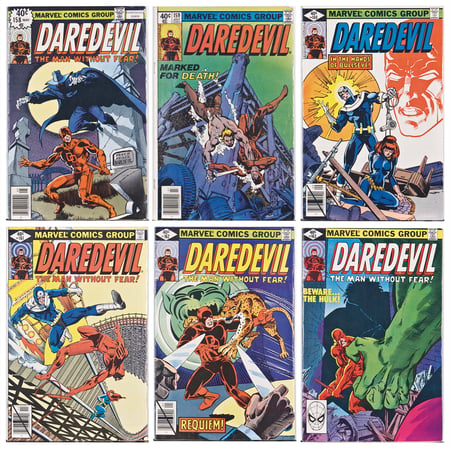
Daredevil
Created by Stan Lee and Bill Everett, Daredevil debuted in April 1964 under Marvel Comics as the alter ego of Matt Murdock, a blind lawyer from Hell's Kitchen who gained heightened remaining senses after exposure to radioactive waste. For its first decade, the title operated as a lighthearted swashbuckling superhero series, leaning heavily on traditional costumed villains and urban adventure formats. The book maintained a steady publication history throughout the Silver Age, establishing core supporting characters such as Foggy Nelson and Karen Page while integrating Murdock's dual life in the legal system with his vigilante operations.
The early 1980s marked a permanent paradigm shift for the series, as Miller's narrative direction redefined the tone, visual storytelling, and thematic maturity of Daredevil. By re-imagining Wilson Fisk, the Kingpin, as a ruthless criminal mastermind and introducing complex antiheroes like Elektra, the series moved toward street-level crime drama and moral ambiguity. Technical innovations in layout composition, stark black-and-white shadow work, and minimalist dialogue established a new production standard for mainstream superhero comics.
The historical impact of the Daredevil series lies in its role as a catalyst for the Bronze Age shift toward darker, creator-driven narrative storytelling. Miller's run transformed the title from a struggling monthly publication into one of Marvel's premiere flagship properties, setting visual and thematic precedents that influenced mainstream comic storytelling throughout the 1980s. The narrative elements introduced during this era continue to serve as the structural framework for modern comic arcs, animated adaptations, and live-action cinematic media.