Grenfall Labrador Industries
Works by Grenfall Labrador Industries
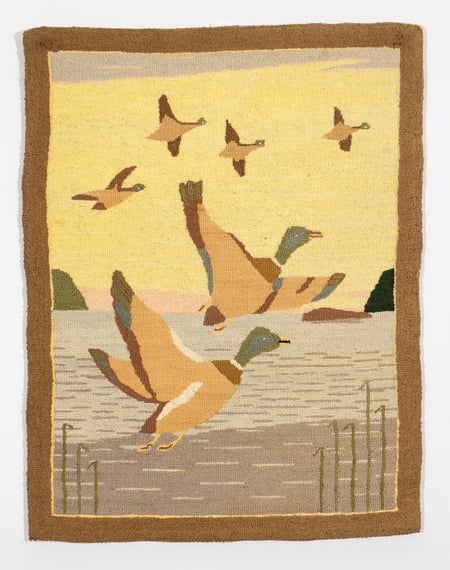
Grenfall Labrador Industries
Grenfell Labrador Industries (originally established under the International Grenfell Association) was a cottage industry initiative active in northern Newfoundland and coastal Labrador throughout the twentieth century. Founded in 1909 by British medical missionary Sir Wilfred Grenfell, the program was designed to provide supplemental income to coastal fishing families, particularly women, during winter months and economic downturns.
The organization is best known for its production of handcrafted textiles, specifically hooked mats and rugs. Production was organized through industrial centers across Newfoundland and Labrador, most notably in St. Anthony. Local artisans executed designs created by organizational staff and volunteer artists, including Jessie Luther, who helped establish the early craft workshops. The hooked mats were constructed using a distinctive technique that incorporated narrow strips of recycled stocking fabric, flannel, and dyed cotton pull-throughs worked into burlap backings.
The visual iconography of Grenfell hooked mats focused on northern subjects, including polar bears, sled dog teams, puffins, icebergs, seal hunts, and coastal village scenes. In addition to hooked rugs, the industry produced embroidered parkas, ivory carvings, wood products, and woven textiles. Each piece was typically marked with a woven fabric label reading "Grenfell Labrador Industries" or "Grenfell Cloth" to verify its origin.
Production continued through the mid to late twentieth century before operations ceased as economic and industrial conditions in the region changed. Items produced by Grenfell Labrador Industries are preserved in public museum and textile collections, including the The Rooms Provincial Museum in St. John's, the Canadian Museum of History, and the Textile Museum of Canada.