David Gilhooly
Historical Canadian Artists
Works by David Gilhooly
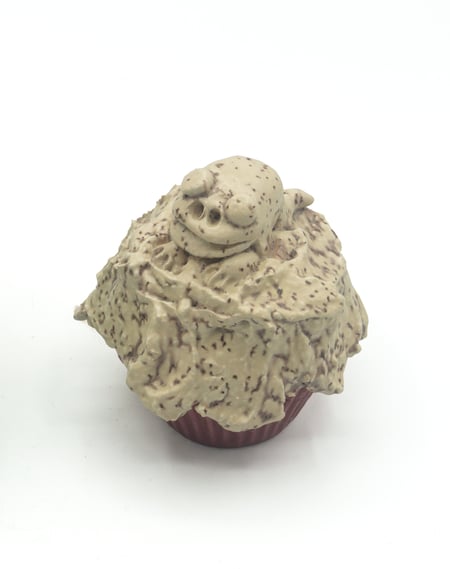
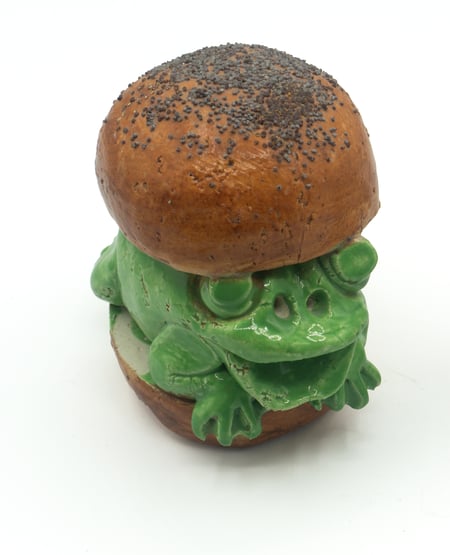
David Gilhooly, RCA
1943 - 2013
David Gilhooly was an influential sculptor and a central figure in the California Funk art movement, known primarily for his satirical works in ceramics. Born in Auburn, California, Gilhooly attended the University of California, Davis, where he earned a Bachelor of Arts in 1965 and a Master of Arts in 1967. During his time at Davis, he served as an assistant to sculptor Robert Arneson in the TB-9 (Temporary Building 9) studio, a collaborative environment that fostered the irreverent and anti-establishment aesthetic of Funk art.
Gilhooly moved to Canada in 1969 to accept a teaching position at the University of Saskatchewan in Regina. His arrival significantly impacted the local art scene, as he introduced the Funk art philosophy to a group of artists who would later become prominent in Canadian ceramics. After two years in Regina, he moved to Toronto in 1971, where he taught at York University for seven years. His tenure in Canada was marked by a prolific output of ceramic works that parodied historical, political, and cultural themes through an alternative universe populated by anthropomorphic frogs.
The artist's work is characterized by its use of humor and common subjects to challenge traditional art hierarchies. His "FrogWorld" series featured detailed ceramic figures such as Frog Queen Victoria and Frog Osiris, while other works depicted everyday food items like donuts, hamburgers, and sandwiches rendered in glazed earthenware. In 1982, Gilhooly began exploring other media, including Plexiglas and assemblage, and he eventually transitioned away from clay entirely in 1996.
Throughout his career, Gilhooly received significant professional recognition, including a Guggenheim Fellowship and a National Endowment for the Arts Fellowship. He was also inducted as a member of the Royal Canadian Academy of Arts (RCA). His sculptures are held in numerous major public collections, including the National Gallery of Canada, the Art Gallery of Ontario, the Montreal Museum of Fine Arts, and the Art Gallery of Nova Scotia. International institutions also hold his work, such as the Smithsonian American Art Museum, the Whitney Museum of American Art, and the Museum of Modern Art in New York