Phil Buytendorp
Contemporary Canadian Artists
Works by Phil Buytendorp
Phil Buytendorp
Philip Buytendorp (born 1961) is a Canadian landscape painter known for his depictions of the Western Canadian wilderness, including the prairies, the Canadian Shield, and the Pacific coast. Born in Brandon, Manitoba, he was raised in a creative environment as the son of the Dutch-Canadian painter George Buytendorp. During his youth, he frequently accompanied his father on painting trips, which provided an early foundation in landscape observation. He received formal training in art theory at the Brandon Allied Arts Centre from 1978 to 1979.
Following his initial studies, Buytendorp moved to Calgary, Alberta, where he worked in the construction trades between 1981 and 1986. During this period, he continued to develop his artistic practice by sketching and painting the Rocky Mountain foothills. In 1986, he relocated to the Fraser Valley in British Columbia to undergo a five-year apprenticeship under his father's direction. This intensive period of study focused on technical refinement and the discipline required for a professional career in the fine arts.
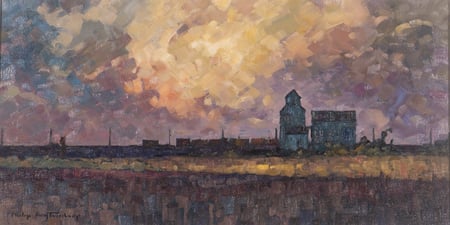
Buytendorp’s style is heavily influenced by the Group of Seven, particularly the works of Tom Thomson, and the mountain landscapes of Carl Rungius. His paintings are characterized by the use of bold brushwork and a vivid color palette, often employing a heavy impasto technique with palette knives to create texture and a sense of "visceral muscularity" in his forms. His subject matter often derives from his experiences as an outdoorsman and mariner, including scenes documented during boating trips through the Inside Passage and the coastal regions of British Columbia.
A member of the Manitoba Society of Artists (MSA), Buytendorp transitioned to a full-time professional practice by the late 1990s. His work is represented in corporate and private collections across North America and Europe. He currently resides and maintains a studio in Chilliwack, British Columbia, where he continues to explore the natural interplay of light and movement within the Canadian landscape.