Bob Marley & The Wailers
Works by Bob Marley & The Wailers
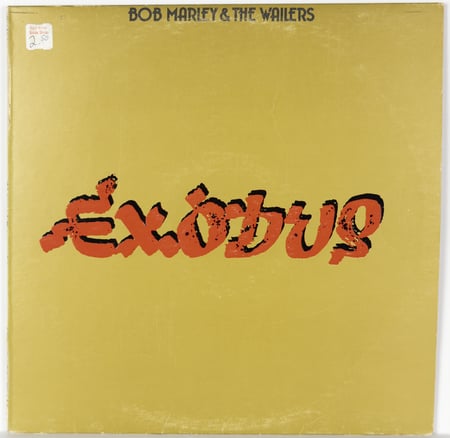
Bob Marley & The Wailers
Bob Marley & the Wailers formed in 1963 in Kingston, Jamaica, originally as "The Wailers," consisting of Bob Marley, Bunny Wailer (Neville Livingston), and Peter Tosh (Winston McIntosh). The group initially recorded ska and rocksteady music for producer Clement "Coxsone" Dodd's Studio One label, releasing their first single "Simmer Down" in 1964, which topped the Jamaican charts. Throughout the 1960s, they recorded over 100 tracks for various producers including Lee "Scratch" Perry, with whom they developed their signature reggae sound between 1969-1971. The band's early Jamaican releases had limited international distribution, selling primarily in Jamaica and the UK's West Indian communities.
The group's international breakthrough came after signing with Island Records in 1972. Chris Blackwell gave them a £4,000 advance to record "Catch a Fire" (1973), which was remixed and overdubbed for rock audiences, selling approximately 14,000 copies initially but establishing their presence in Europe and North America. "Burnin'" (1973) followed, featuring "Get Up, Stand Up" and "I Shot the Sheriff," the latter becoming a #1 hit for Eric Clapton in 1974. After this album, Bunny Wailer and Peter Tosh departed for solo careers, with Marley continuing as "Bob Marley & the Wailers" with the backing band including brothers Carlton and Aston Barrett (drums and bass), Junior Marvin, and Al Anderson on guitars, Tyrone Downie on keyboards, and the I-Threes (Rita Marley, Marcia Griffiths, and Judy Mowatt) on backing vocals.
The mid-to-late 1970s marked the band's commercial and cultural peak. "Natty Dread" (1974) was their first album as the reconfigured group, reaching #44 on the Billboard 200. "Live!" (1975), recorded at London's Lyceum Ballroom, captured their powerful stage presence and included the version of "No Woman, No Cry" that became their signature song. "Rastaman Vibration" (1976) peaked at #8 on the Billboard 200, their highest U.S. chart position. "Exodus" (1977), recorded after an assassination attempt on Marley in Jamaica, stayed on the British album charts for 56 consecutive weeks and was later named "Album of the Century" by Time Magazine in 1999. The album featured "Jamming," "Three Little Birds," and "One Love/People Get Ready."
Bob Marley & the Wailers' influence extended far beyond commercial success. They were the first reggae act to achieve sustained international recognition, effectively introducing the genre to global audiences. Their music promoted Rastafarianism, Pan-Africanism, and messages of unity and resistance against oppression. Major concerts included the "Smile Jamaica" concert (1976) and the "One Love Peace Concert" (1978), where Marley famously joined hands of political rivals Michael Manley and Edward Seaga. The band performed at Zimbabwe's independence celebrations in 1980, highlighting their political significance. Their 1977 European tour, supporting "Exodus," played to over 1 million fans across multiple countries.
Album sales accelerated significantly after Bob Marley's death from cancer on May 11, 1981. "Legend" (1984), a greatest hits compilation, has sold over 15 million copies in the United States alone and over 28 million worldwide, making it the best-selling reggae album of all time. It has spent over 700 nonconsecutive weeks on the Billboard 200 chart as of 2024. The band's catalog has generated over 75 million album sales worldwide. In 1994, Bob Marley & the Wailers were inducted into the Rock and Roll Hall of Fame. Rolling Stone ranked them #11 on their list of the 100 Greatest Artists of All Time.
The band's legacy continues to influence popular music and culture globally. Their songs have been covered by thousands of artists across genres, sampled extensively in hip-hop, and featured in countless films and commercials. "One Love" was designated as the official anthem for UNICEF's "One Love" campaign, while "Get Up, Stand Up" became an anthem for human rights movements worldwide. The Marley estate, valued at over $130 million, continues to generate significant revenue through music sales, licensing, and branded products. The biographical film "Bob Marley: One Love" (2024) introduced the band's story to new generations, while their music streams exceed 1 billion plays annually on digital platforms, demonstrating their enduring relevance nearly five decades after their international debut.