Pink Floyd
Works by Pink Floyd
Pink Floyd
Pink Floyd formed in London in 1965, emerging from the city's underground music scene. The original lineup consisted of Syd Barrett on guitar and lead vocals, Roger Waters on bass, Richard Wright on keyboards, and Nick Mason on drums. Barrett, the band's early creative leader, named the group after two blues musicians, Pink Anderson and Floyd Council. The band quickly became fixtures at venues like the UFO Club and the Roundhouse, where their experimental approach to rock music, incorporating extended instrumental passages, light shows, and improvisation, made them pioneers of the psychedelic rock movement.
The band's debut album, "The Piper at the Gates of Dawn" (1967), was largely written by Barrett and showcased his distinctive songwriting combining whimsical lyrics with adventurous musical structures. However, Barrett's mental health deteriorated rapidly, exacerbated by heavy drug use, and his behavior became increasingly erratic and unpredictable during performances and recording sessions. In early 1968, guitarist David Gilmour, a childhood friend of Barrett's, was brought in to cover for Barrett's unreliability. Barrett was officially dismissed from the band in April 1968, though he remained an influential presence in the band's work for years to come. The remaining members struggled initially with Barrett's absence, releasing "A Saucerful of Secrets" (1968) and the soundtrack albums "More" (1969) and "Ummagumma" (1969) while finding their direction.
Pink Floyd's breakthrough came with "The Dark Side of the Moon" (1973), an album exploring themes of conflict, greed, aging, and mental illness. Waters had assumed primary songwriting duties, and the album's cohesive concept, innovative use of studio technology, and accessibility brought the band massive commercial success. "The Dark Side of the Moon" remained on the Billboard 200 chart for over 900 weeks and became one of the best-selling albums of all time. The band followed with "Wish You Were Here" (1975), a tribute to Barrett and meditation on absence and the music industry, and "Animals" (1977), a darker work inspired by George Orwell's "Animal Farm" that reflected Waters' increasingly cynical worldview.
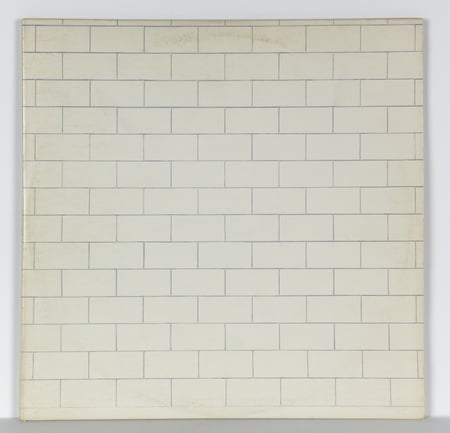
Tensions within the band escalated during the creation of "The Wall" (1979), a double album concept work largely written by Waters that drew on his personal experiences and explored themes of isolation and abandonment. The album spawned the hit single "Another Brick in the Wall (Part 2)" and was adapted into a 1982 film directed by Alan Parker. By this point, Wright had been forced out of the band during the recording sessions, though he returned as a salaried musician for the subsequent tour. Waters' dominance continued with "The Final Cut" (1983), which was essentially a Waters solo album credited to Pink Floyd, and tensions reached a breaking point. Waters left the band in 1985 and attempted to dissolve Pink Floyd legally, but Gilmour and Mason successfully retained the name and continued without him.
Gilmour and Mason, with Wright returning as a full member, released "A Momentary Lapse of Reason" (1987) and "The Division Bell" (1994), both achieving commercial success despite mixed critical reception and Waters' public dismissal of the albums as not genuine Pink Floyd. The band performed sporadically through the 1990s and 2000s, with Waters, Gilmour, Mason, and Wright reuniting for a single performance at Live 8 in 2005. Wright died in 2008, and the band released "The Endless River" in 2014, a largely instrumental album based on recordings from "The Division Bell" sessions, as a tribute to Wright. Waters and Gilmour have continued their solo careers, with occasional public disputes over the Pink Floyd legacy and brand.
Pink Floyd's influence on progressive rock and popular music is profound. They pioneered the use of elaborate concept albums, expanded the possibilities of studio production and sound design, and created some of the most ambitious and elaborate live shows in rock history. Their albums have sold over 250 million copies worldwide, with "The Dark Side of the Moon" and "The Wall" ranking among the best-selling albums ever released. Despite the internal conflicts that marked much of their history, Pink Floyd created a body of work that explored complex themes with musical sophistication and remains influential across multiple generations of musicians.